Solid Walnut · Three Hand-Carved Recesses · Turned Feet
Yidaki
• Finished · Delivery next

The Commission
Music Meets Furniture
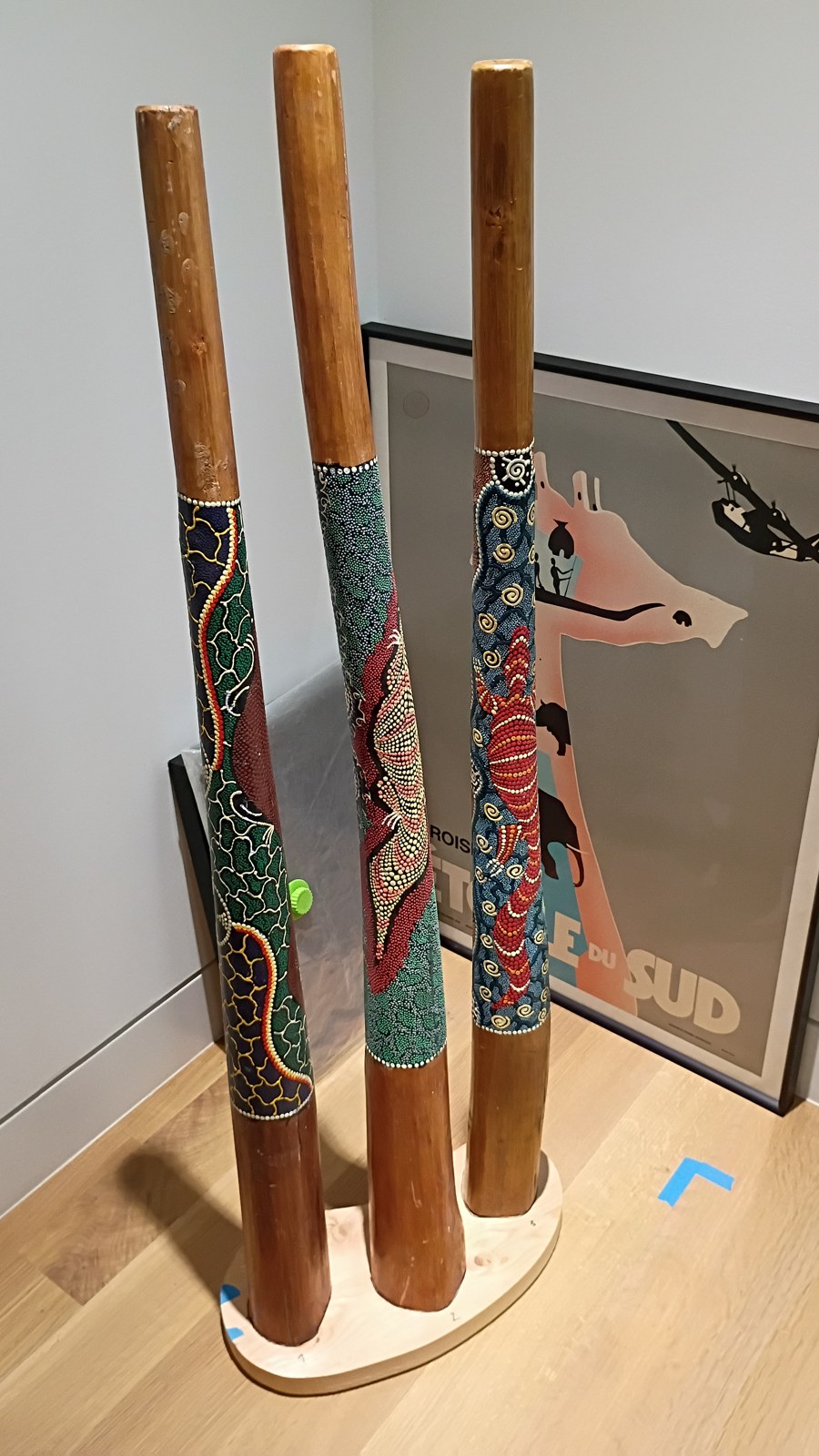
Ali and Eduardo own three decorated didgeridoos, and they deserve better than leaning in a corner. The brief: a simple walnut base that stands all three upright, so they read as a collection instead of clutter.
The room already has good company. The slatted credenza ALISO built for them, The Nook, lives a few feet away, next to their own pod-legged coffee table. The stand has to belong to that room: same walnut warmth, same soft geometry.
The intersection of music and furniture is exactly my kind of project.
Why “Yidaki.” Didgeridoo is a name settlers gave the instrument. The Yolŋu people of northeast Arnhem Land, in northern Australia, call it the yidaki. It’s one of the oldest wind instruments still played: a eucalyptus limb hollowed by termites, played with circular breathing into a continuous drone.
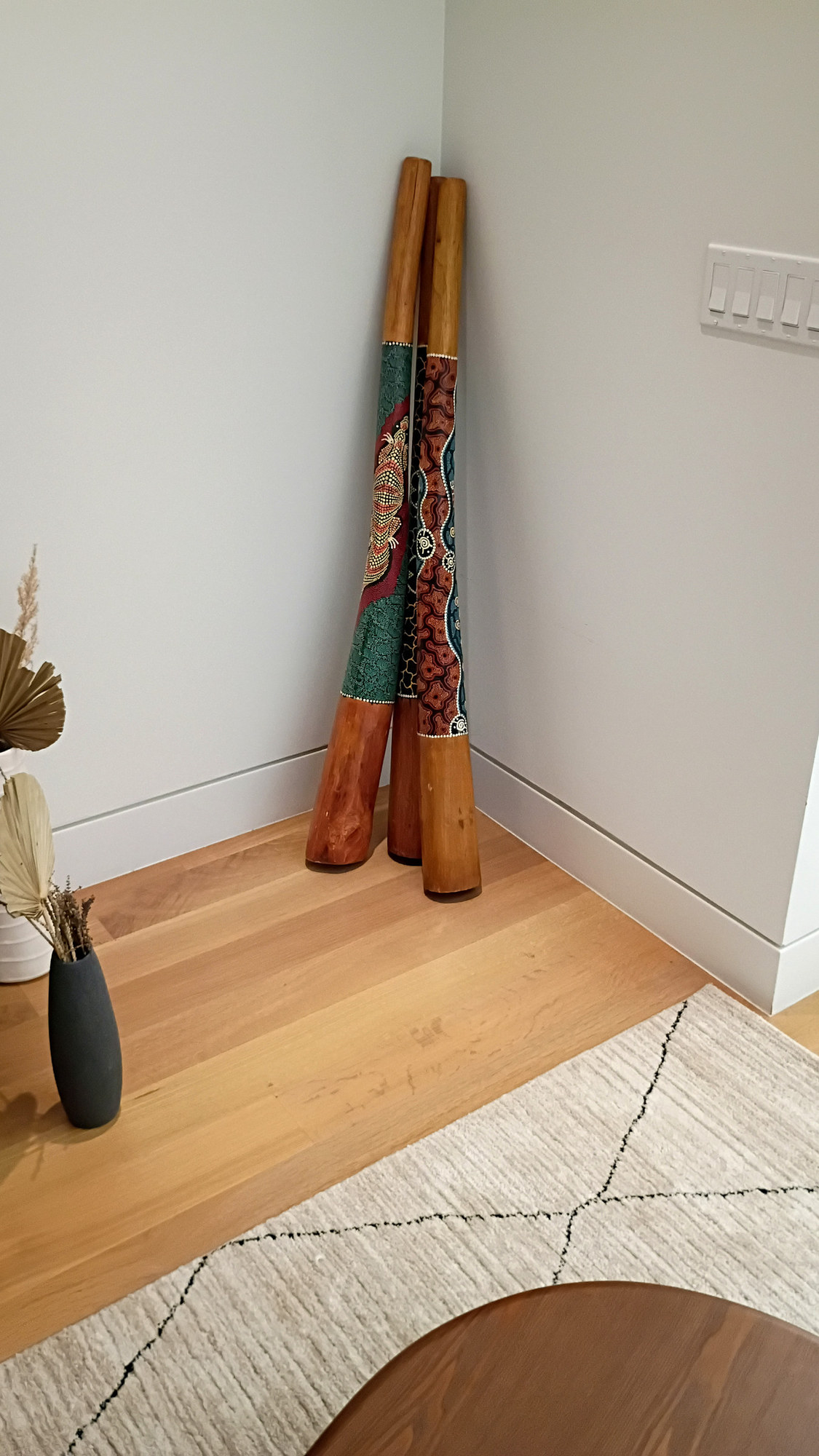
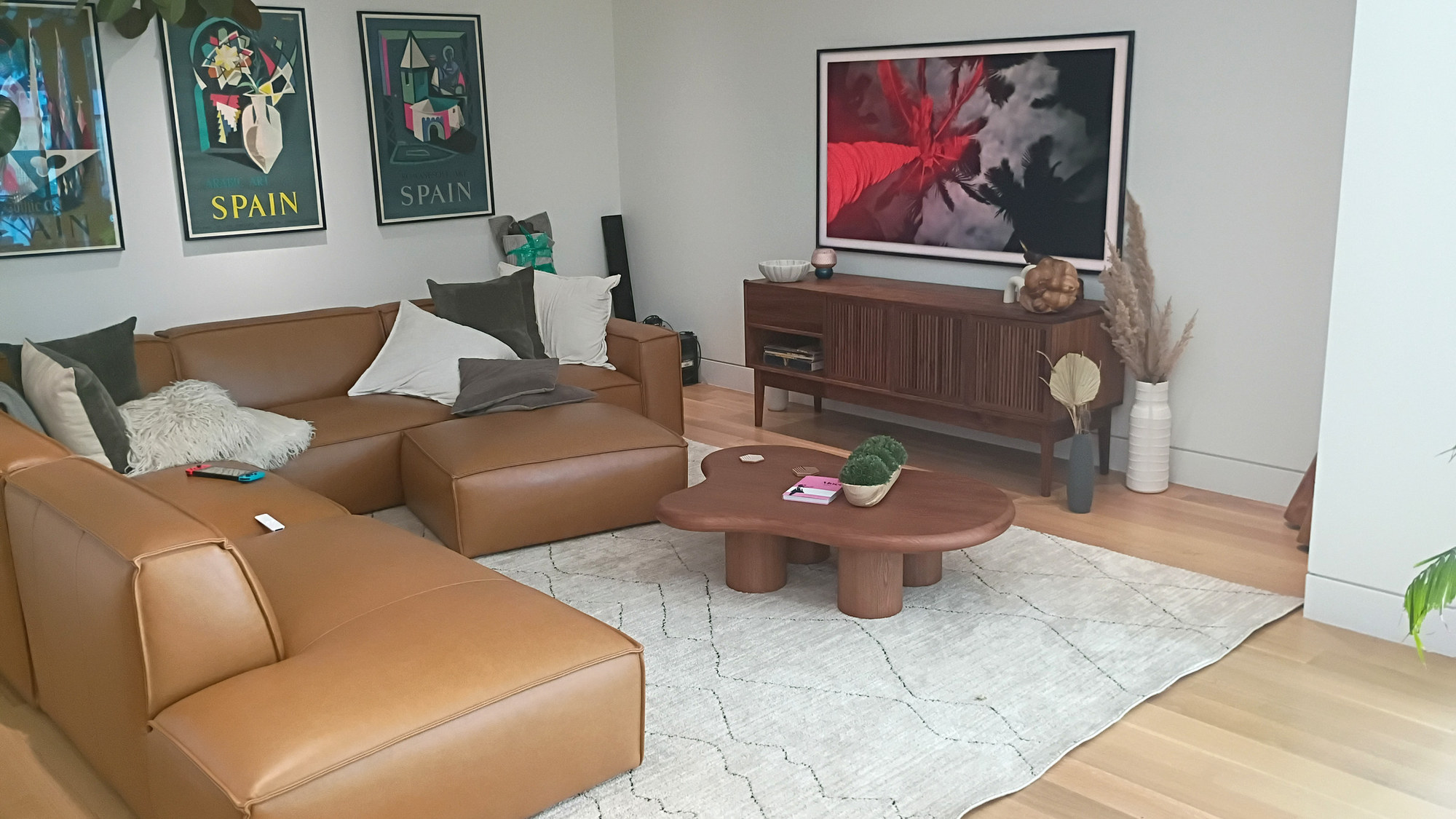
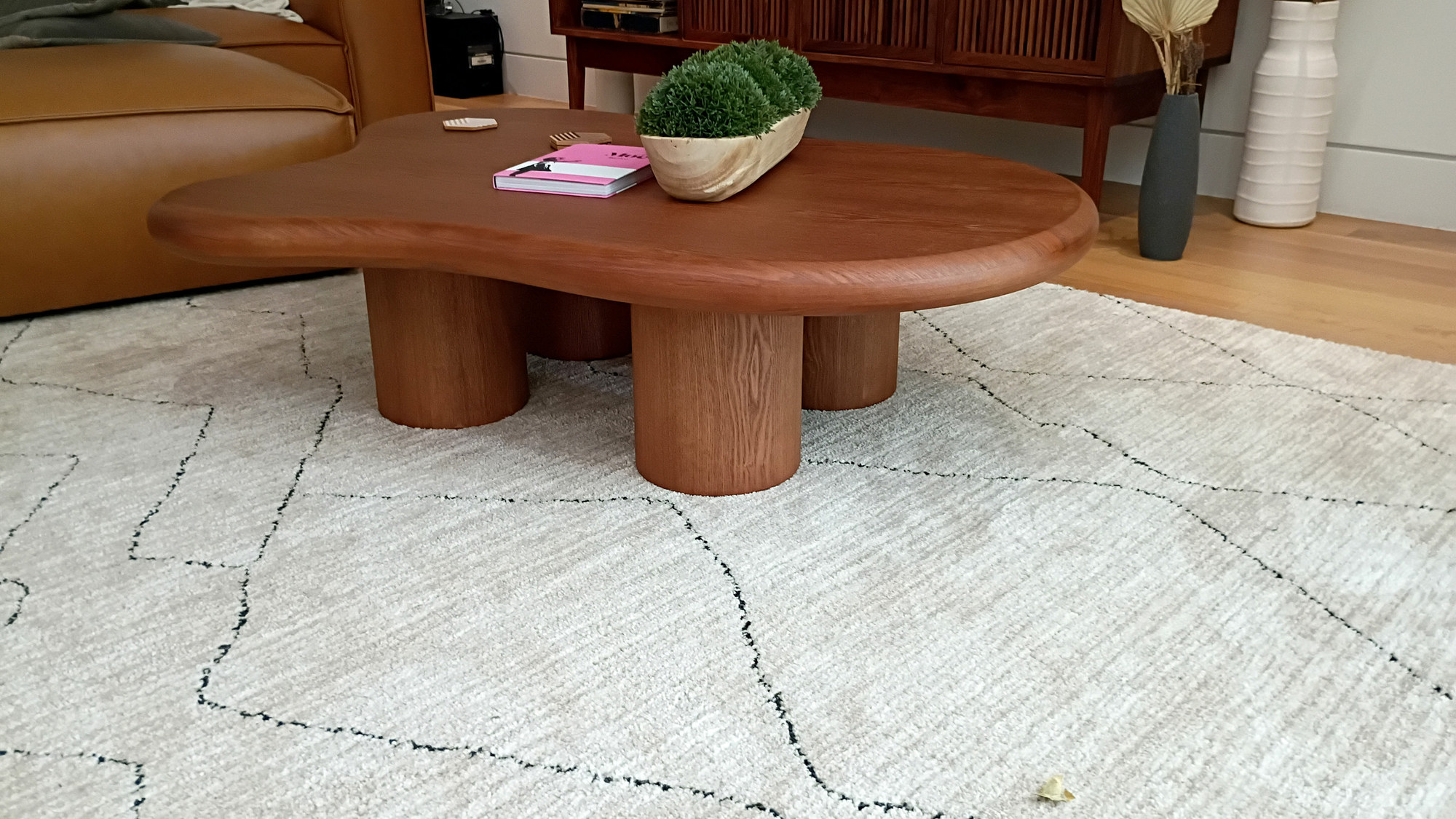
The instruments, and the room they live in.
The Design
A Quiet Plinth
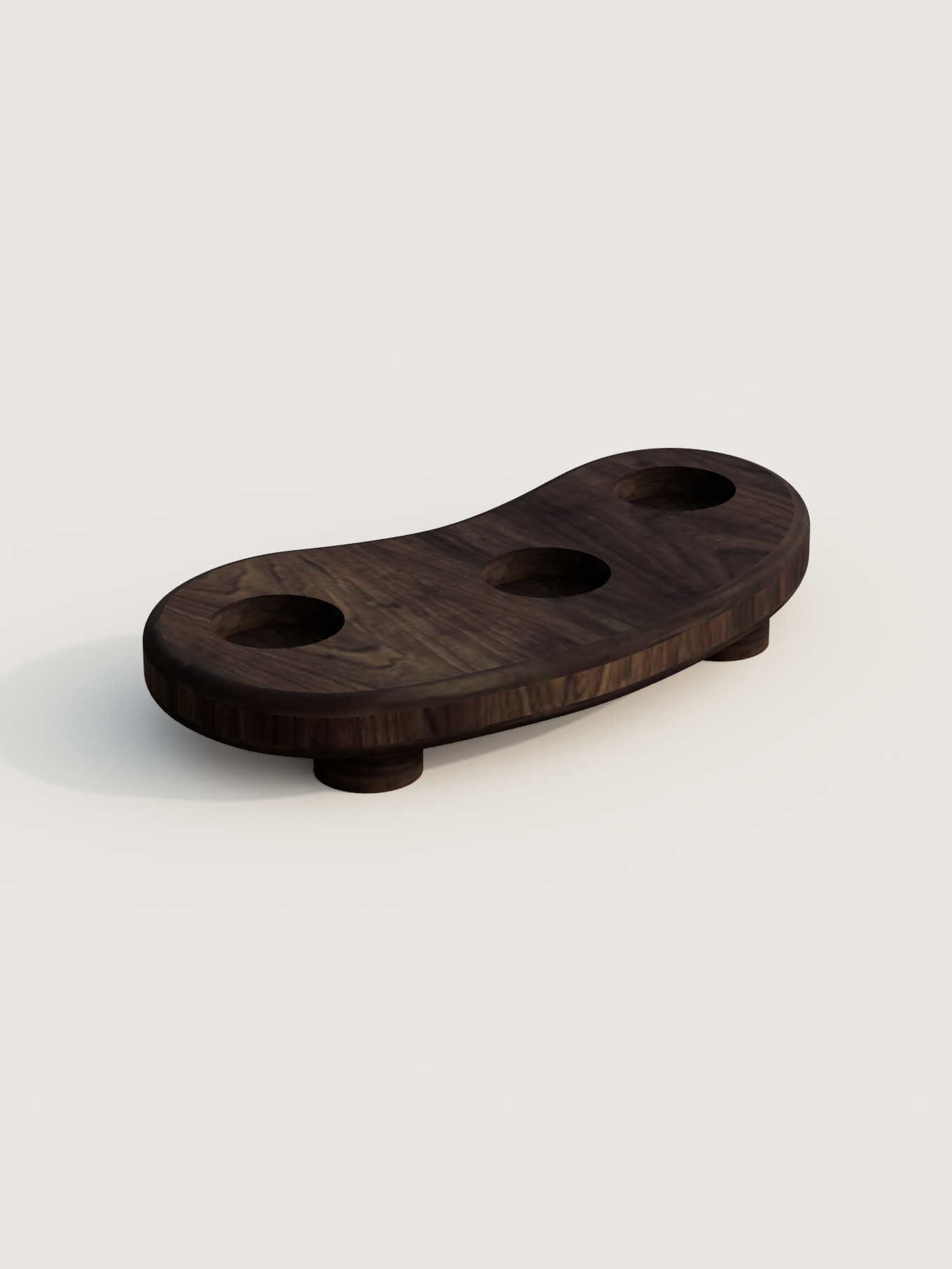
The instruments are the objects. The base should almost disappear. It’s one slab of solid walnut, 1¾ inches thick, cut into a soft bean shape that echoes the curves of the coffee table beside it.
The first plan bored three bell seats into the slab in a gentle arc, each one machined to hold its instrument upright. Four turned walnut feet lift it just off the floor, enough to throw a shadow and make it read as furniture rather than a board. The feet stayed. The bored seats didn’t survive the prototype.
The Prototype
Everything Is a Prototype
I love prototypes, but not as a dress rehearsal for the final piece. A prototype puts you in a better frame of mind: curious, unafraid of mistakes, exploring instead of overthinking. Stay there long enough and the finished piece starts to look like one more prototype. That’s the point.
The softwood test, cut from the same template, showed the bean shape running small. The bigger lesson was that the plan to sink each instrument into a fixed, machined pocket had to go. It was achievable, but slow, and it fought the spirit of the piece. The stand should feel organic and adjustable, the way wood is, while staying as stable and solid as wood is.
So each tool gets the job it’s best at. The machine cuts the base profile. The three recesses are carved by hand, shaped so each Yidaki settles at a lean and stays put whichever way it’s turned.
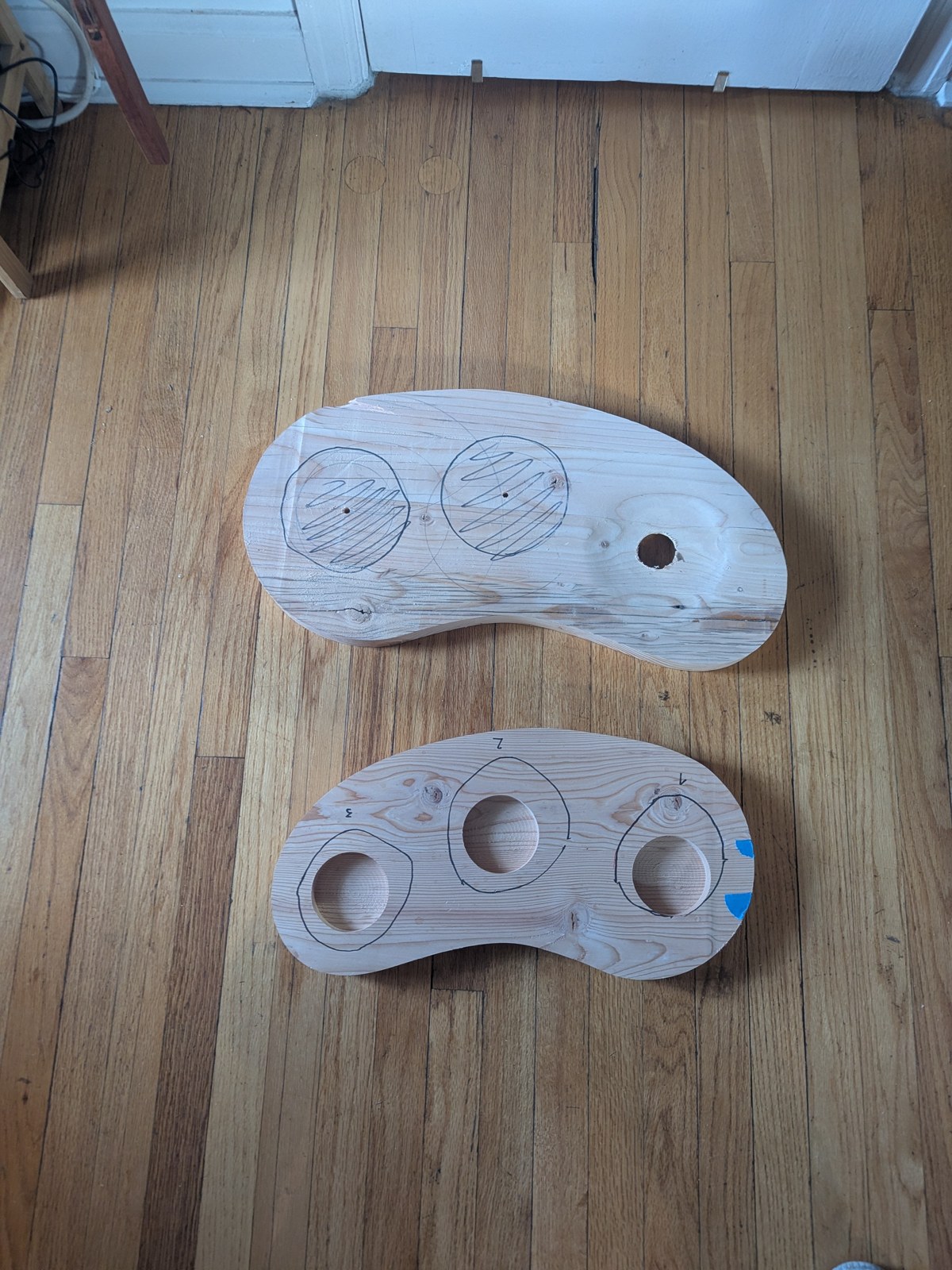
Machined pockets out, hand-carved recesses in. Carving was fun.
The Build
The Right Tool
Every new tool wants to be used for everything. I only really understand one when I know when to use it and when to leave it alone.
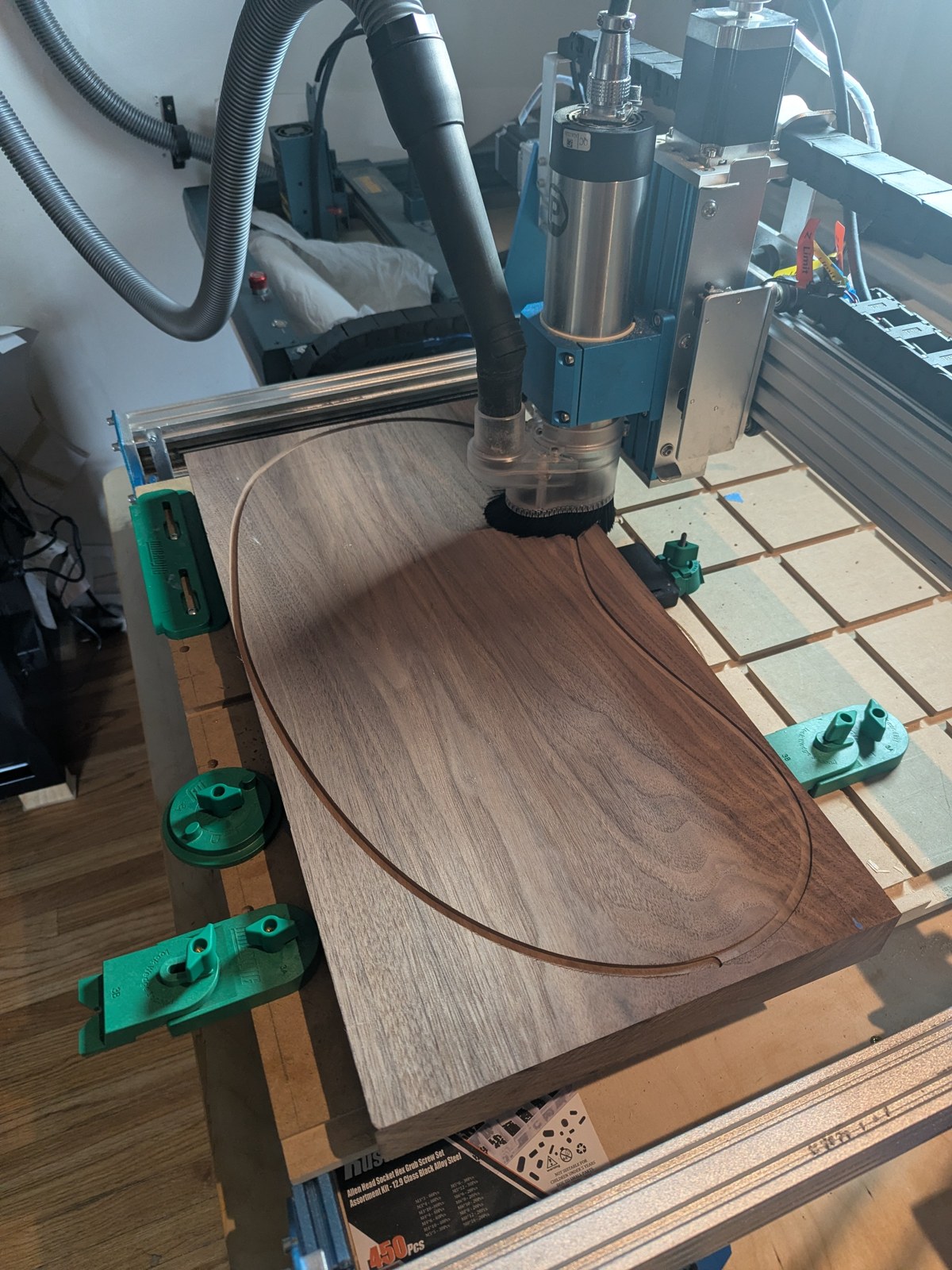
Setting up the CNC for this cut took longer than doing it by hand would have. But the outline of the bean is the one place on this stand where precision is the design. The instruments sit in a specific relationship to its curves, and that curve has to stay in harmony all the way around. A router or a sander chasing it by hand would lose it, no matter how careful. Sometimes the human wobble is the beautiful part. Not here.
So the machine cut the walnut. The recesses go back to the hand, as the prototype taught: angle grinder and a carving bit.
Status
On the Bench
Carved, turned, oiled. Next stop: Ali and Eduardo’s living room.
- Design (Fusion 360 model + renders)
- Softwood prototype: fixed pockets out, hand-carved recesses in
- Walnut base glue-up & milling
- CNC-cut curved profile
- Hand-carve the three angled recesses
- Turn the feet and pegs
- Hand-rubbed oil finish, matched to the room
- → Delivery
Specifications
The Details