American Walnut · Tricorn Black · Custom Hardware
The Nook
The Commission
Sound & Space
Under a staircase in Ali and Eduardo’s Salt Lake City home sat an awkward alcove with no purpose. Adjacent sat a tiny credenza holding their turntable and a Vestaboard reading “Best thing since sliced bread.” That treasured piece became the DNA for the entire project.
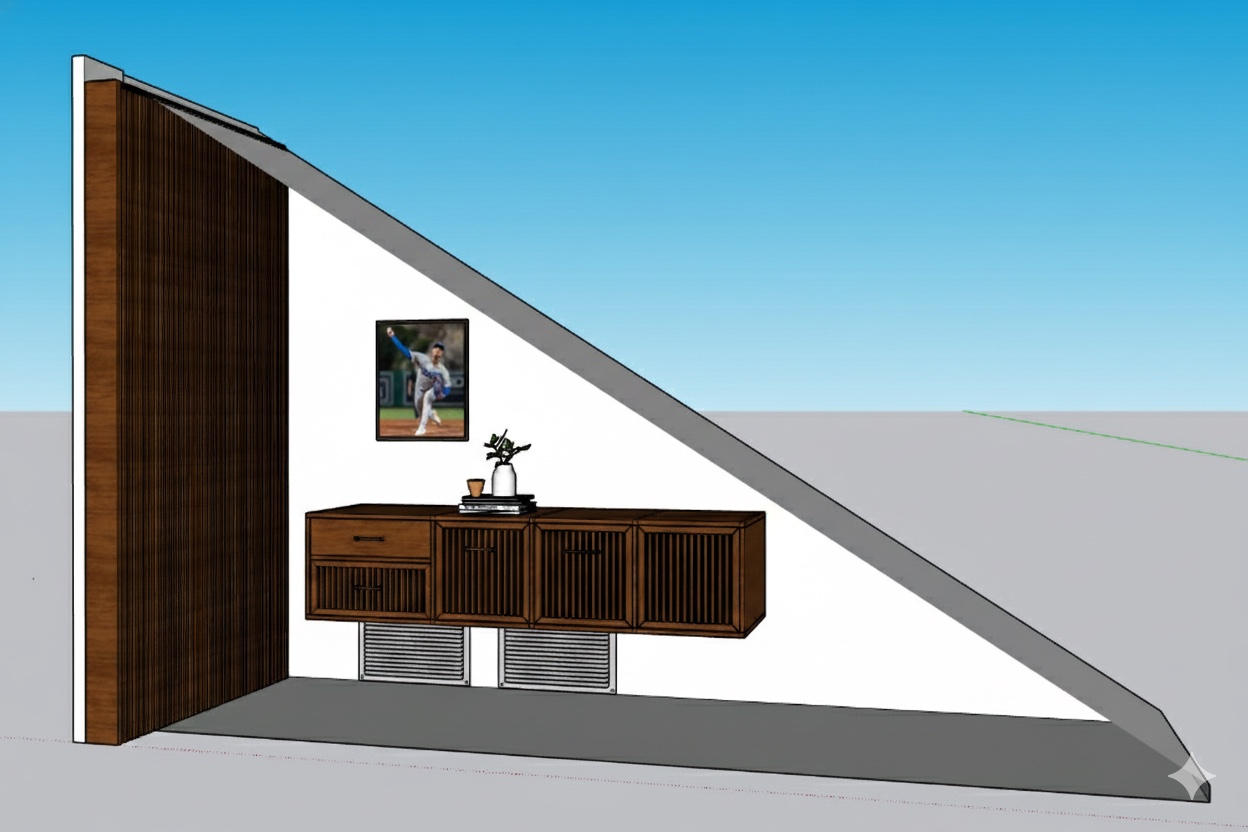
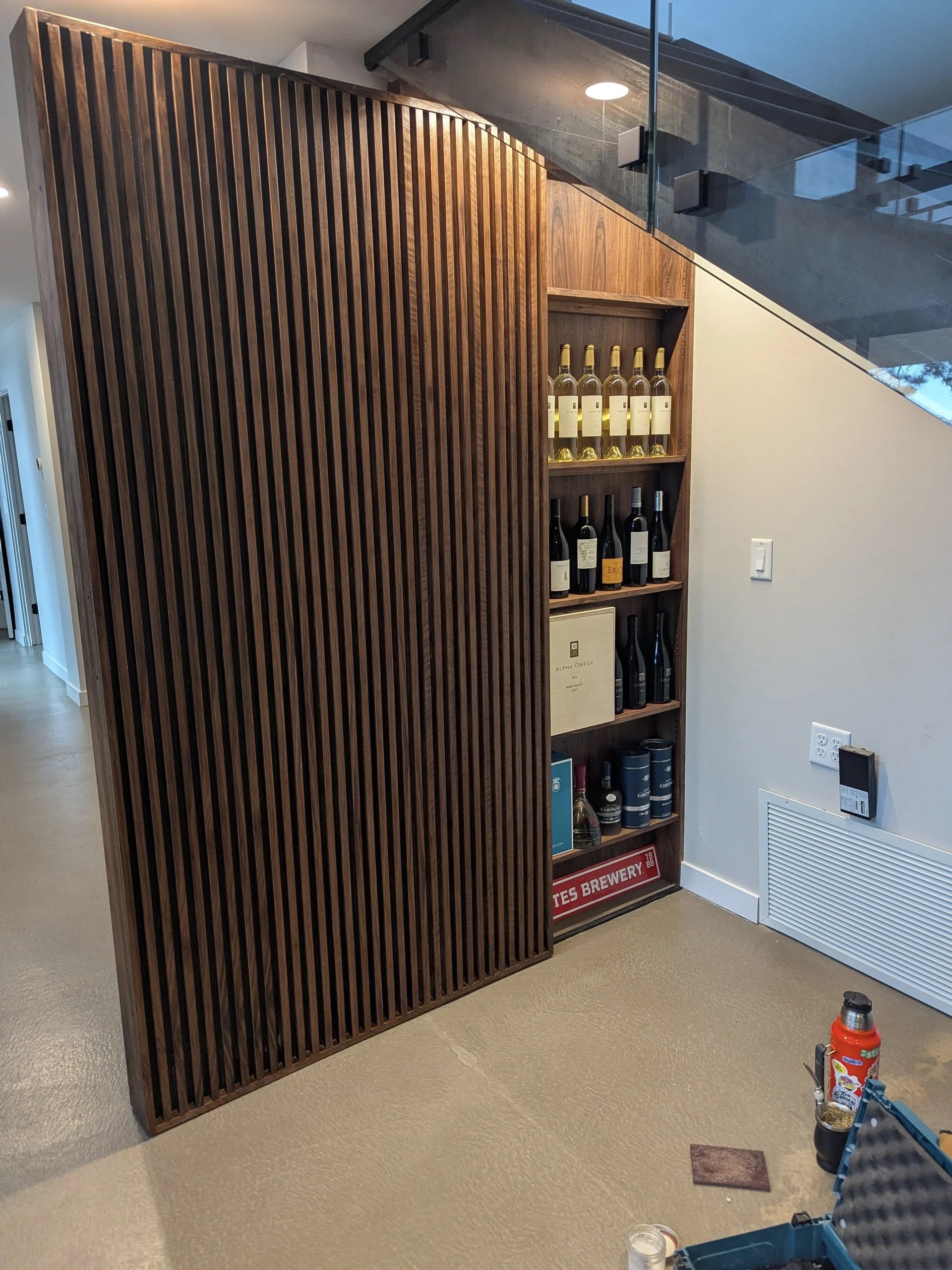
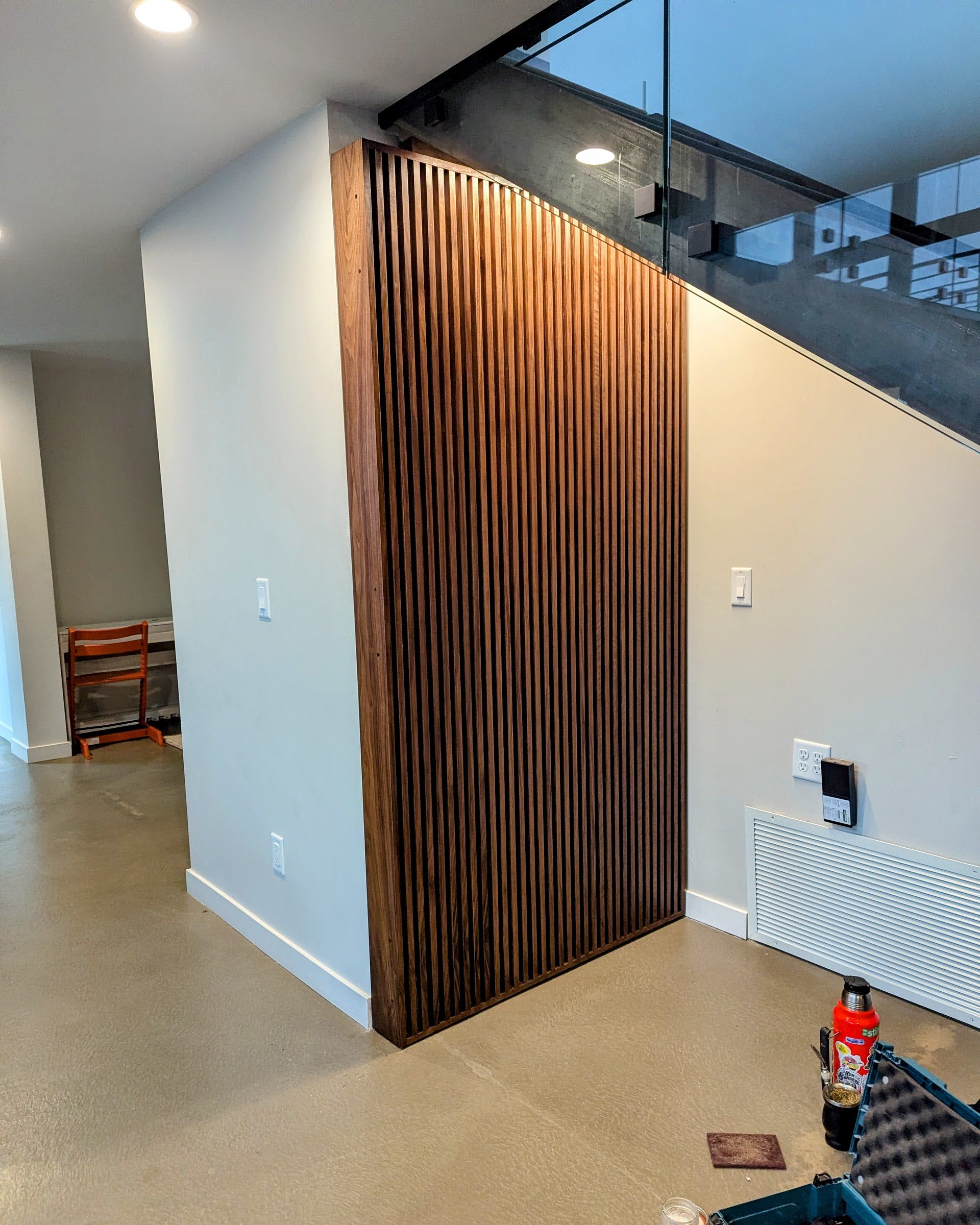
Eduardo wanted to transform the space into a sanctuary for his father’s vinyl collection — hundreds of records accumulated throughout the ’70s and ’80s. The solution: a hidden wine closet behind a 200-pound slatted walnut door, designed as an interplay of mass and void, wood and light.
The original plan included a floating credenza to house the records and a Technics 1200. But Ali and Eduardo decided to move — and they wanted to take the credenza with them. A floating piece can’t travel. So the credenza grew legs and became its own project entirely.
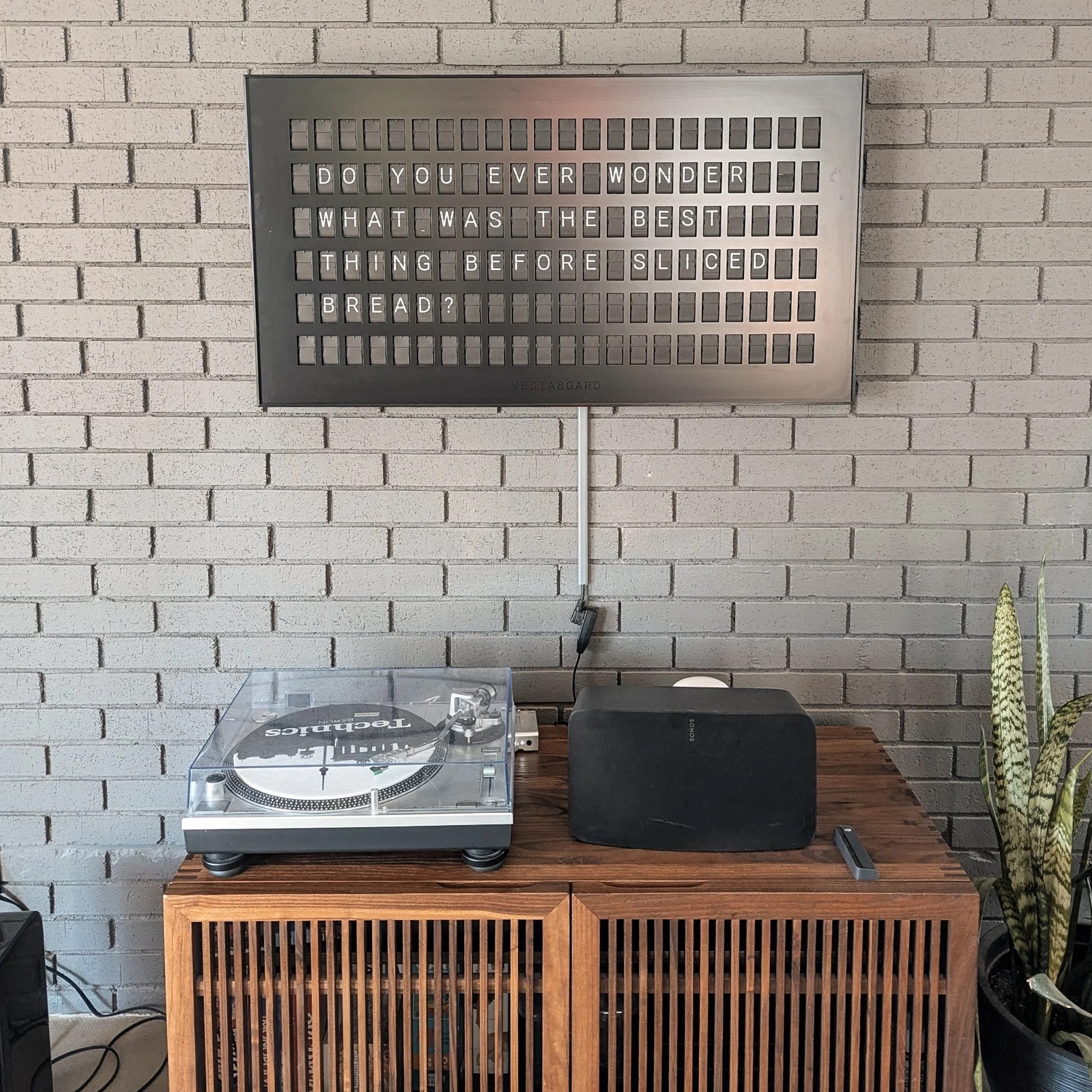
The tiny credenza that started it all — turntable, Vestaboard, and a vision.

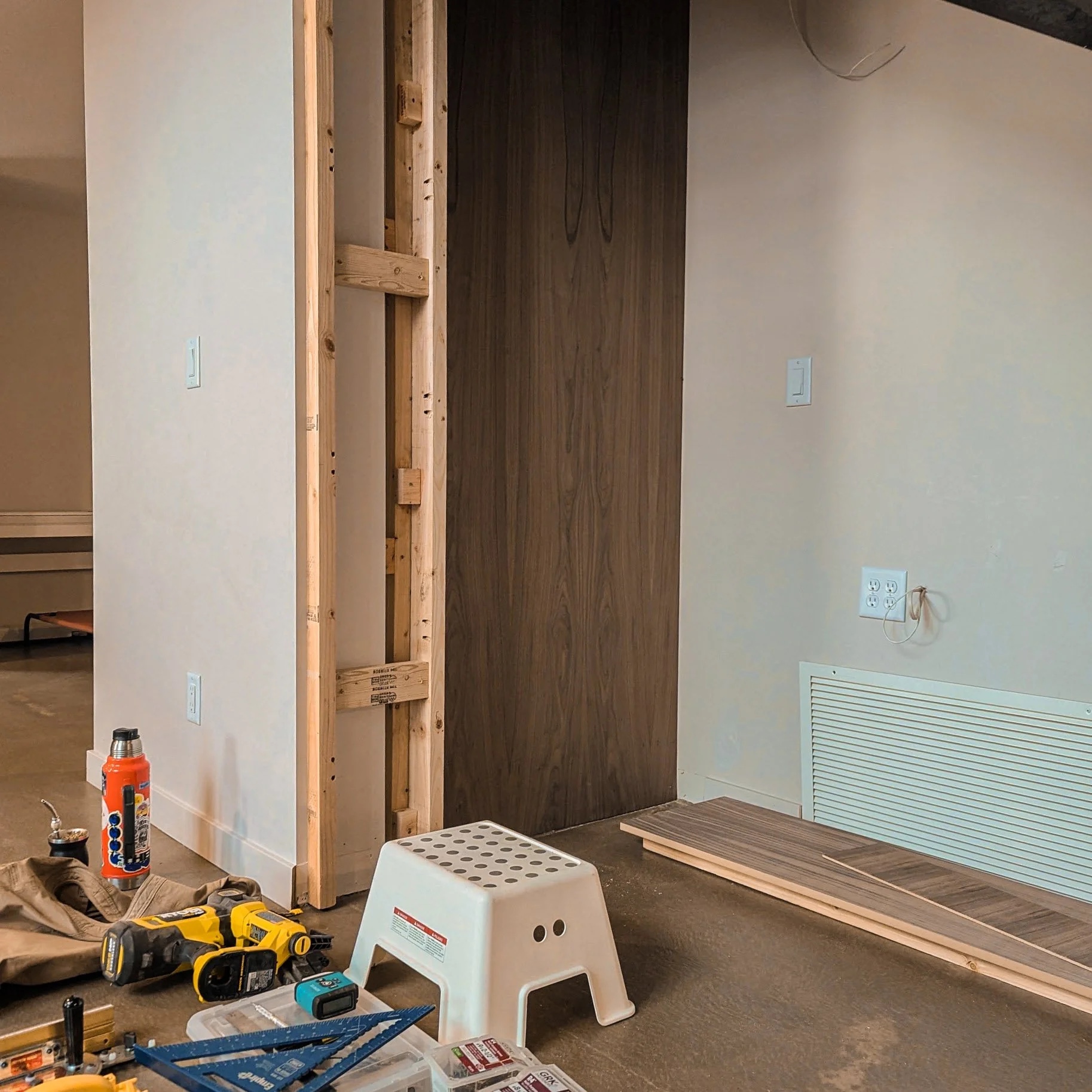
The space before — an awkward alcove with no purpose.
The Design
37 Slats of Walnut
It started with the credenza. I built several versions of the design around that idea — a floating cabinet with slatted doors that echoed the existing piece. The clients identified the slatted motif in early renderings and requested it as a full-height sliding panel concealing the wine closet.
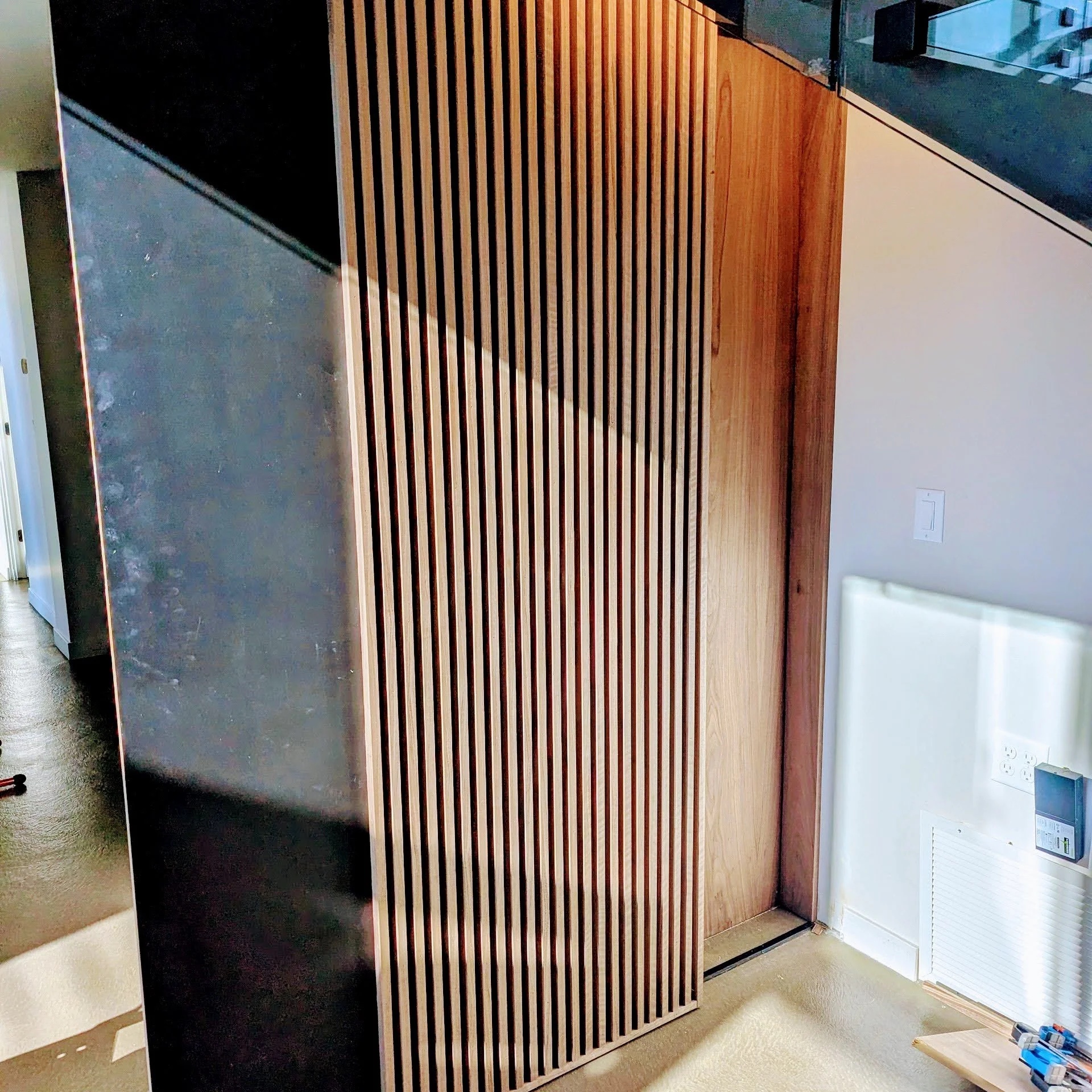
The material spec: 37 slats of solid American walnut, each ¾” × 1″ × 90″, mounted on a Tricorn Black MDF panel. Custom 5-slat spacing jigs ensured consistent gaps across the entire door.
The Engineering
200 Pounds on Skate Wheels
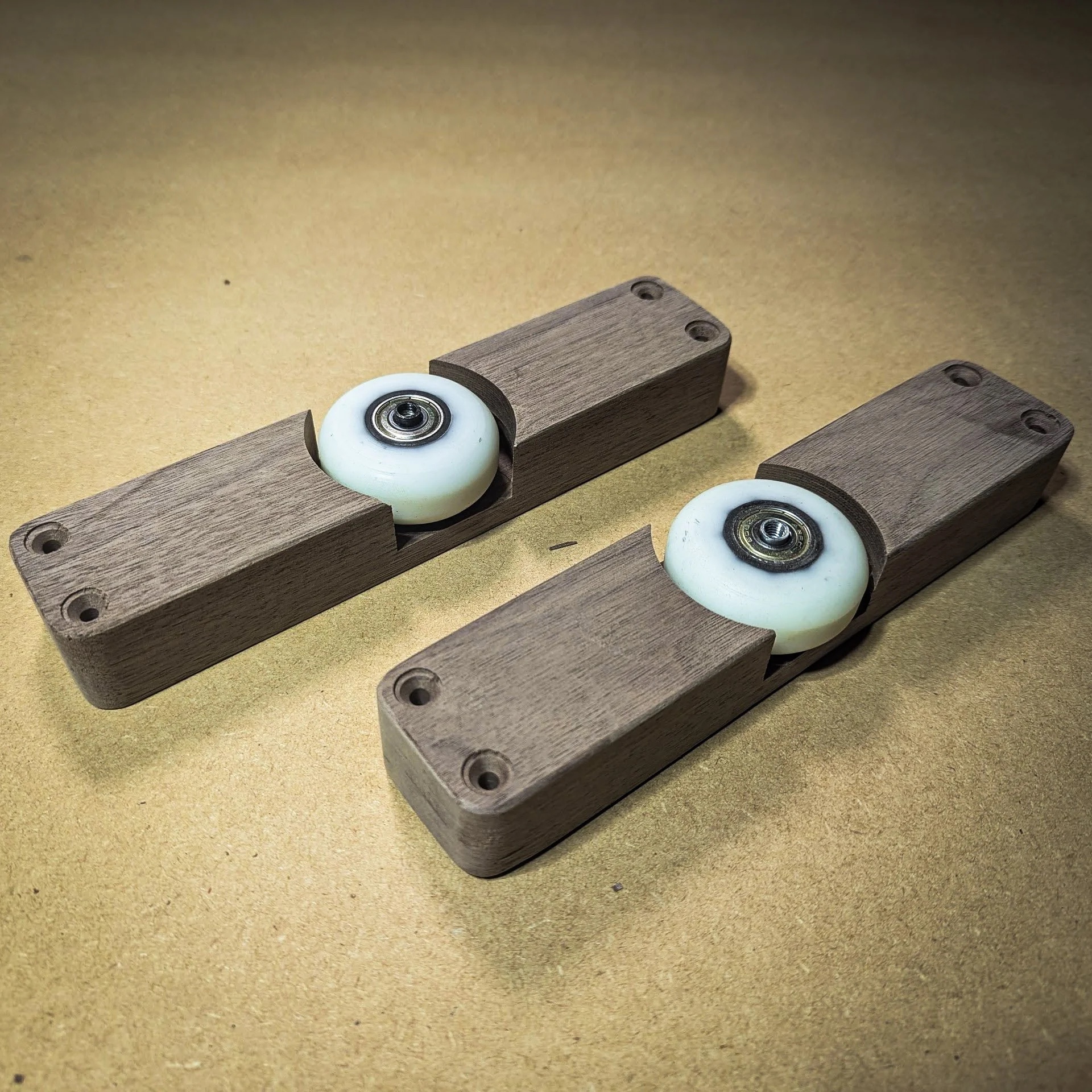
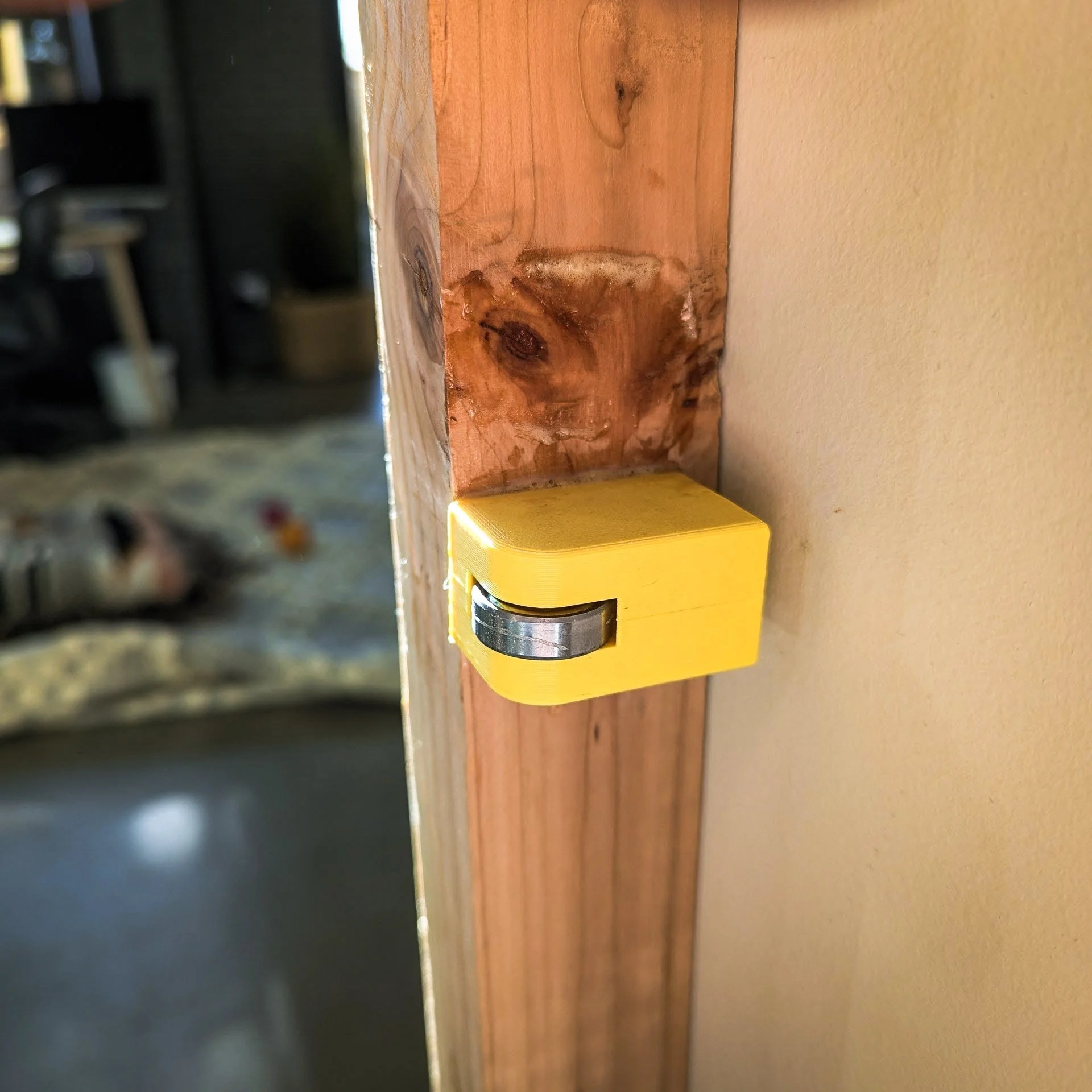
The door weighs 200 pounds. No commercial sliding system could handle it. The solution came from an unexpected place — inline skate wheels. I designed custom walnut mounts that house the wheels with bearings, running along a curved quarter-pipe rail at the bottom. A commercial rail at the top handles the hang and alignment.
The “crooked” rail runs smooth. The straight one didn’t. Reality versus theory — OCD lives in theory; the workshop lives in reality. I 3D-printed prototypes of the bearing mounts before committing to walnut. The final system glides the 200-pound door with one finger.
The Build
One Slat at a Time
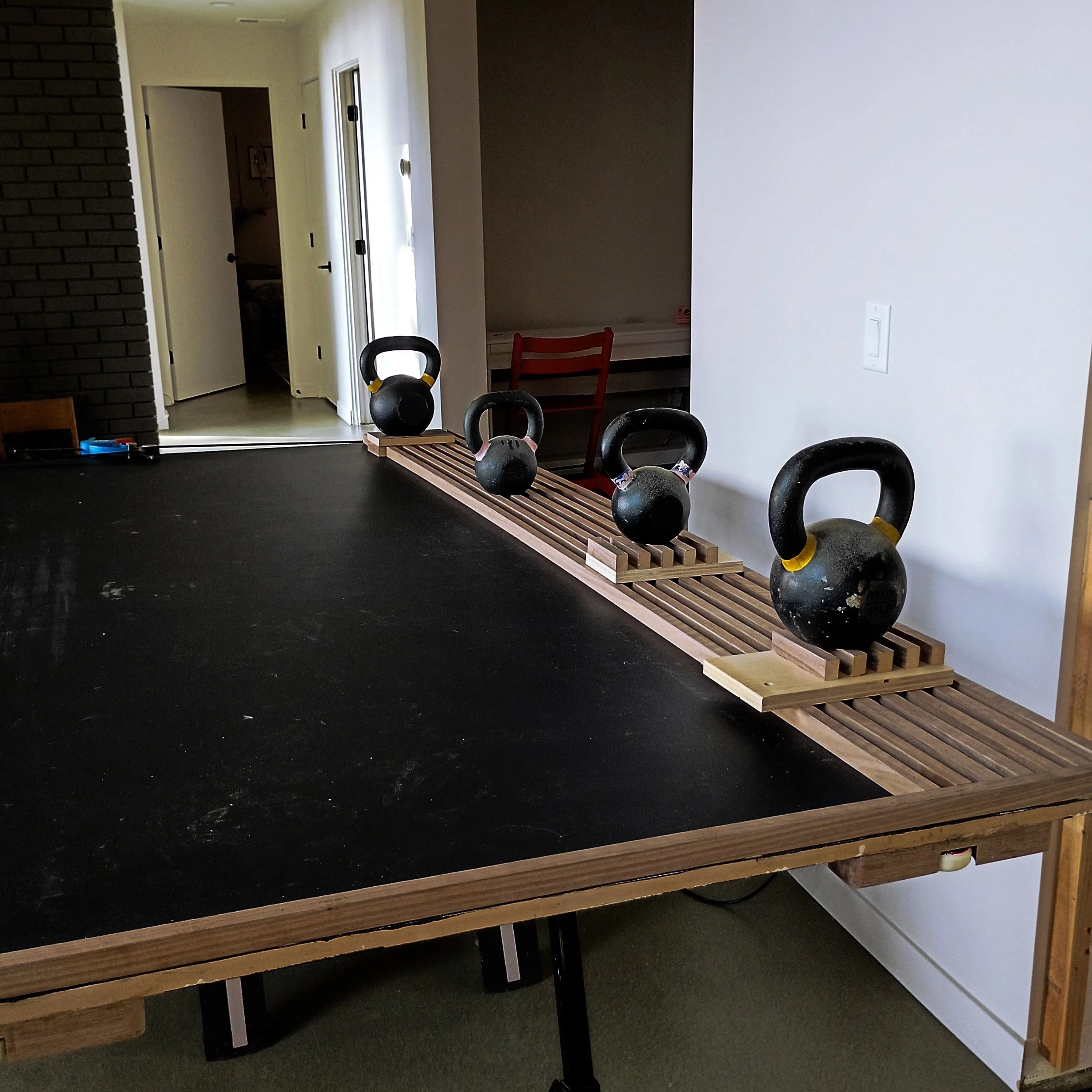
This was a job of patience. Pine framing bolted to drywall. MDF panel foundation with gravity-applied glue — kettlebells doing the clamping. Then one slat at a time, careful spacing with the custom jigs, building the door flat before hanging it.
The drywall was slightly out of plumb. The MDF absorbed paint differently than expected. The wood glue had its own ideas about consistency. But the full door weight tested successfully on the first hang. Simplify, simplify, simplify — that became the mantra. Strip the rail system to essentials. Oil plus beeswax instead of three sophisticated products. Let the walnut speak for itself.

The Reveal
Mass and Void
The door slides open and the wine closet appears behind it — bottles lit from above, walnut shelving, the whole thing glowing through the slat gaps like a lantern. Slide it closed and it becomes a wall of wood and shadow, 37 lines of walnut catching whatever light the room offers.
Once I embraced simplicity, the project flowed. And by the end, I didn’t want the door to be done.
Specifications
The Details