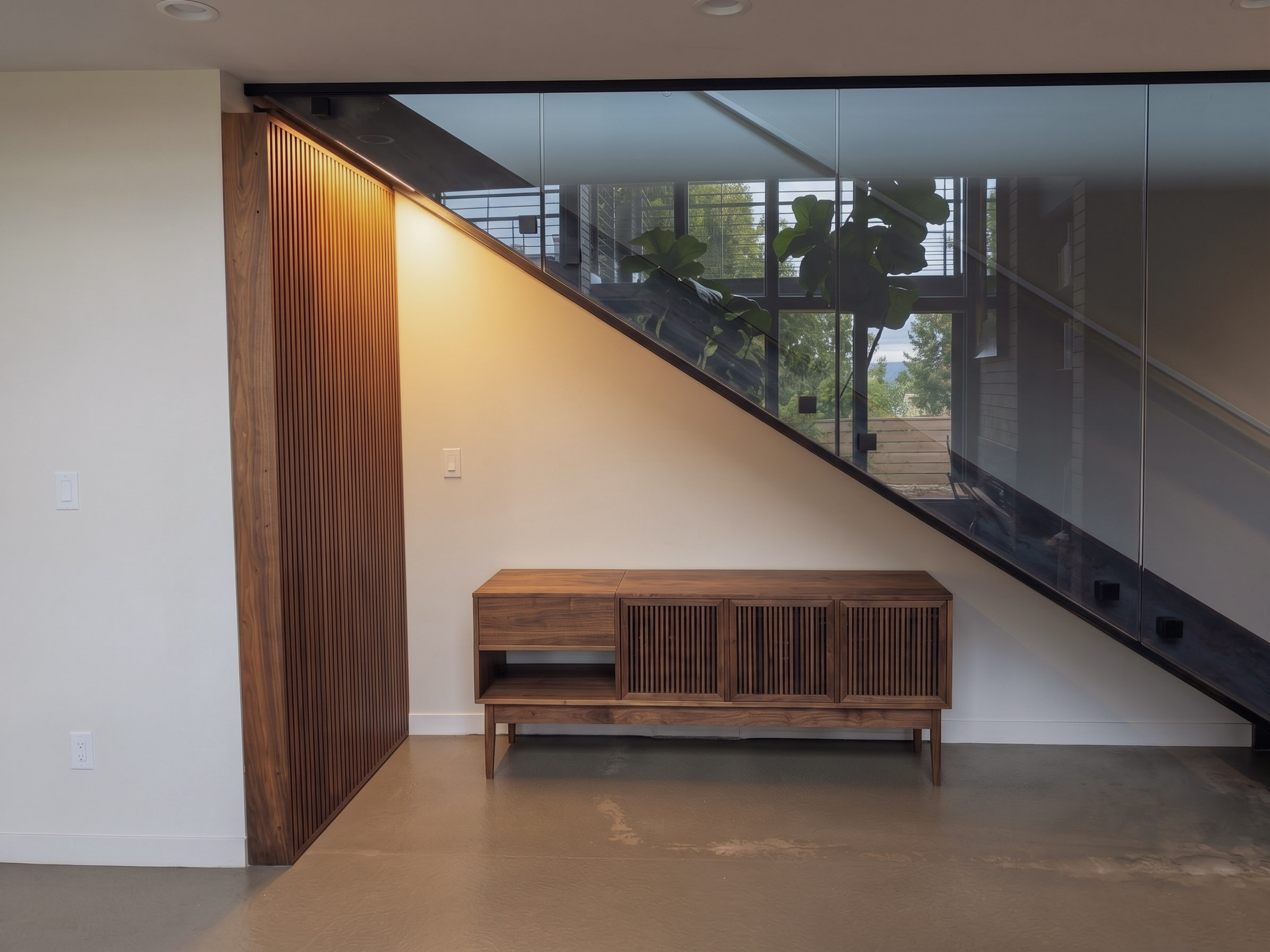
American Walnut · Tapered Legs · Technics 1200
Las Patas
The Commission
A Piece That Travels
This credenza was born as Phase 2 of The Nook — a floating wall-mounted record console designed to live under a staircase in Ali and Eduardo’s Salt Lake City home. The plan: slatted walnut doors, a turntable bay with a flip-top, three sliding record drawers, and invisible hardware. A continuation of the slatted door’s DNA.
Then Ali and Eduardo decided to move.
A floating piece can’t travel. It’s bolted to studs, married to a wall. So they called and said: we need legs. And just like that, the credenza stopped being an installation and became a piece of furniture — something that lives on its own, goes where they go.
It grew legs. Las Patas.
The Design
Mid-Century Soul
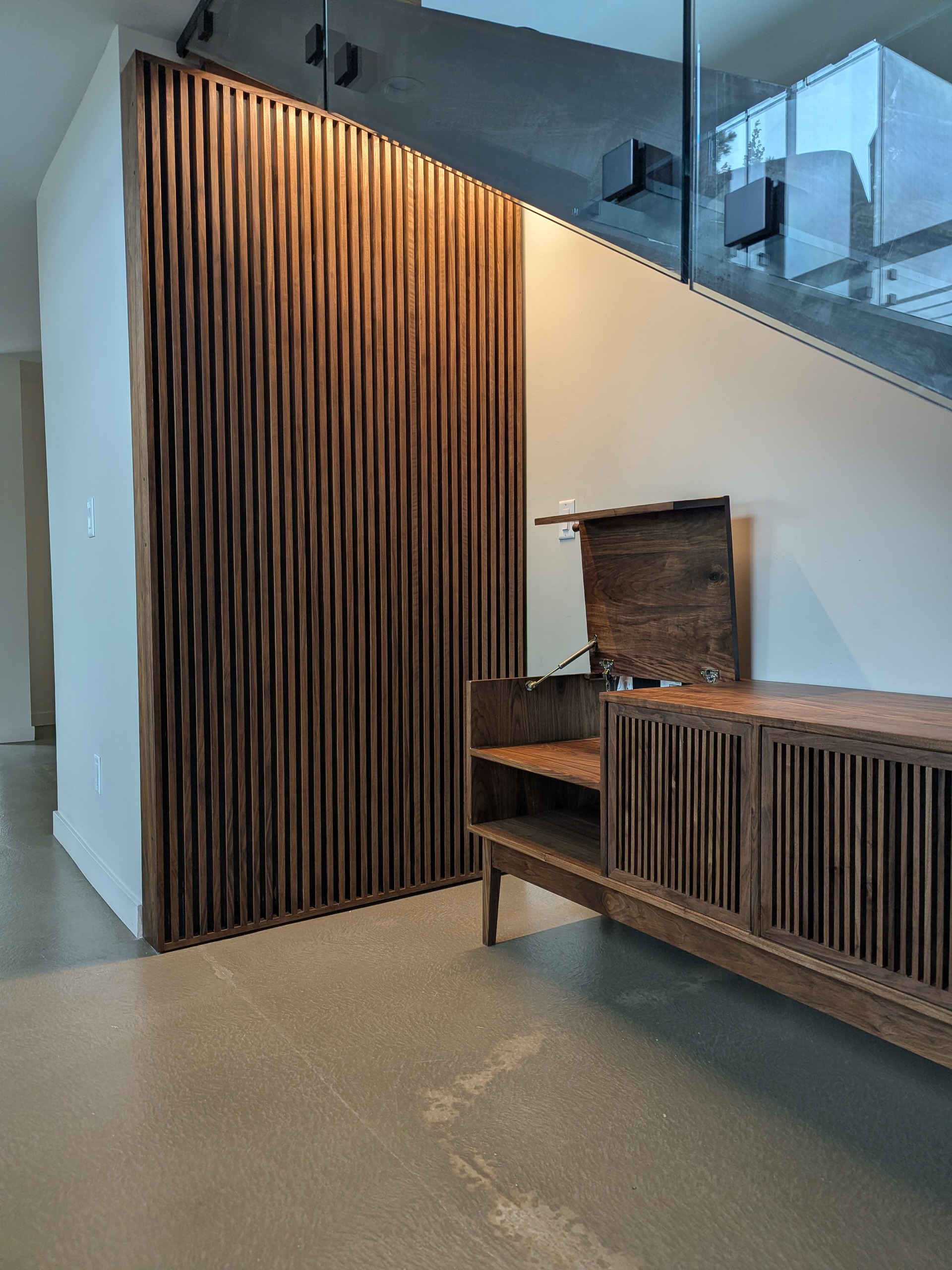
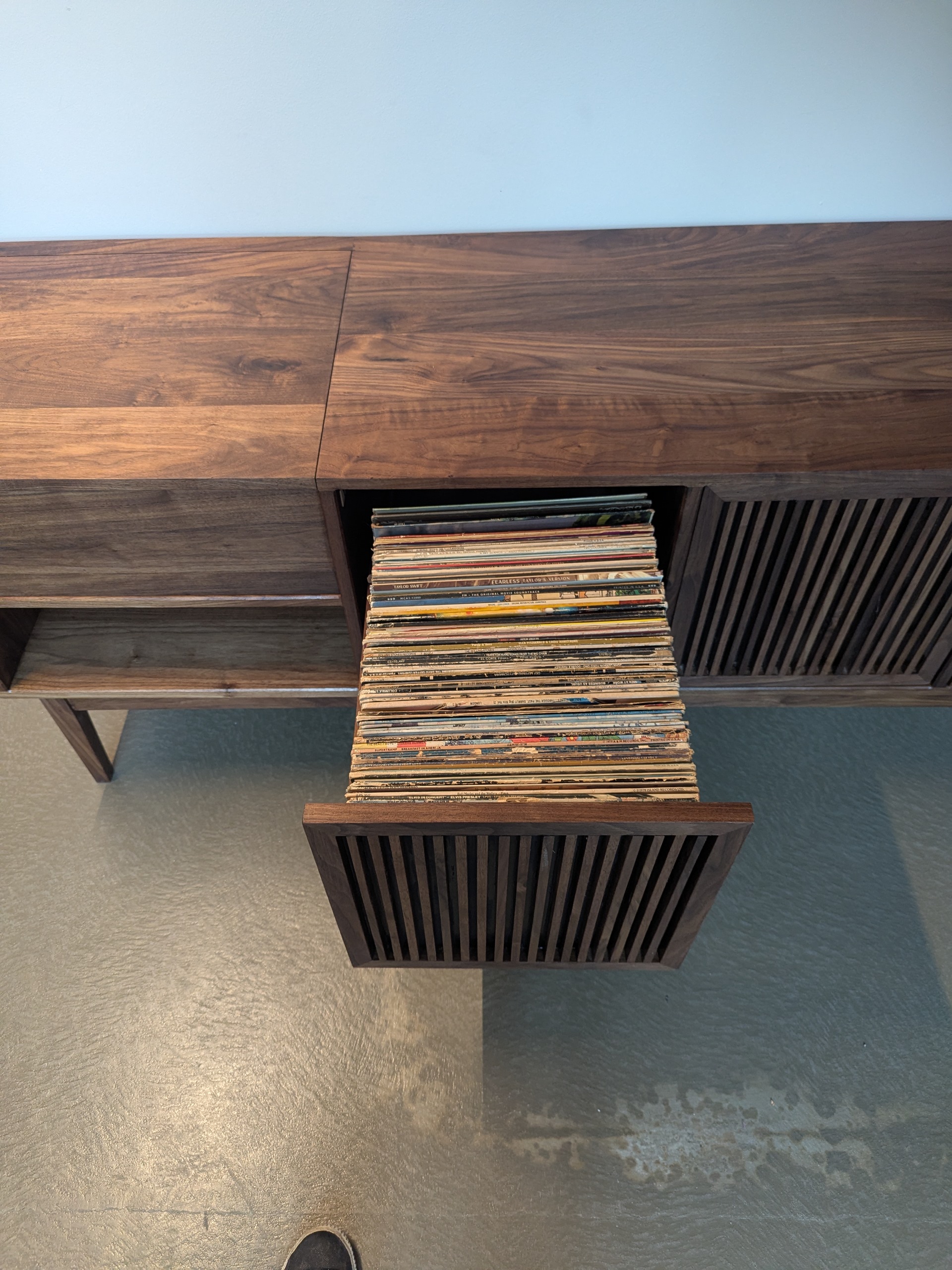
The design language carries over from The Nook — slatted door fronts, walnut throughout, minimalist lines. But now the piece stands on its own. Tapered legs give it that mid-century posture. The turntable bay opens upward on gas struts, revealing the Technics 1200. Three sliding record drawers hold the collection. An electronics drawer hides the amp and preamp.
68 ¾ inches of walnut, built to hold a lifetime of vinyl and the memory of the space where it was born.
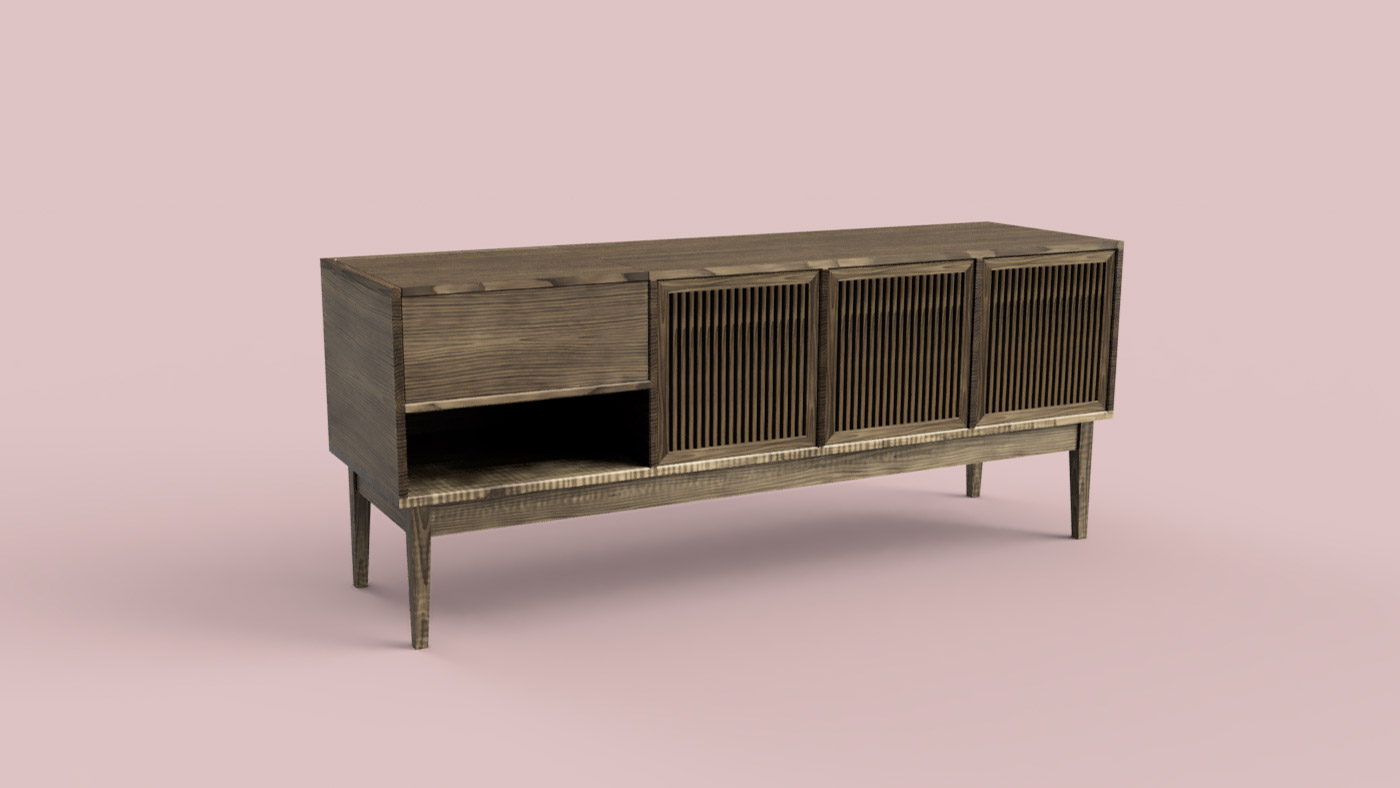
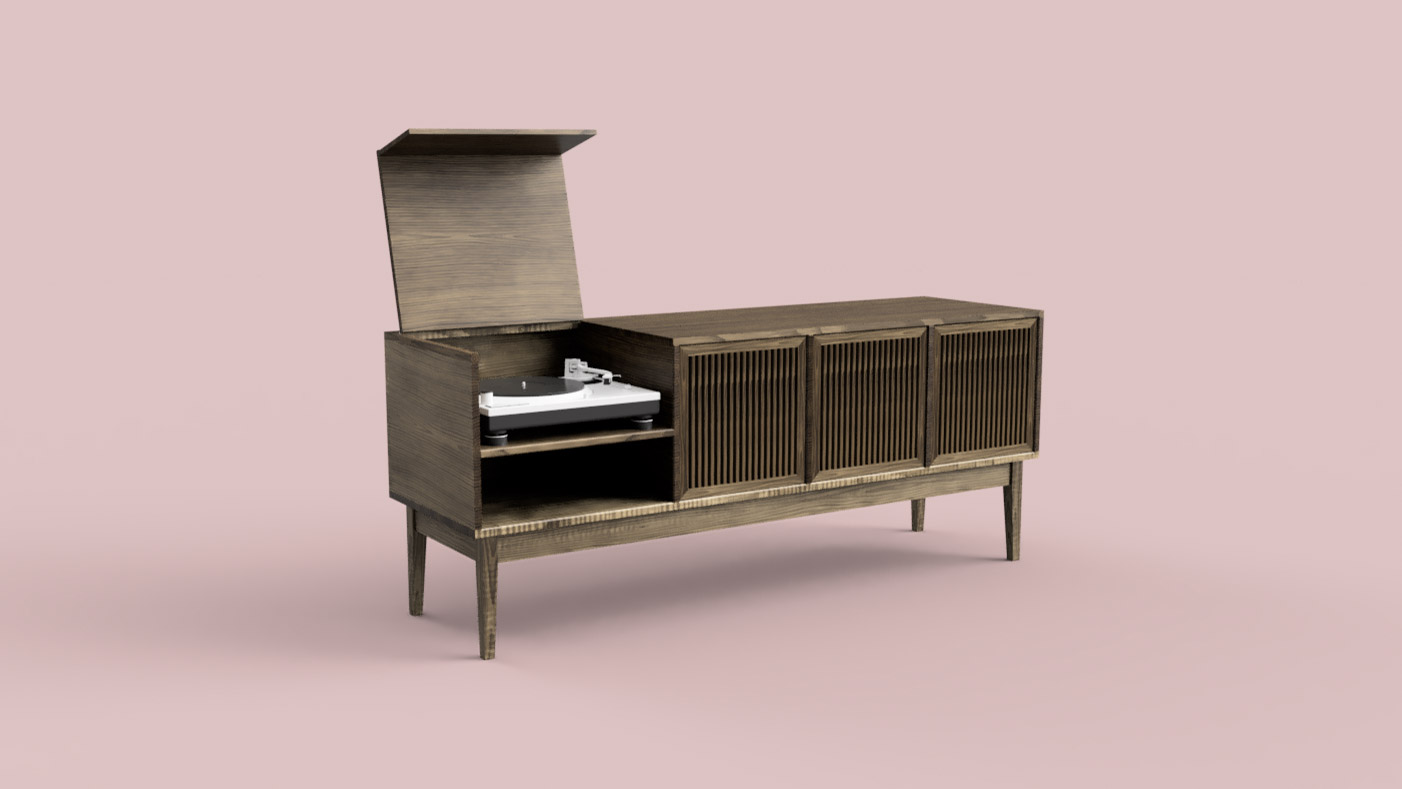
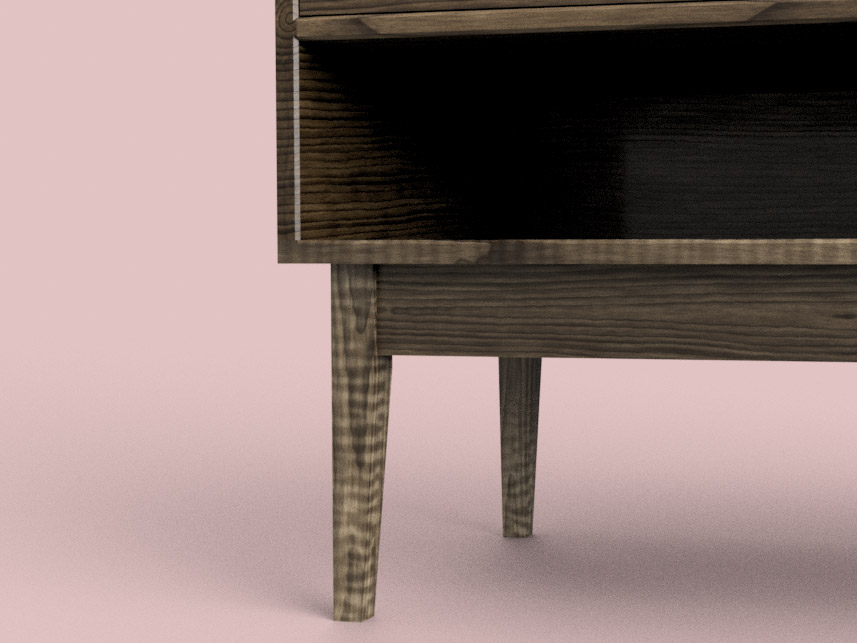
Las Patas — the legs that changed the project.
The Build
Glue, Dowels & a Prayer
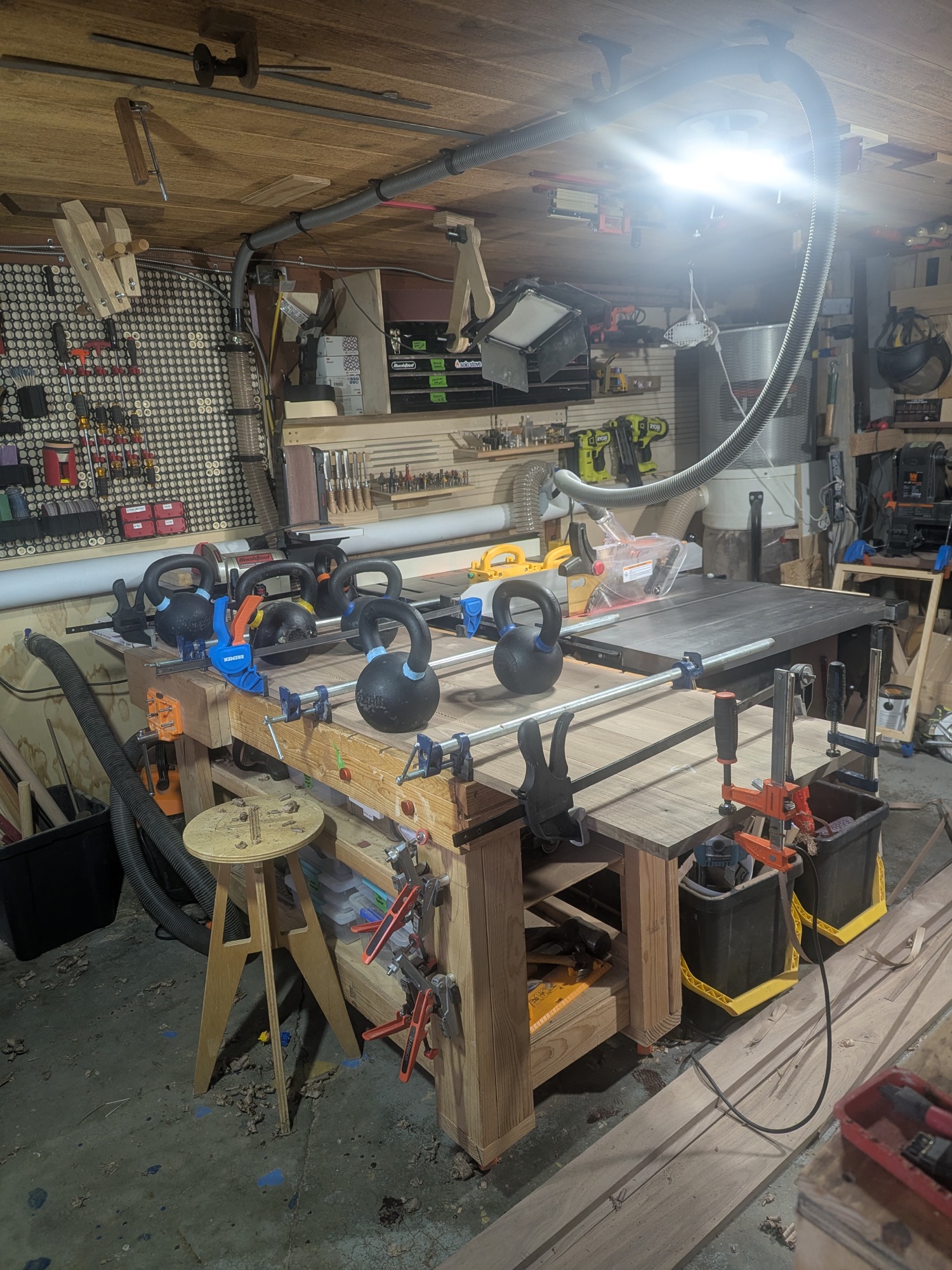
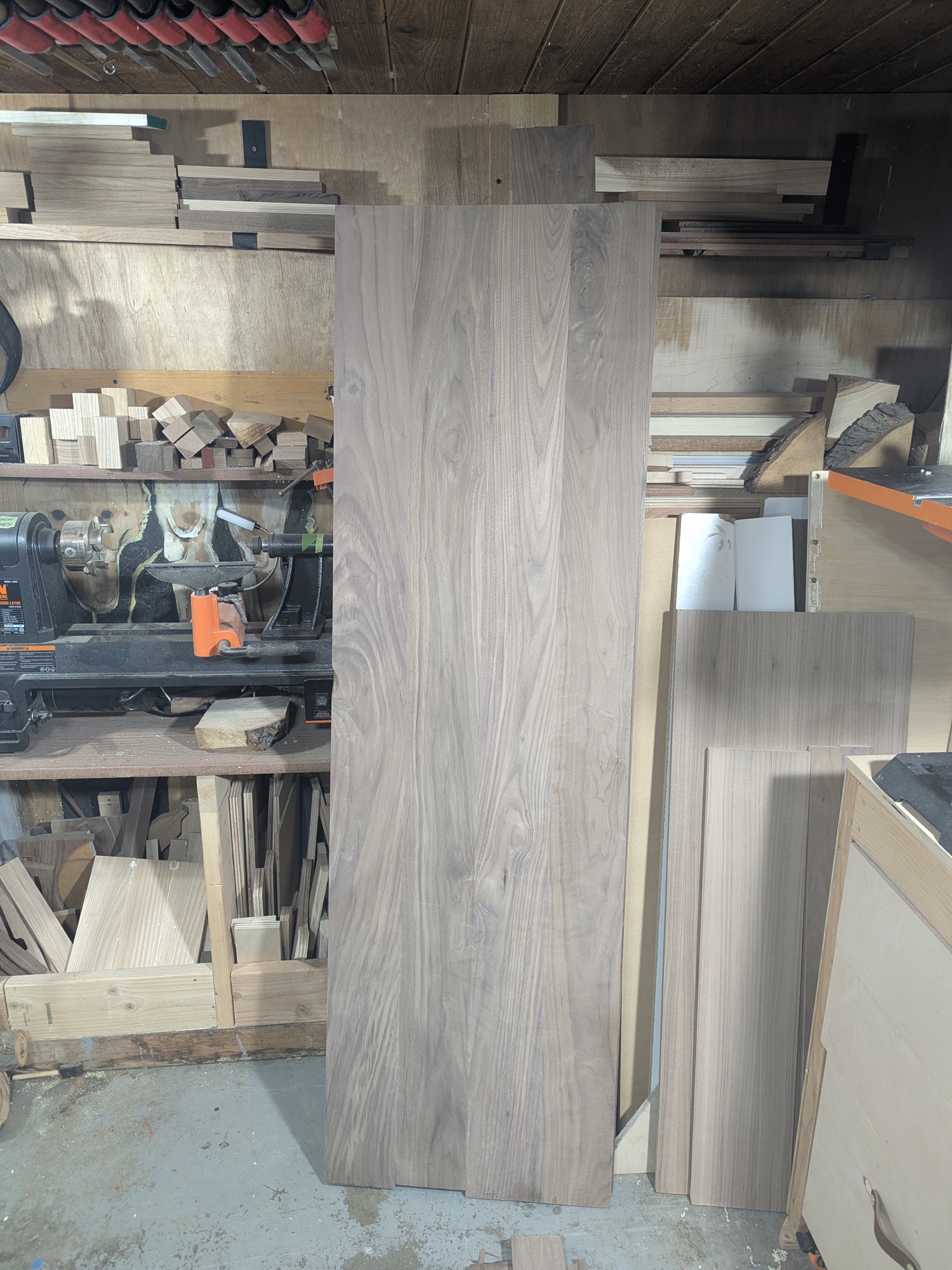
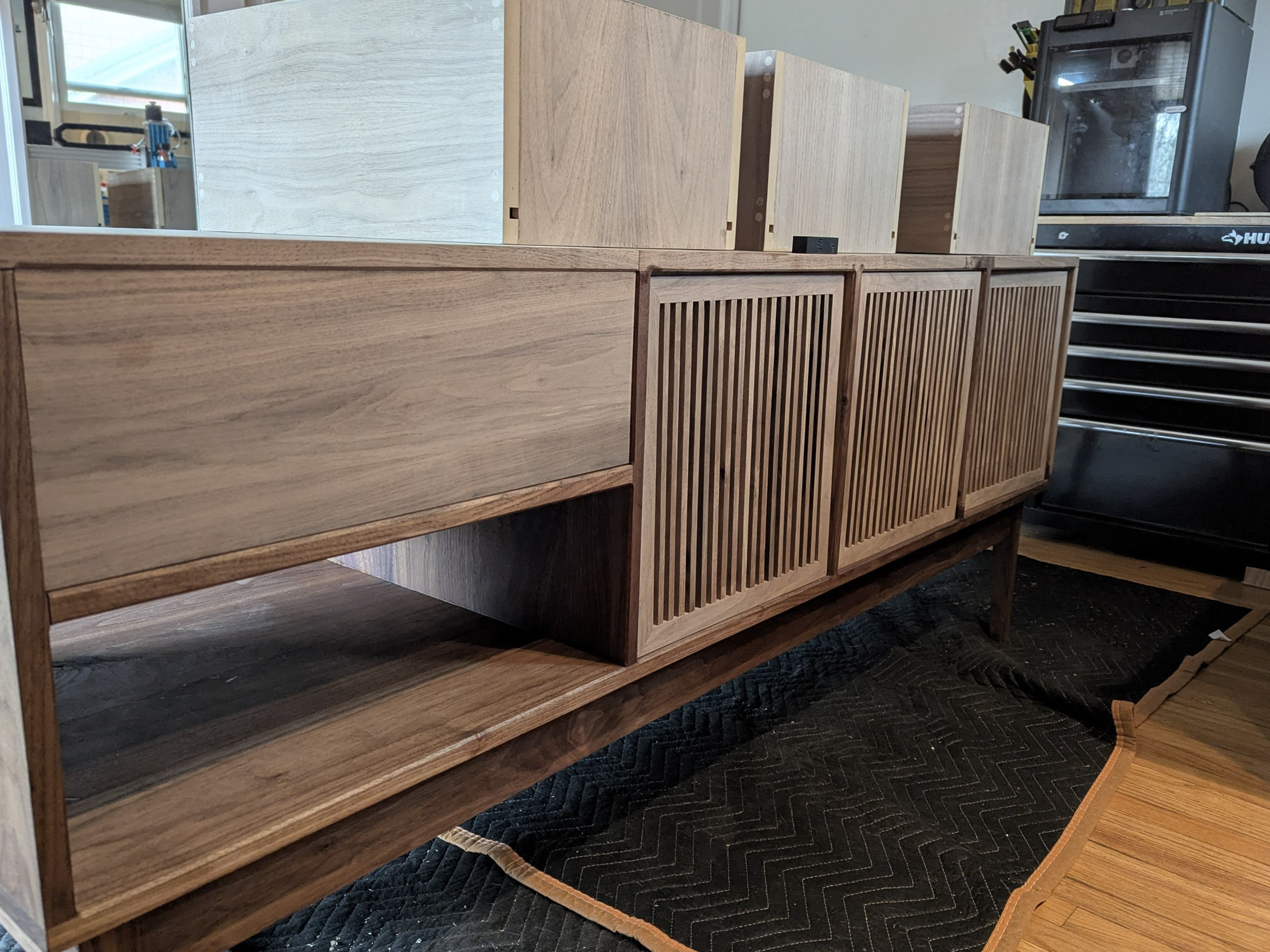
118 linear feet of walnut S4S, shared with another project. Every panel is a glue-up of four strips of 1×6, clamped with bar clamps and weighted with kettlebells. The grain was picked with intention — even at the raw stage, you can see the figure coming through.
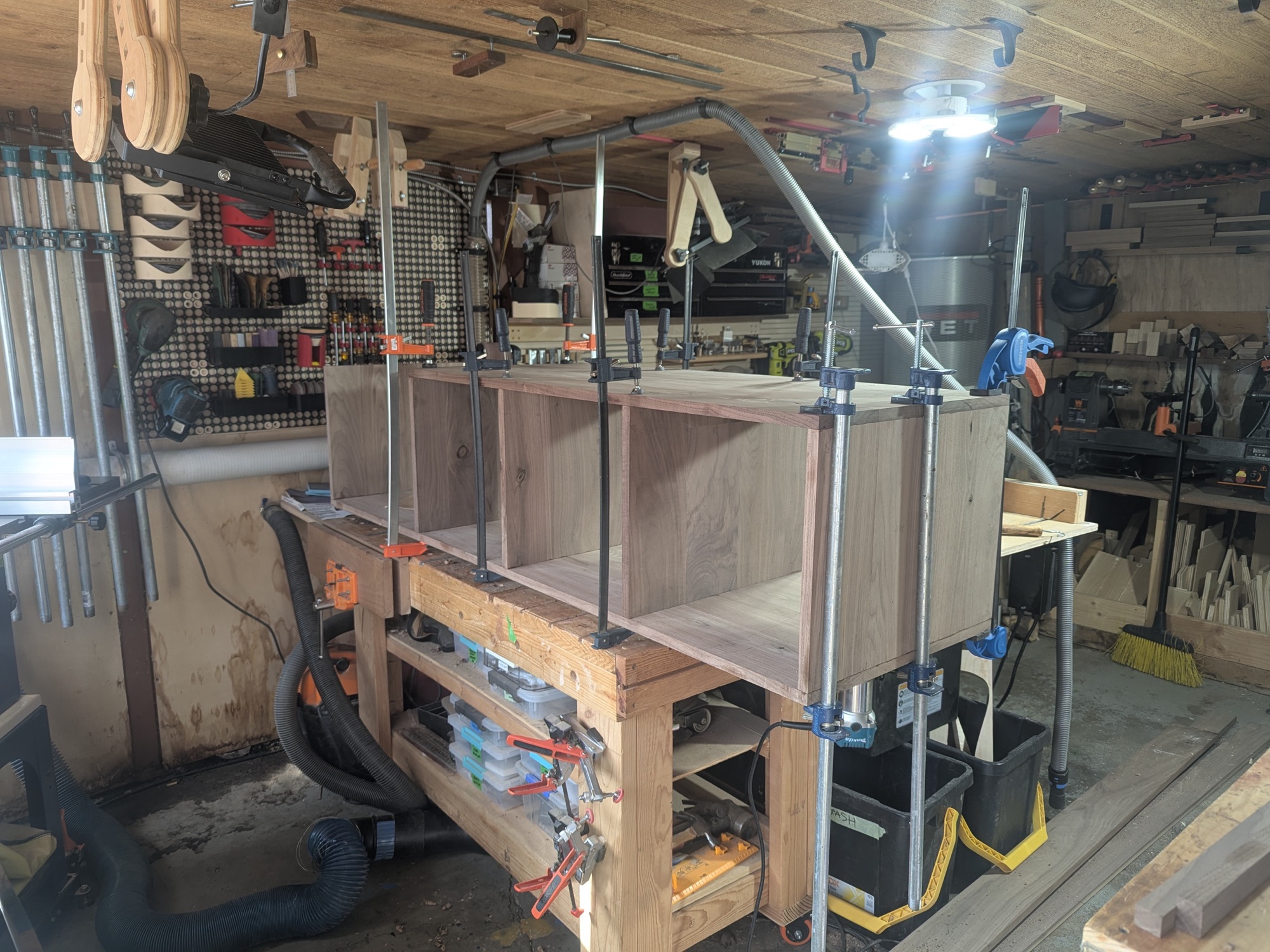
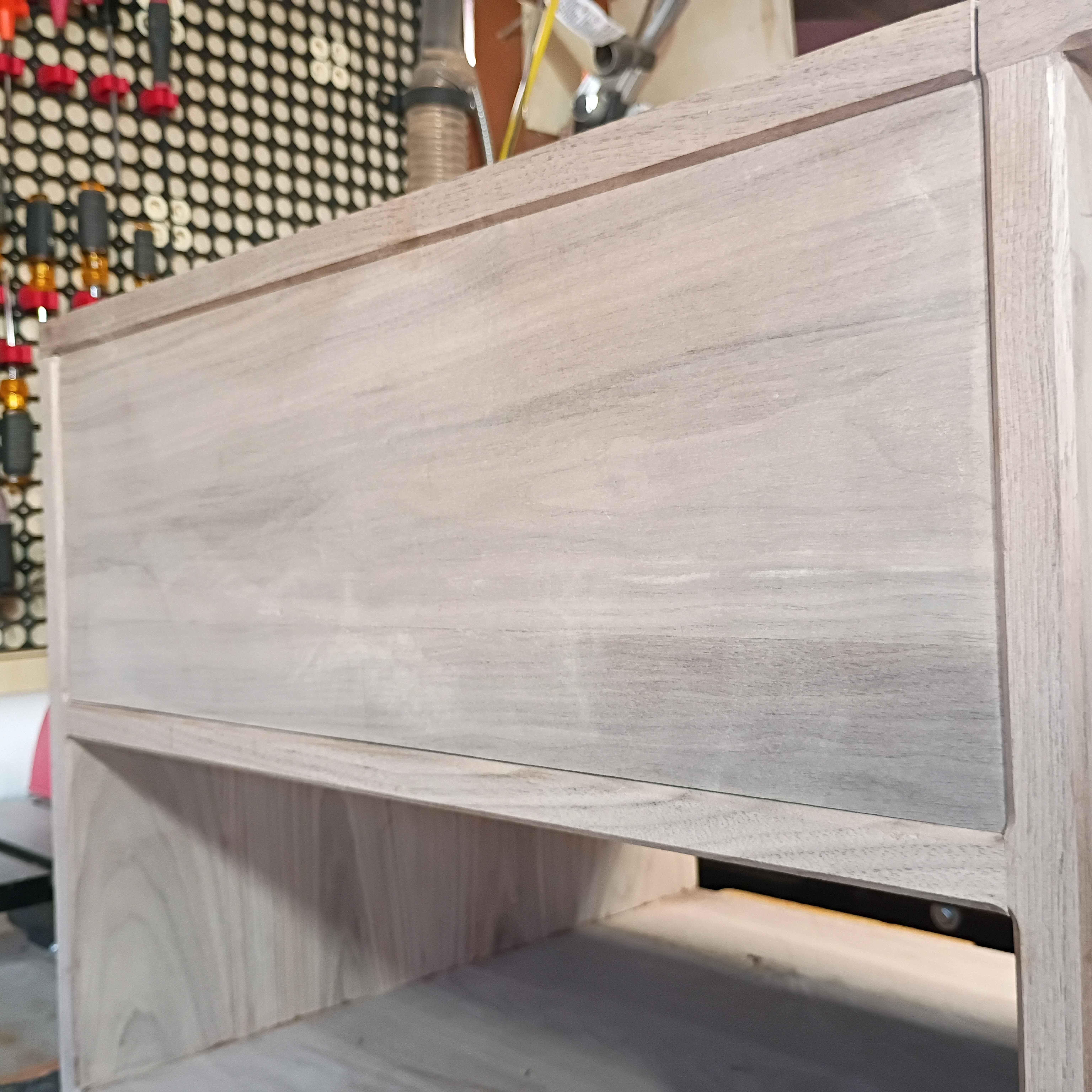
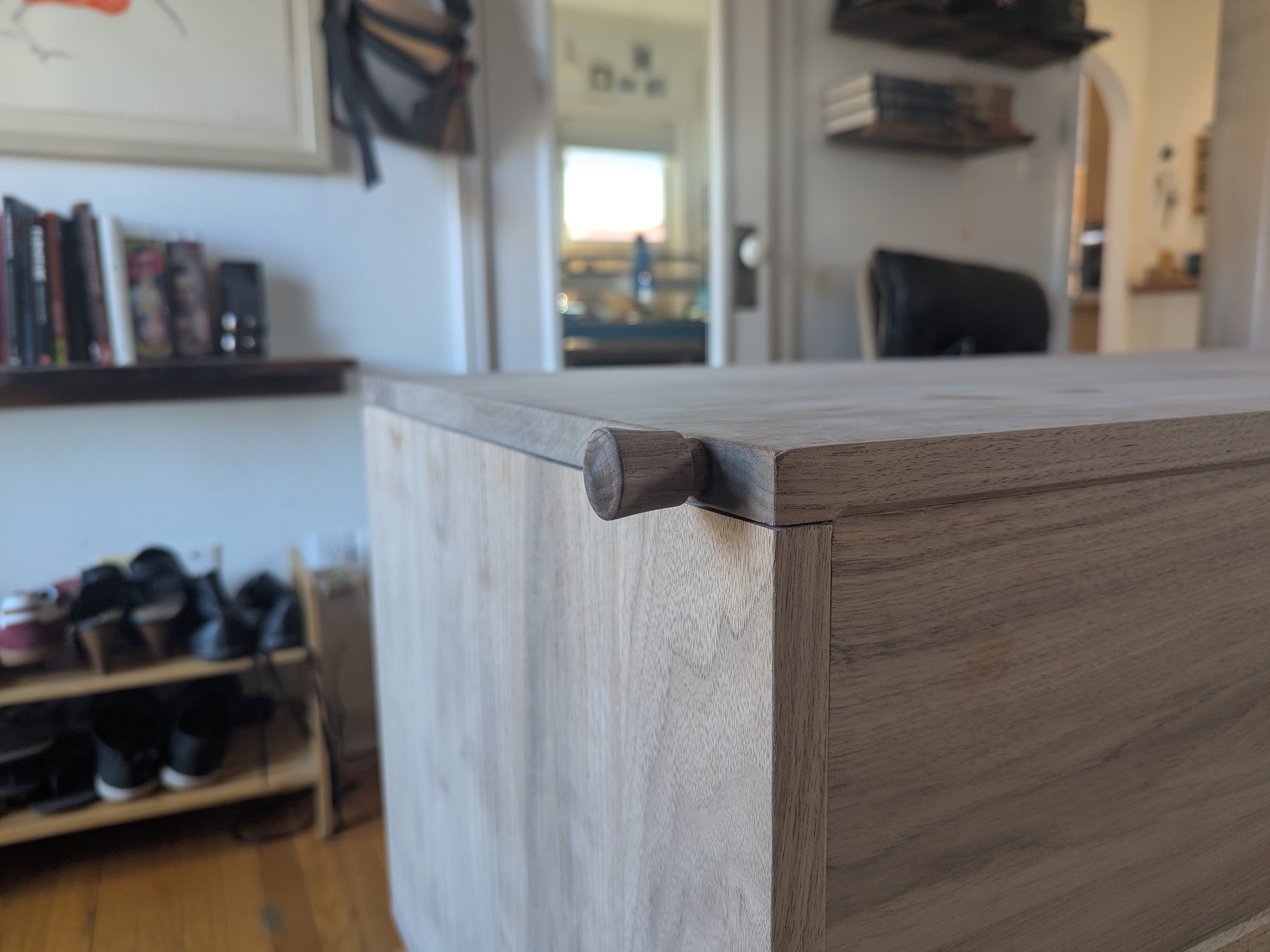
The carcass is glued and doweled. See-through walnut dowels at every joint. No back panel — the wall was supposed to be the back, but now the piece stands free. The turntable compartment gets a quarter-inch walnut plywood back for cable management.
The Reveal
Sibling Reveal
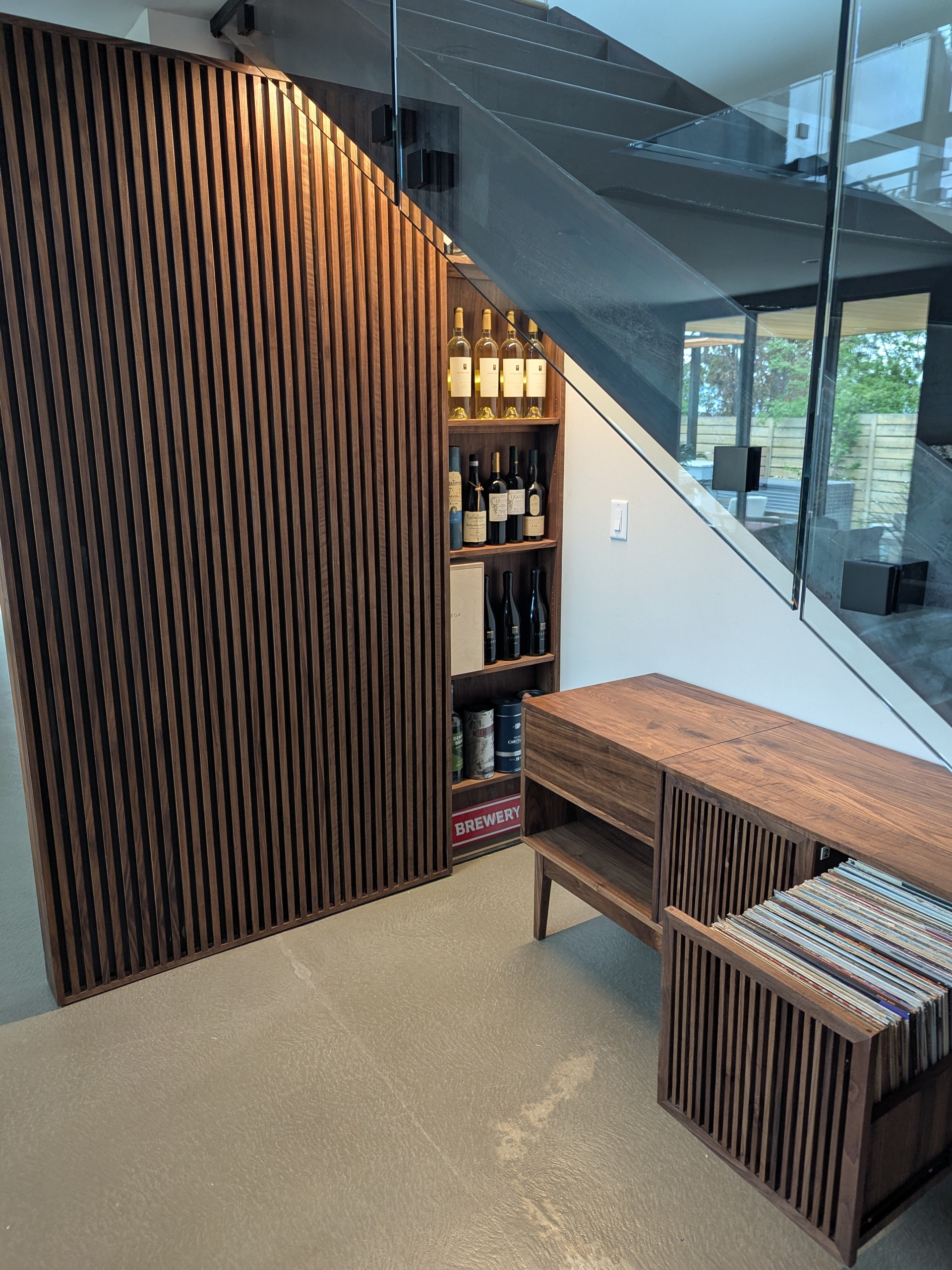
Delivered Las Patas today — two months after The Nook’s door went in. For the first time, the two pieces are in the same room.
Ali and Eduardo are moving soon. The door stays. The credenza travels. That was the whole point of giving it legs — a floating piece can’t go with you, a standing piece can.
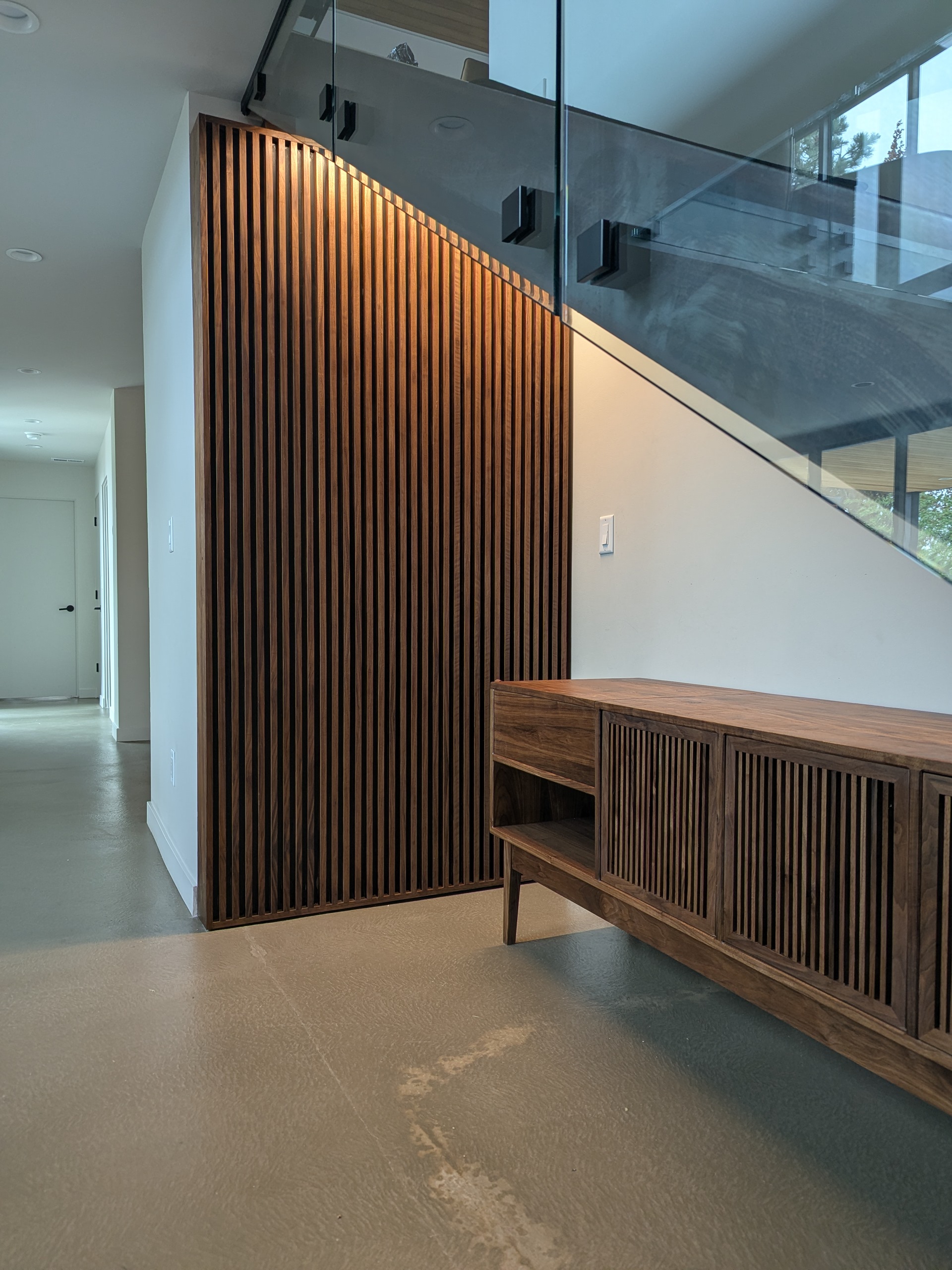
The Technics 1200 bay with the flip-top and el botoncito works like a dream. Gas strut glides, lid clicks, the lip guides your hand. Three slatted doors for vinyl. Tapered legs underneath. Bookmatched grain where it mattered. Eduardo loaded his father’s vinyl collection into the drawers right there on the floor. The wine closet opened behind the slats. Both pieces doing what they were built for, at once.
Delivered. Standing tall. Exactly where it belongs.
And a project like this teaches things. Two stick with me.
Simpler is better. Simple magnifies. A quiet surface lets the grain speak. Every time I wanted to add something — a detail, a flourish, an ornament — the piece got worse. The best moves were subtractions.
Problems are the project. If you see unforeseen things as obstacles — as disruptions to your imaginary plan — everything becomes stressful. You’re trying to avoid reality. But if you realize that problems, mistakes, and surprises are the job — that they are what you’re doing — everything softens. Nothing is at stake. You flow.
Simplify. Expect things to fail. Keep a prototype mind every step of the way. Stay adventurous.
This was one of the most enjoyable builds I’ve done. My skill went up, and that part is fun to watch.
Cin cin.
Now — rest.
Labore et constantia.
Specifications
The Details