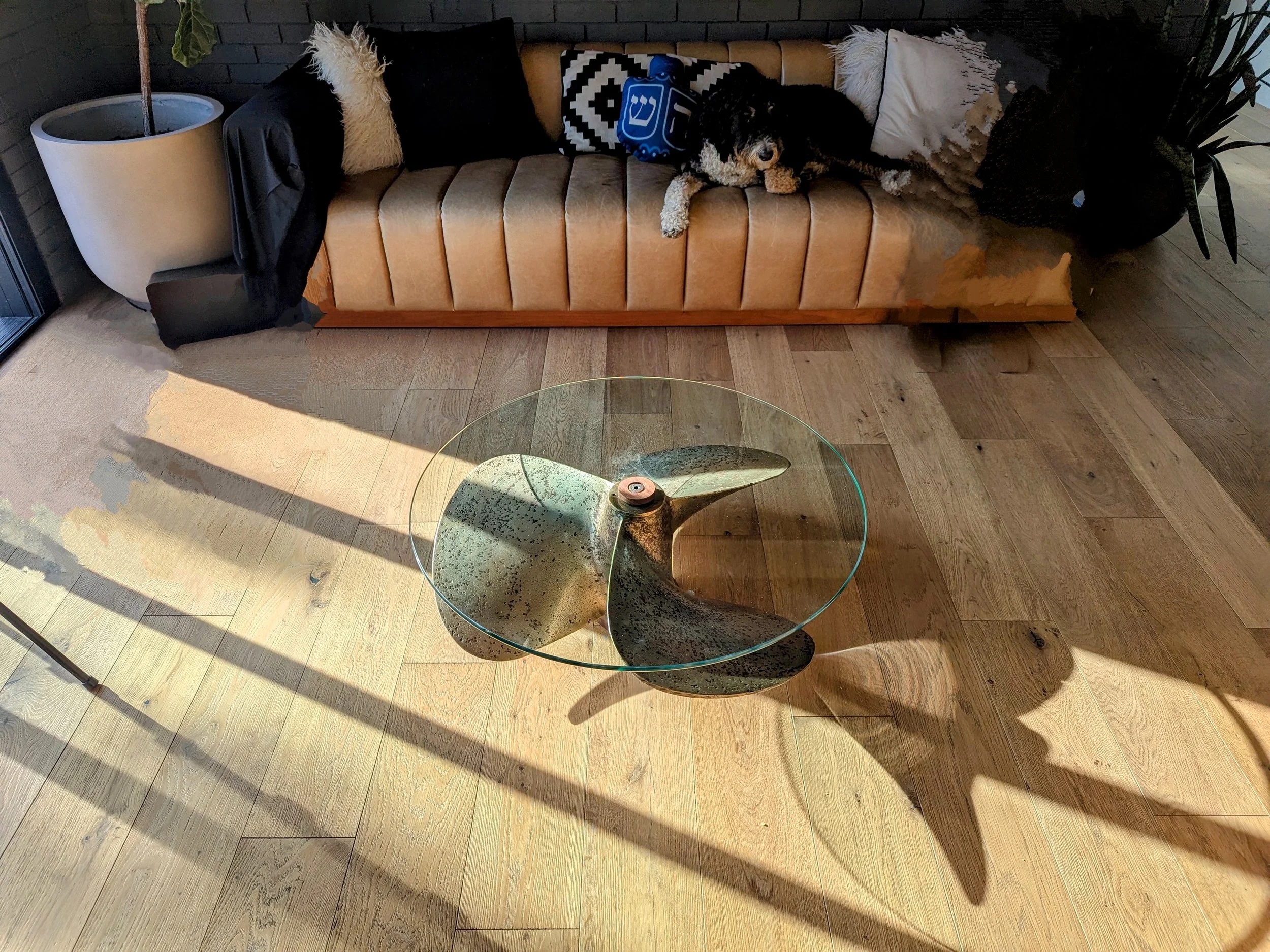
La Propela
A Venezuelan ferry propeller reborn as a coffee table
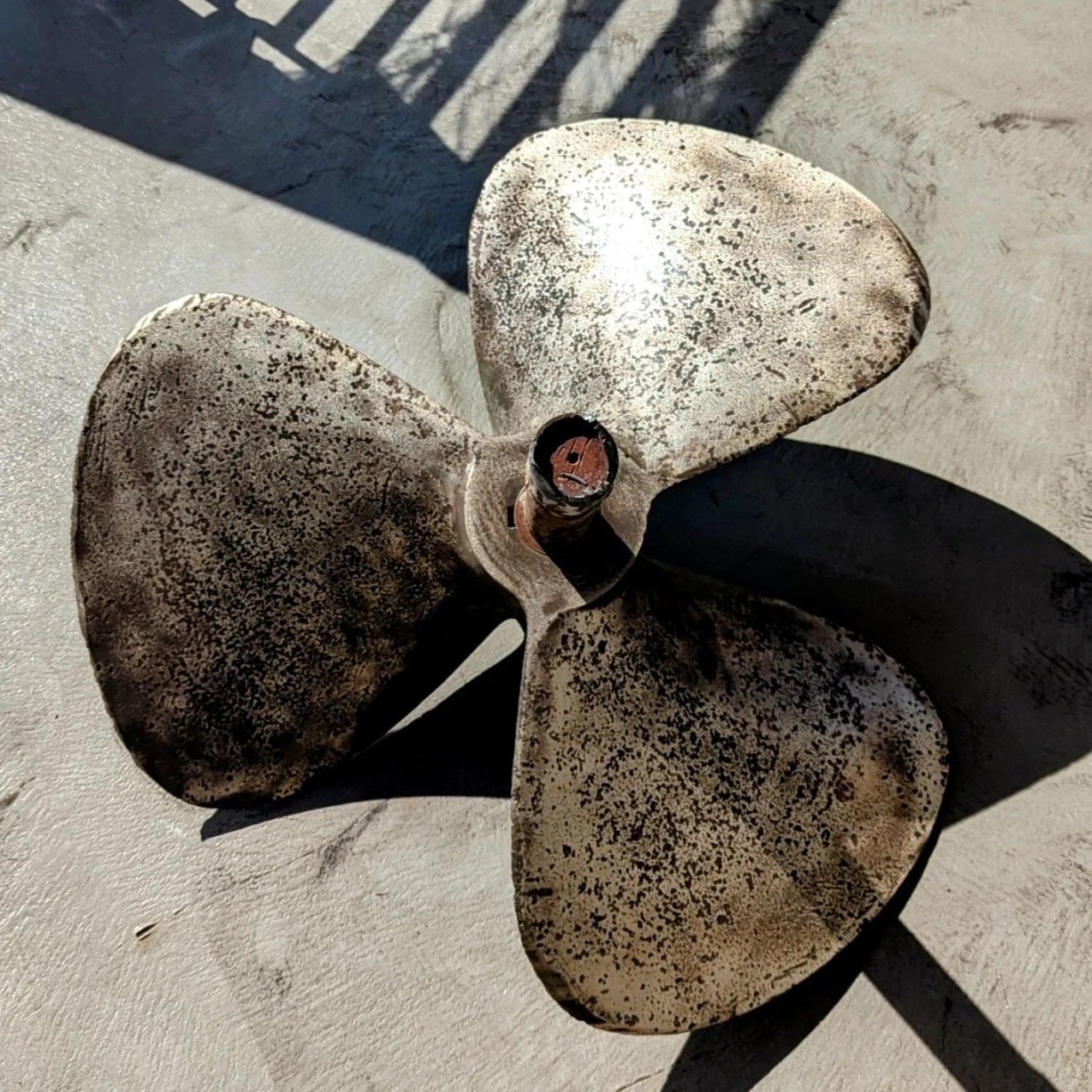
This propeller spent decades pushing a ferry that carried trucks across the Orinoco River in Venezuela. When the ferry was decommissioned, Eduardo’s father saw its potential and claimed it. It has been a cherished part of Eduardo’s family ever since — a symbol of resilience and heritage that somehow made its way thousands of miles north to Salt Lake City.
Eduardo wanted this piece to take on new life. Not as a relic behind glass, but as something you could gather around. Something that would anchor a living room the way it once anchored a hull.
The commission was clear: turn this into a table worthy of the journey it already made.
The propeller dictated the design. Three blades, asymmetric by nature, each one with a different pitch and personality. The challenge wasn’t imposing a shape — it was listening to the one already there.
A round glass top would let the blades speak without framing them into a geometry they’d resist. The base needed to elevate the propeller just enough to read as a table, not a pedestal. And every detail — the walnut base, the custom nut — had to feel like it belonged to the propeller, not bolted onto it.
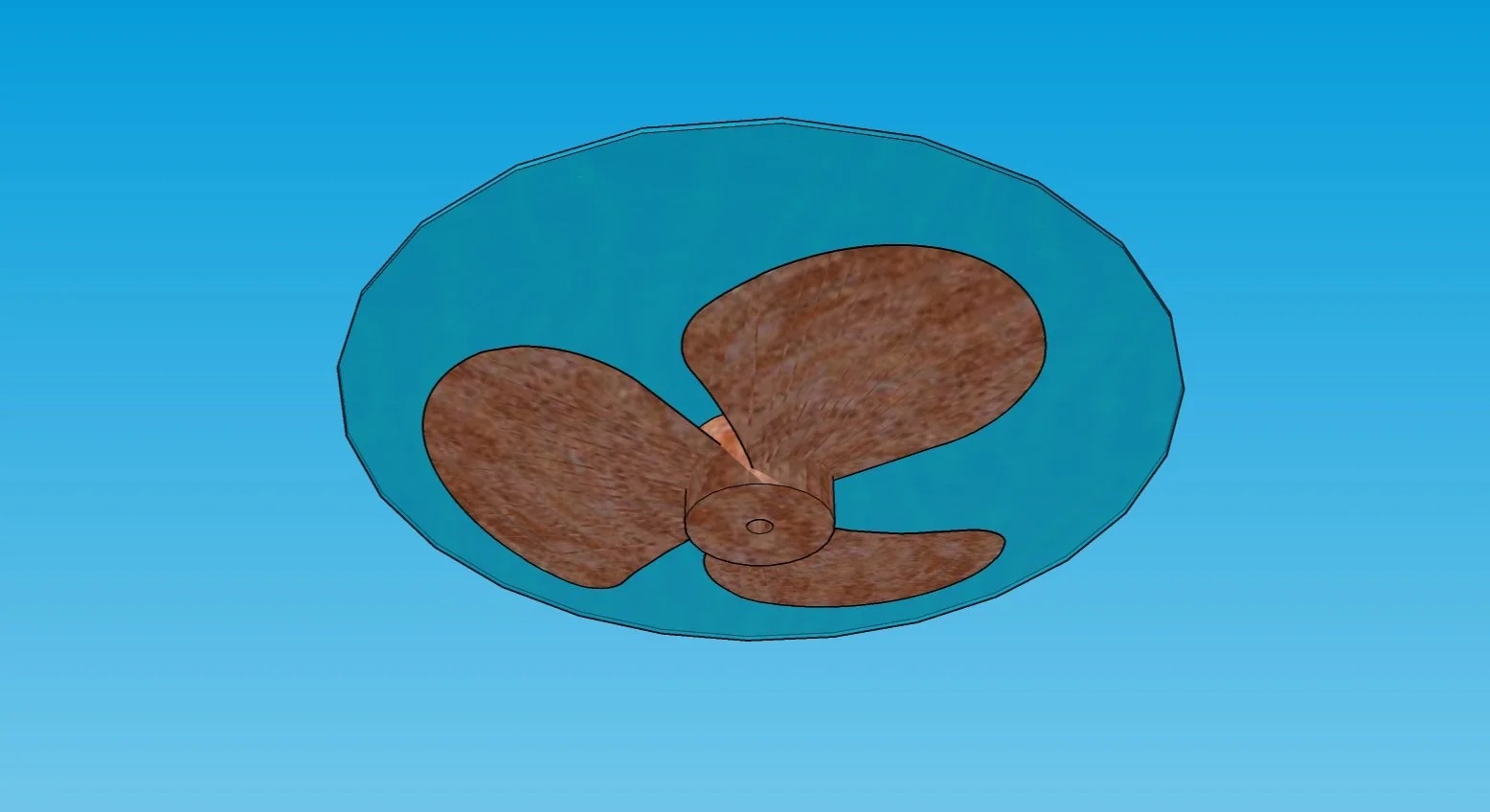
Early concept — propeller with glass top, exploring the visual relationship between bronze, walnut, and transparency
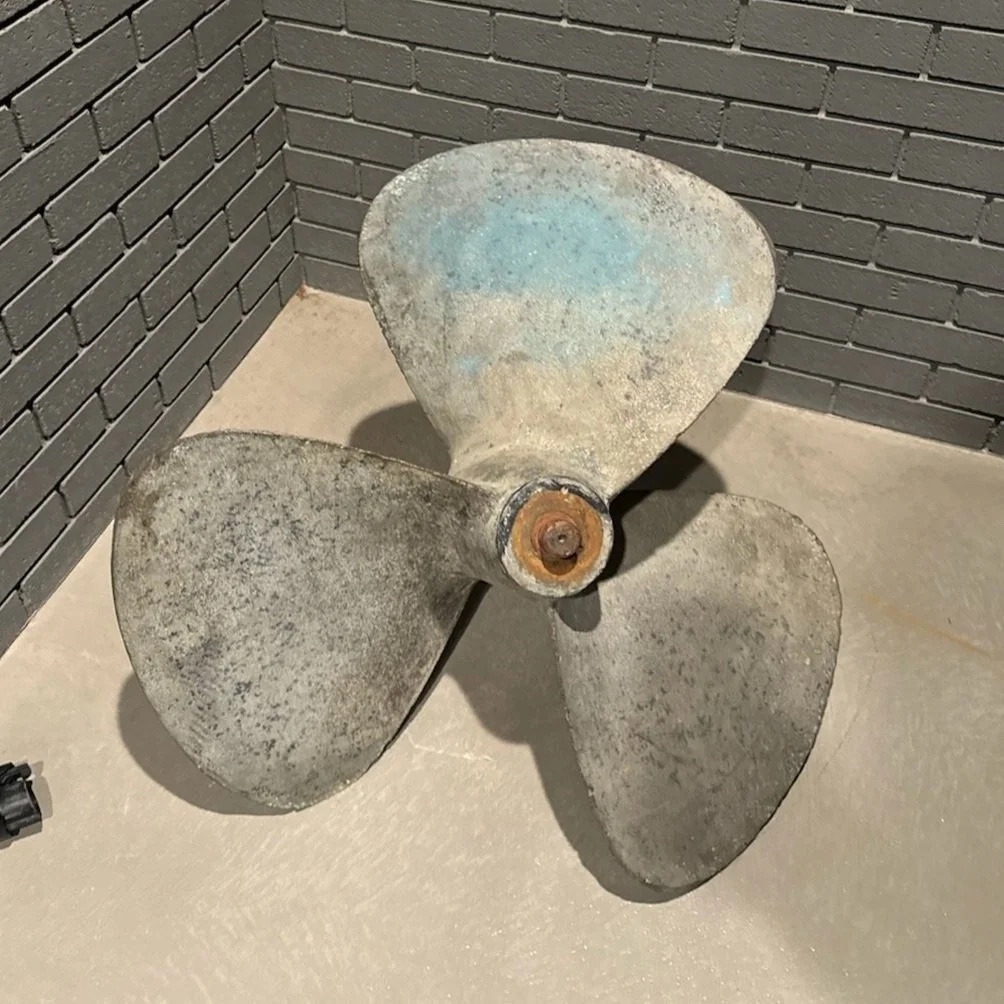
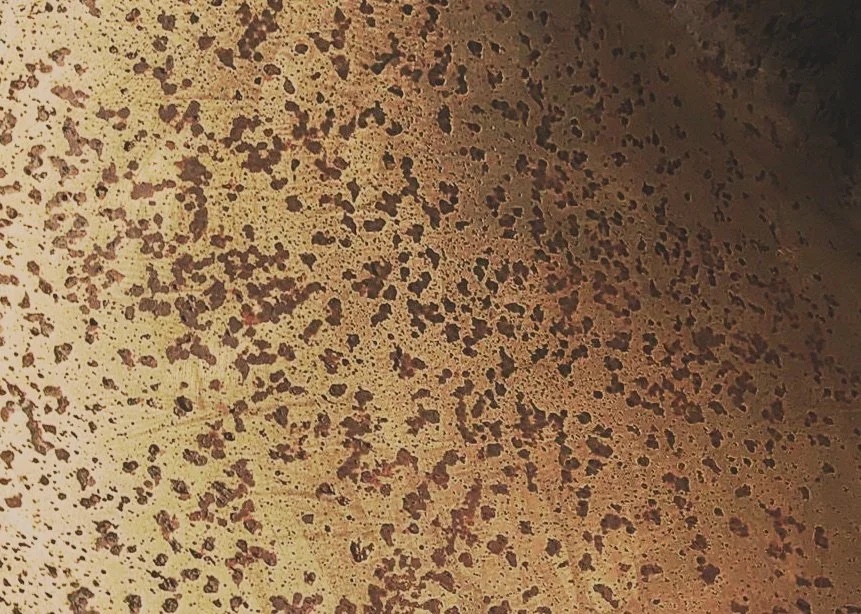
The propeller arrived raw — decades of oxidation, river grime, and marine growth baked into the bronze. The surface was a topography of its own history: pits, patina, and what I started calling “bronze freckles” — constellations of darker spots where the metal had lived hardest.
Sanding and polishing was a negotiation. Take too much off and you erase the story. Leave too much and it looks neglected, not preserved. The goal was a surface that looked cared for but not sanitized.
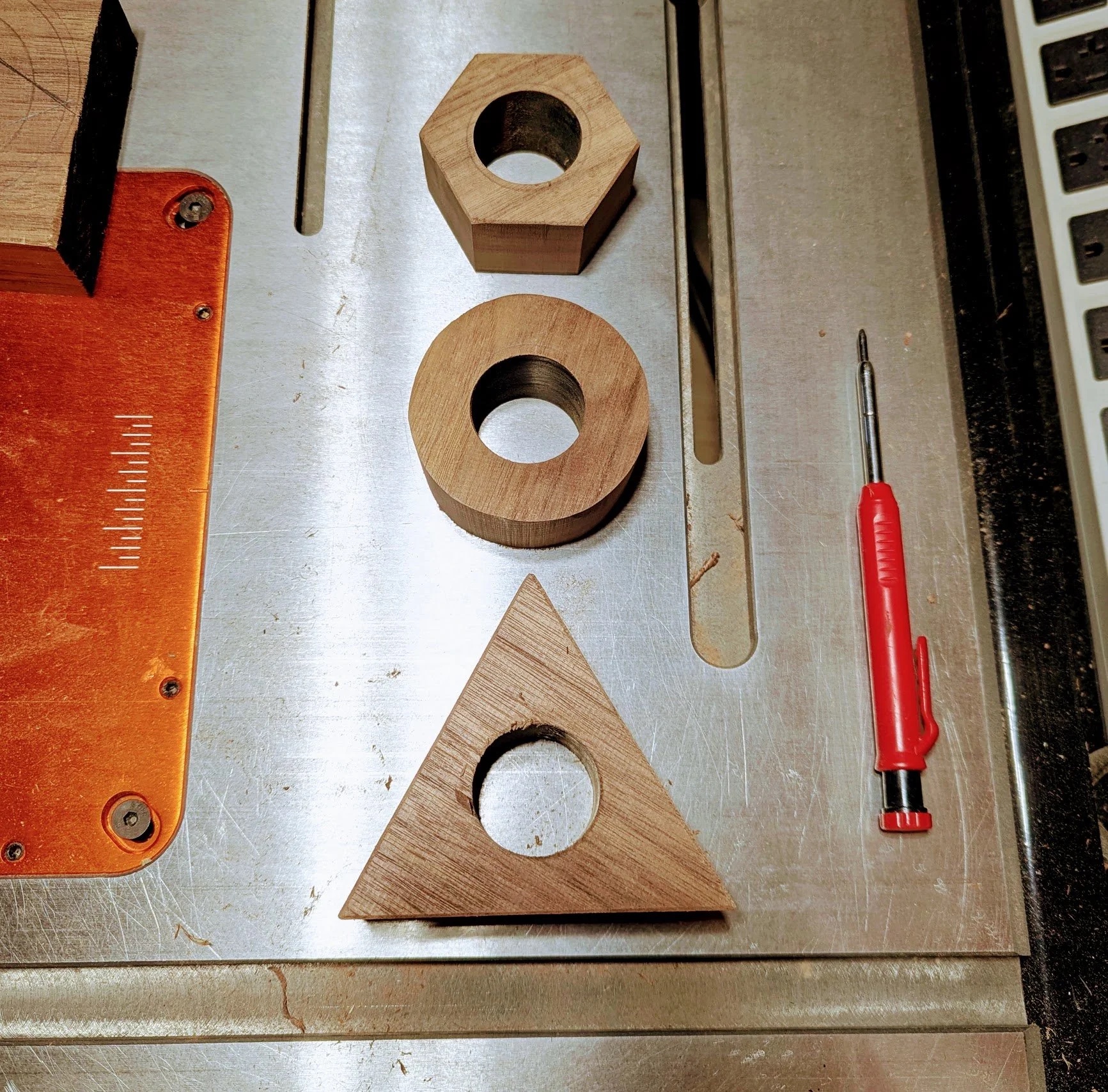
The base and nut were turned from solid walnut. The nut sits at the center hub where the propeller’s shaft once connected to the engine — a mechanical joint turned into a furniture detail.
I tested three shapes: hexagonal (too industrial), triangular (too aggressive), circular (just right). The round nut echoes the propeller’s rotational nature without competing with the blades’ organic asymmetry.
The walnut was chosen to warm up the bronze — two materials that aged differently but belong in the same sentence.
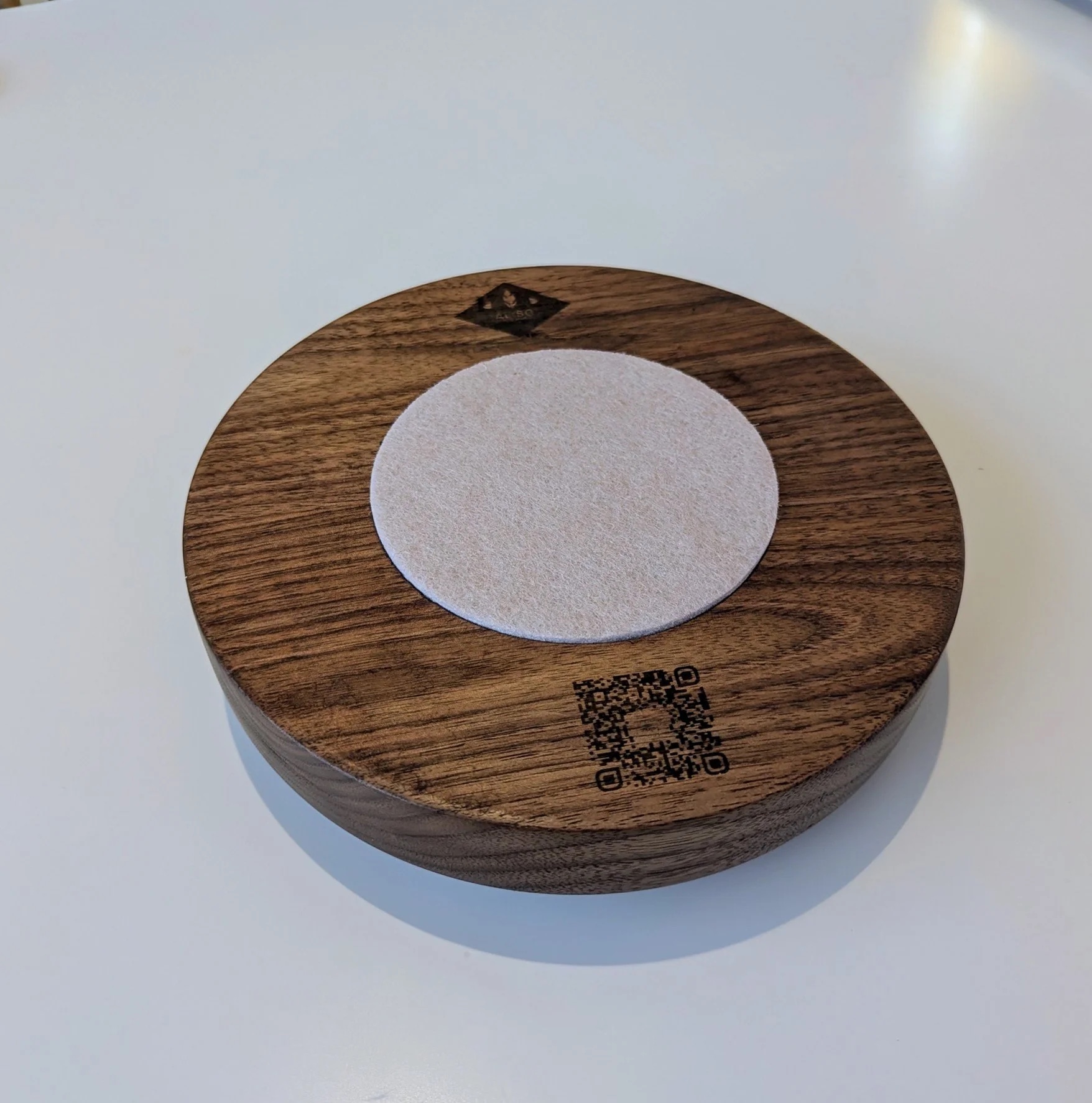
Every ALISO piece gets signed. The bottom of the walnut base carries the brand stamp, a QR code linking to this page, and a felt pad to protect the surface it rests on.
These aren’t afterthoughts — they’re the last line of the story. The part only the owner sees when they flip it over, years from now, and remember where it came from.
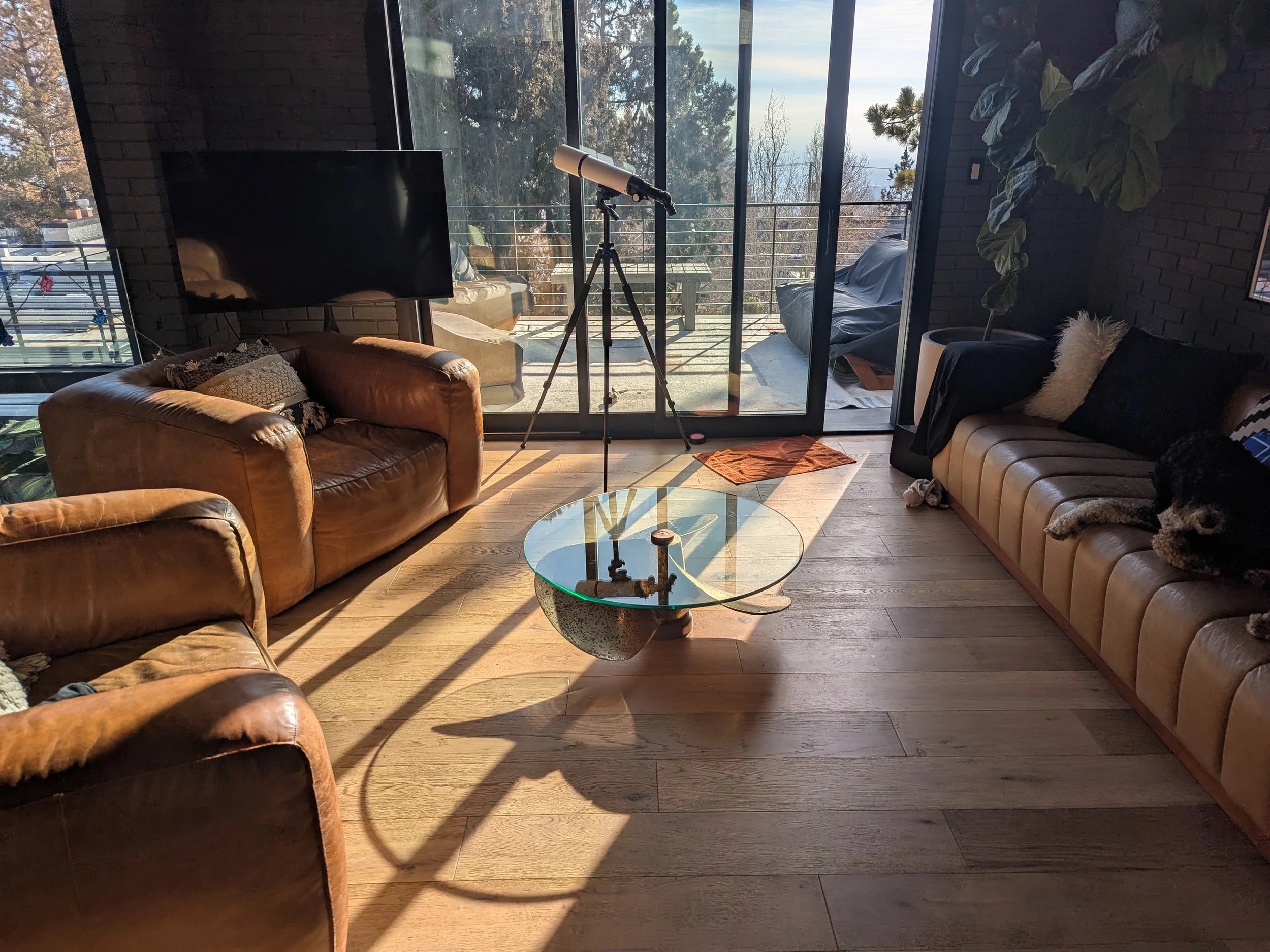
Installed in its new home, the propeller finally rests — not because it stopped moving, but because it arrived. The glass disappears. The blades cast shadows on the hardwood floor that shift with the sun, echoing the water shadows they once cut through on the Orinoco. But there’s one mystery left: how did this propeller ever make its way to Venezuela in the first place?
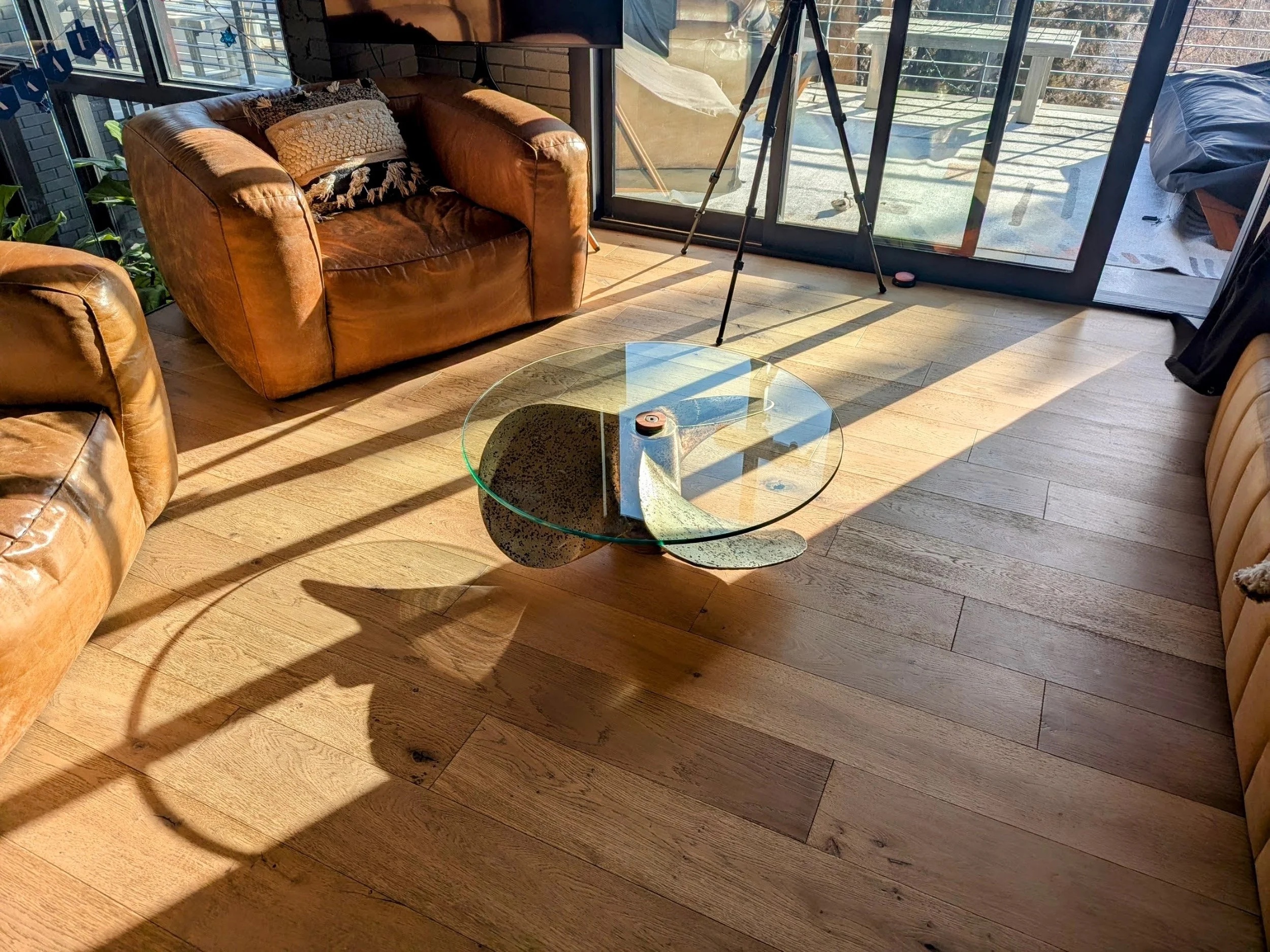
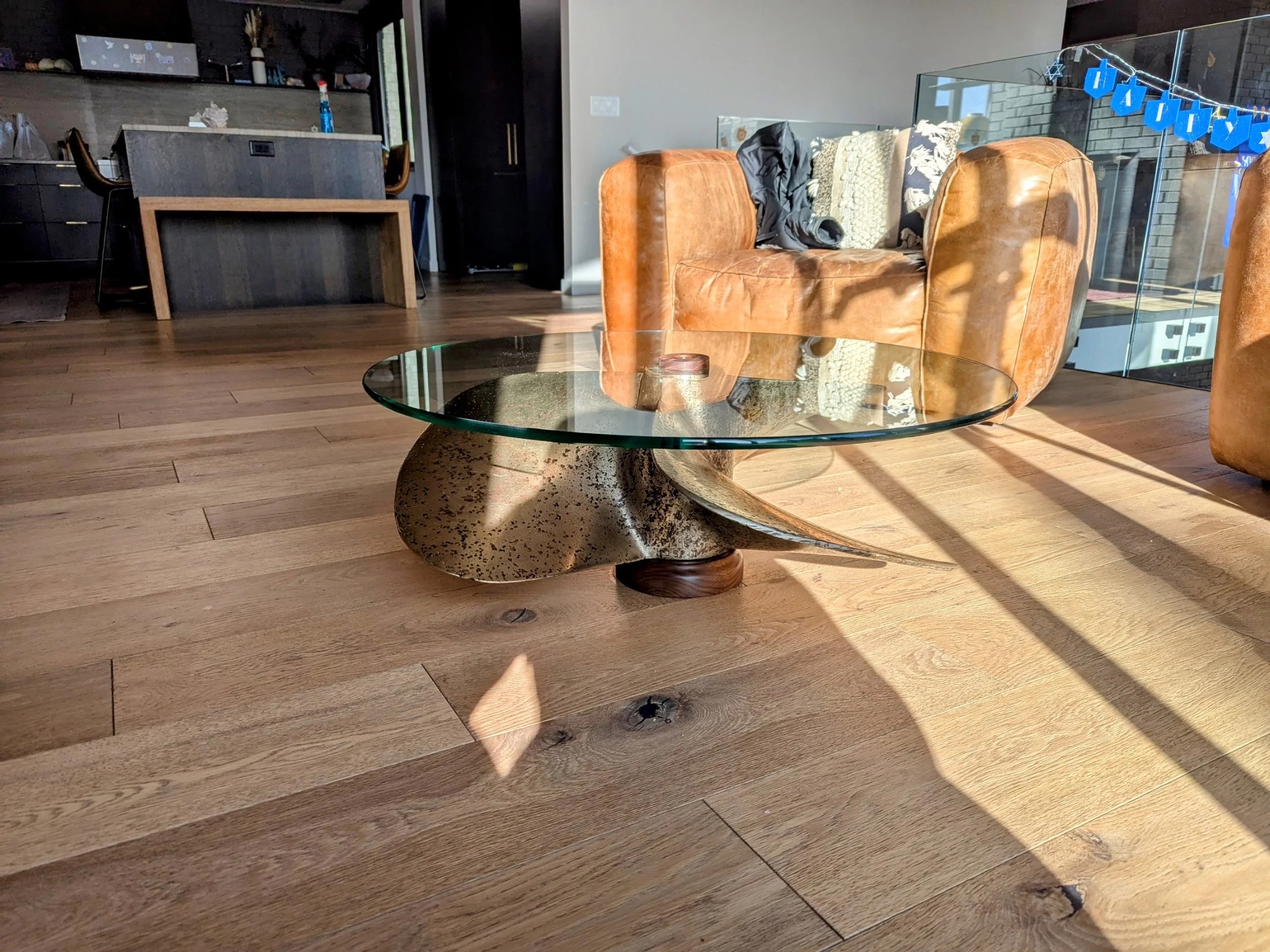
From the Orinoco River to the Great Salt Lake.