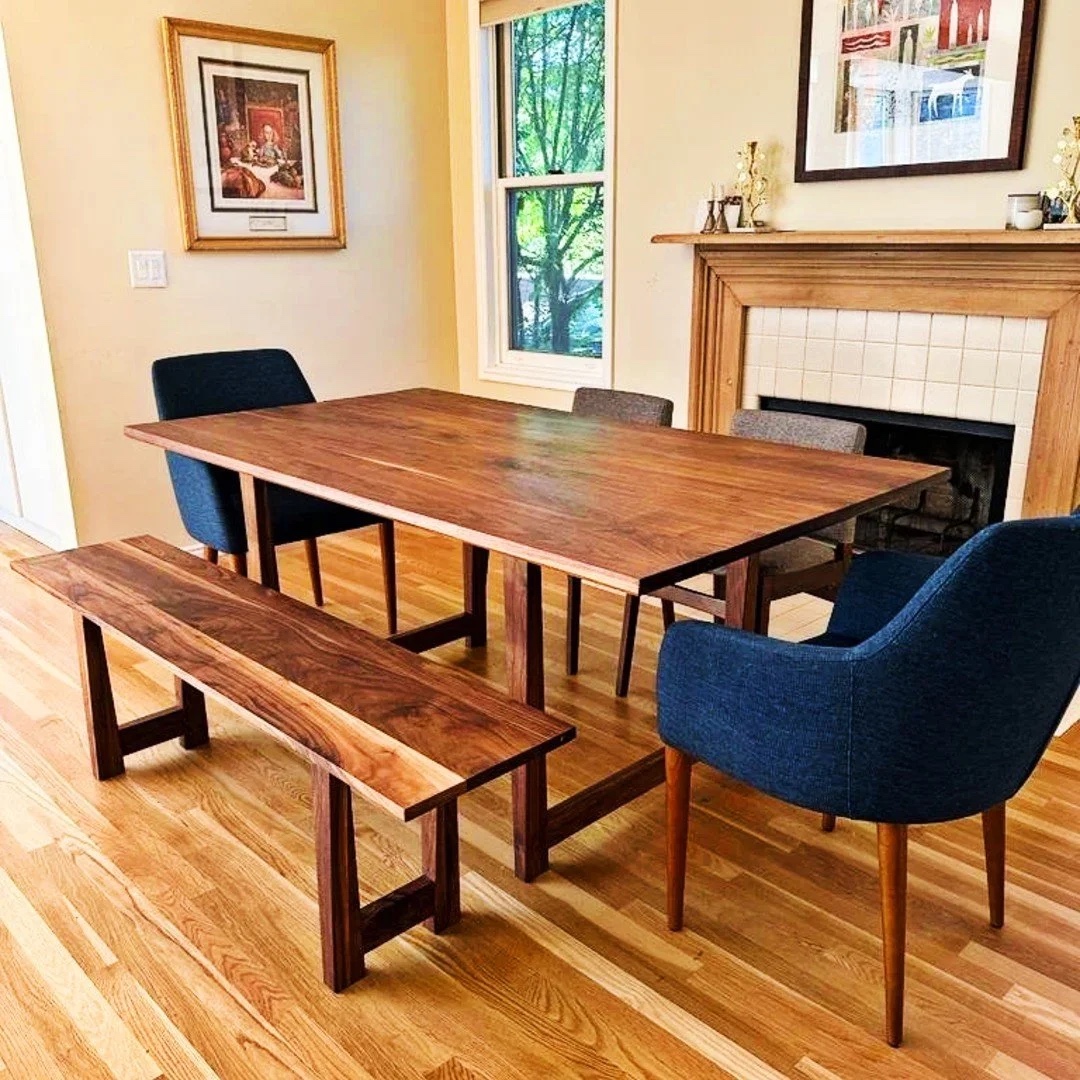
Brittney’s Table
Walnut dining table & bench after Peter Hvidt
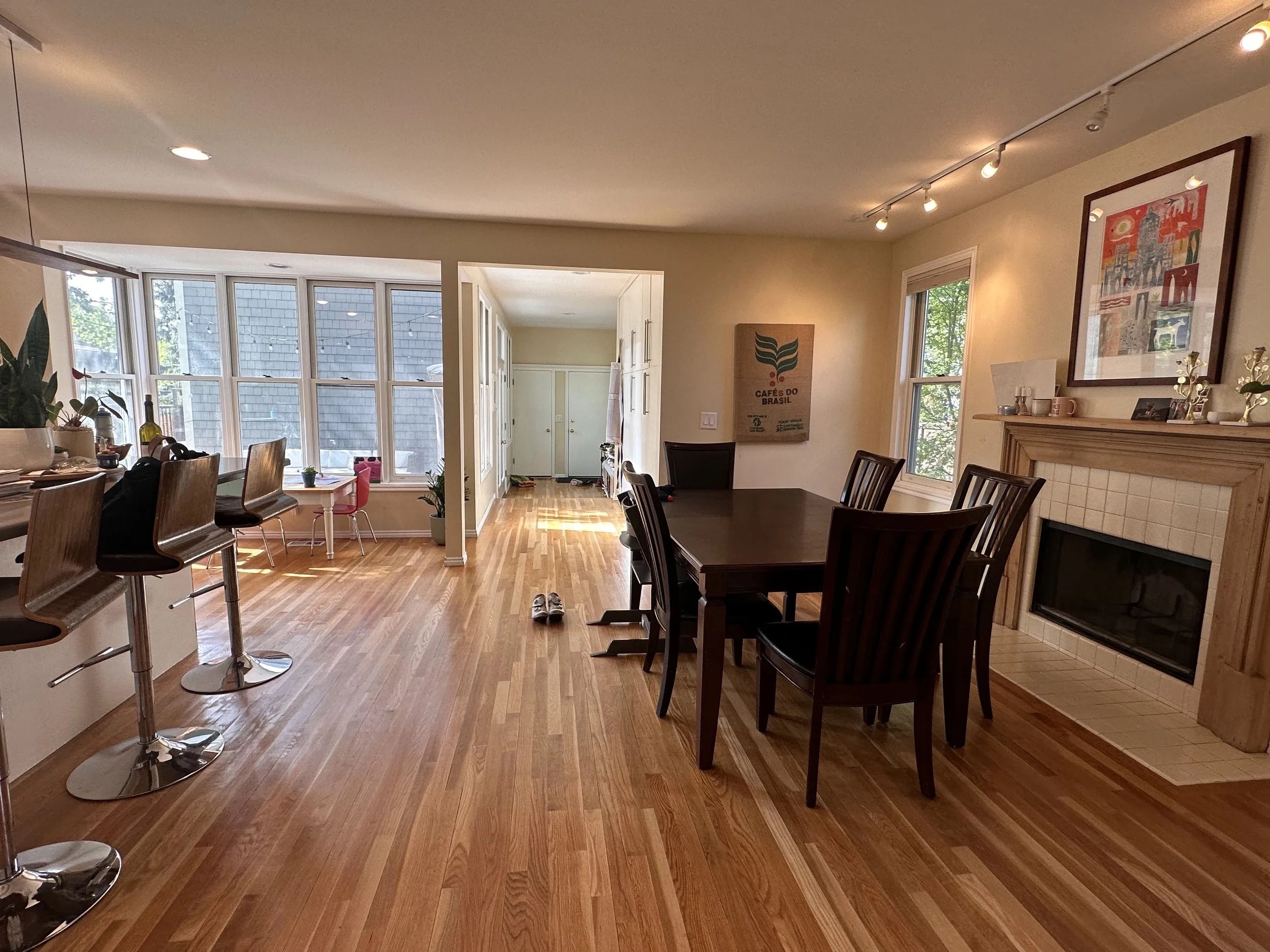
Brittney’s dining room is full of natural light and honey-toned hardwood floors. A stone fireplace anchors the space. But the dining table had seen better days and it was time for it to go.
She wanted something elegant and sharp with a mid-century modern sensibility. Something that showed the wood without being rustic. Robust and light at the same time. It might sound contradictory, but it’s not — it’s the sign of someone who knows exactly what they want.
We found the answer in Peter Hvidt, a Danish designer from the mid-century modern period whose leg constructions play with thickness and lightness in a way that makes furniture feel like it’s floating.
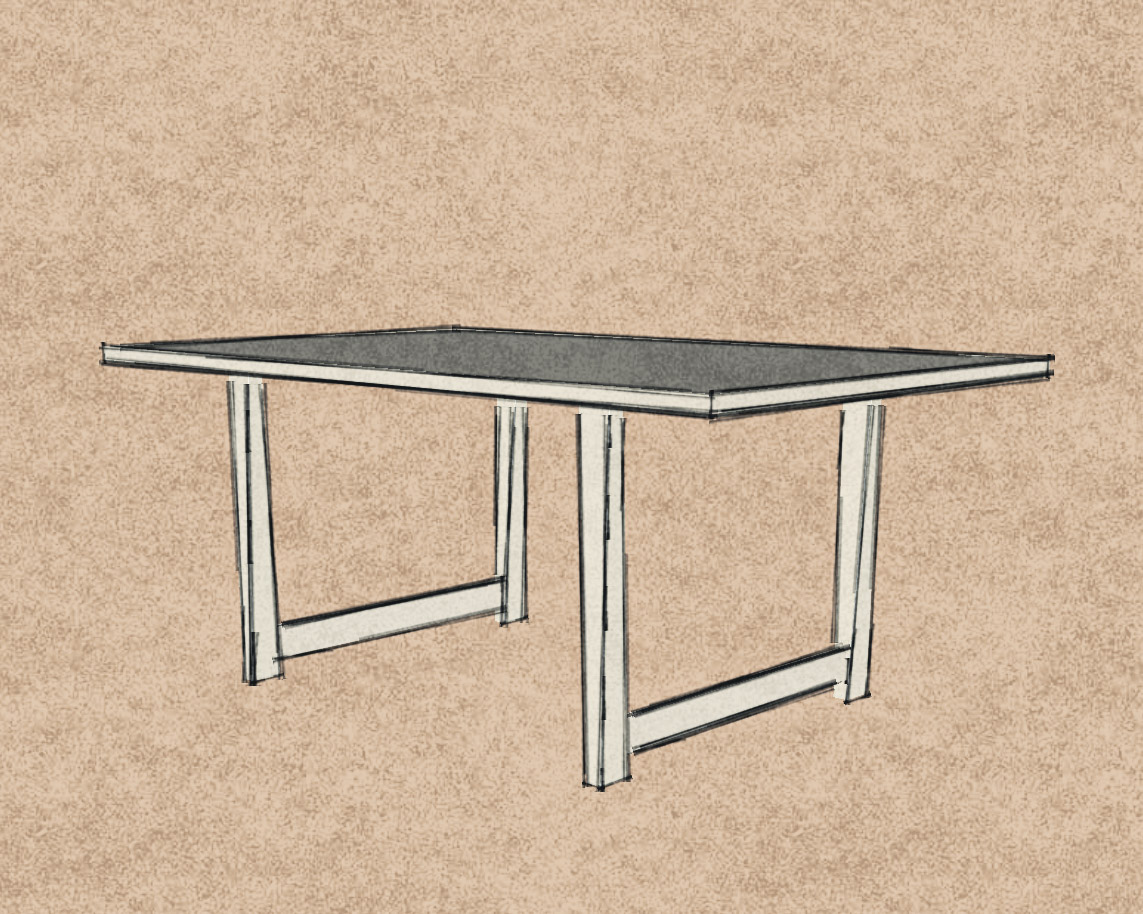
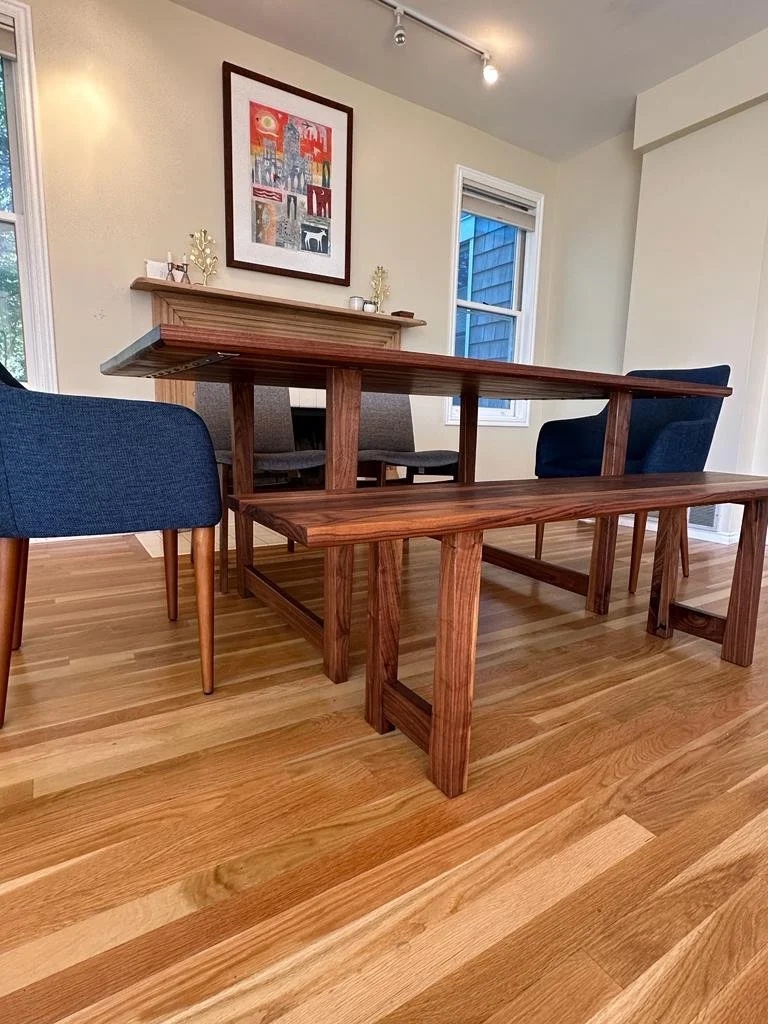
I presented Brittney with several directions — U-shaped legs, panel legs, rounded midcentury classics, and some wilder variations. Each one explored a different balance of weight and personality. She gravitated toward the Hvidt-inspired U-leg, where a pair of tapered uprights join at the base through a stretcher, creating the illusion that the tabletop is suspended.
But the original Hvidt was round and heavy with lacquer. We needed to sharpen those lines — make every edge deliberate, every angle clean. And instead of staining the wood into submission, we’d let the natural walnut do all the talking. No stain, no paint. Just walnut being walnut.
Dark, warm walnut against light floors and a stone fireplace. Contrast that feels natural, not imposed.
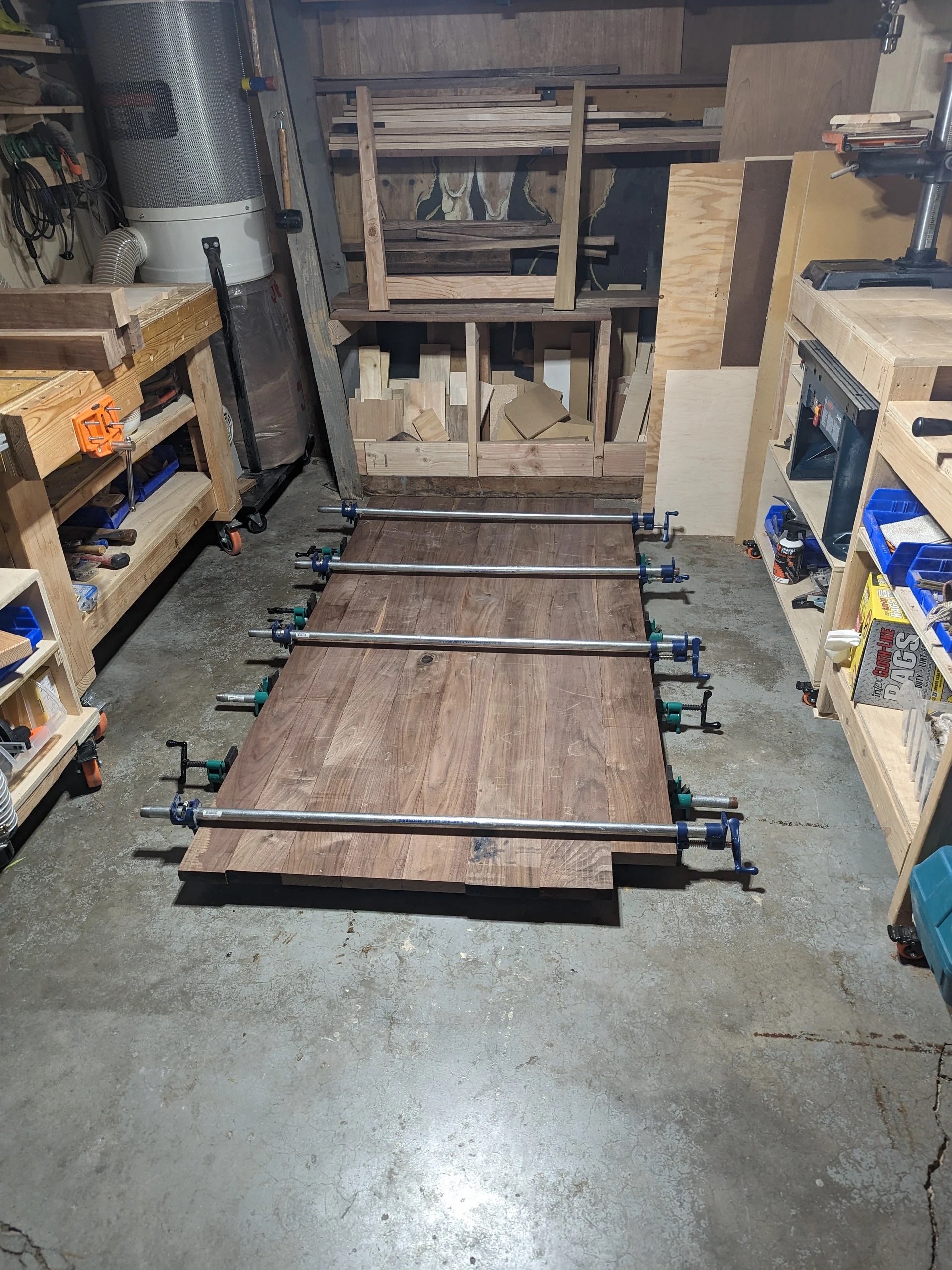
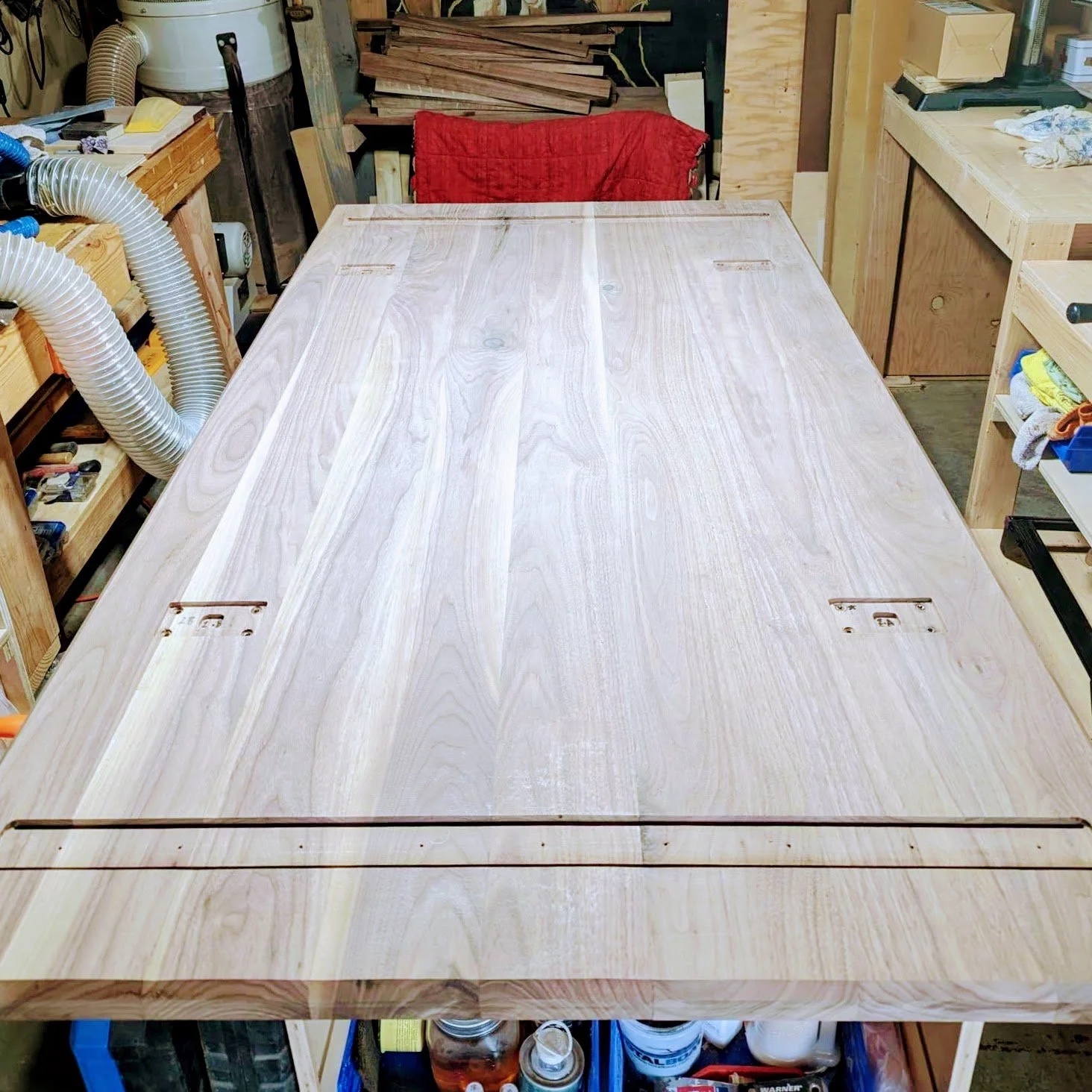
The tabletop started as eight distinct boards of American black walnut, hand-selected for grain character and color variation. Two nights of meticulous planing and jointing, arranging and rearranging for grain symmetry — the kind of decisions that disappear into the finished piece but define its presence.
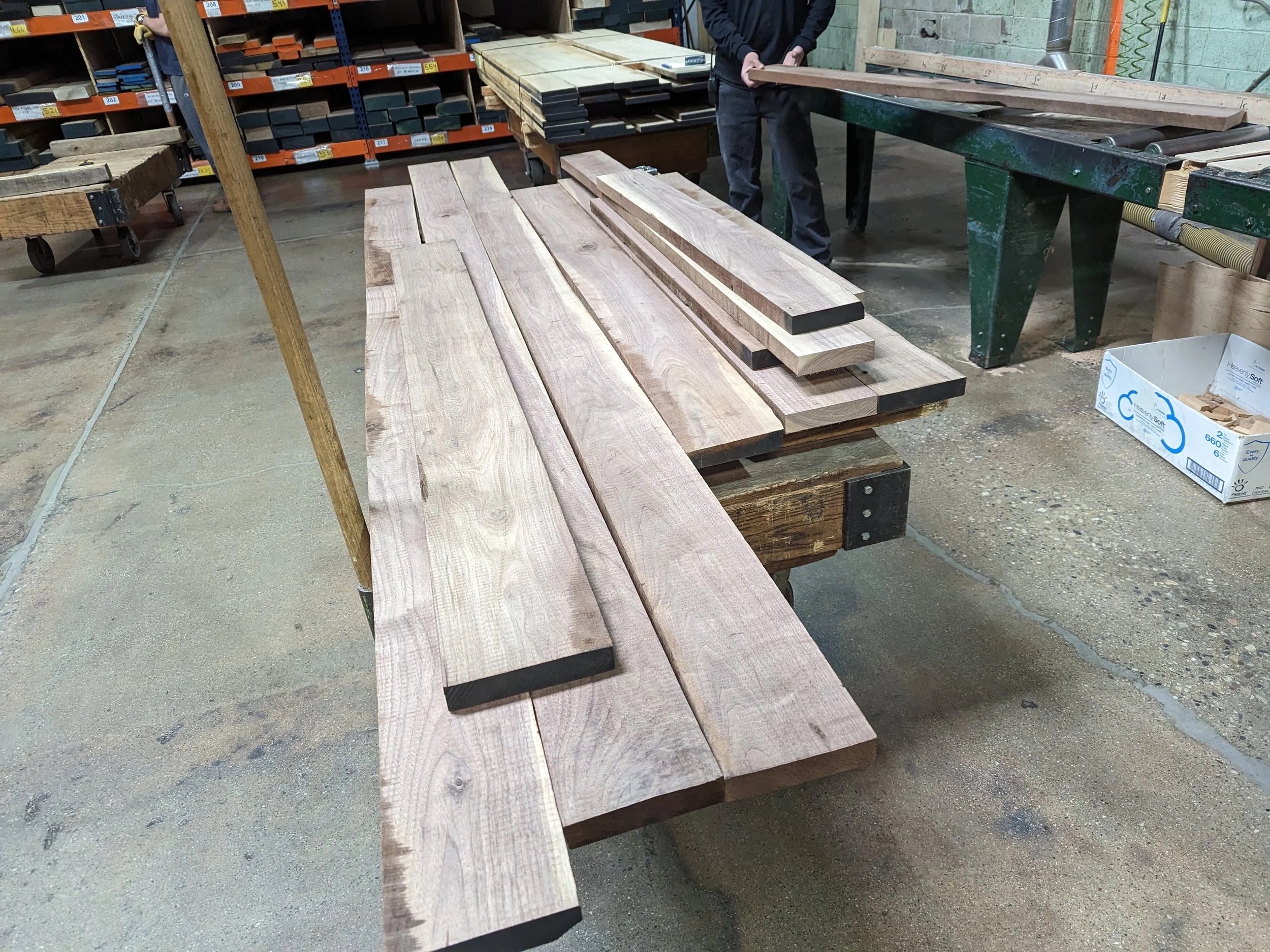
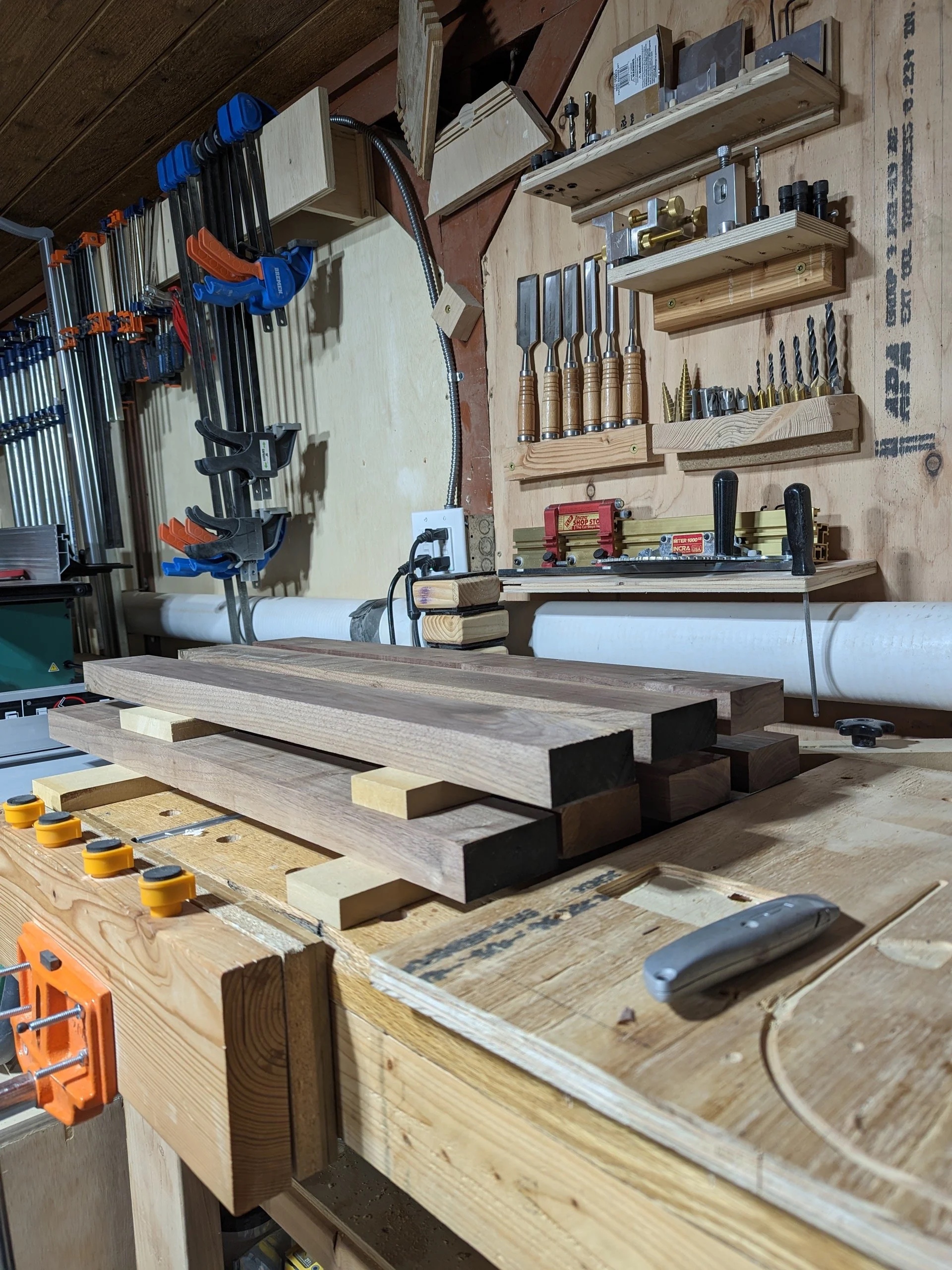
The glue-up was tense. Board eight warped after the adhesive set, requiring corrections, adjustments, and patience. This is the part of custom furniture that nobody sees — the quiet battle between what you planned and what the wood decides to do.
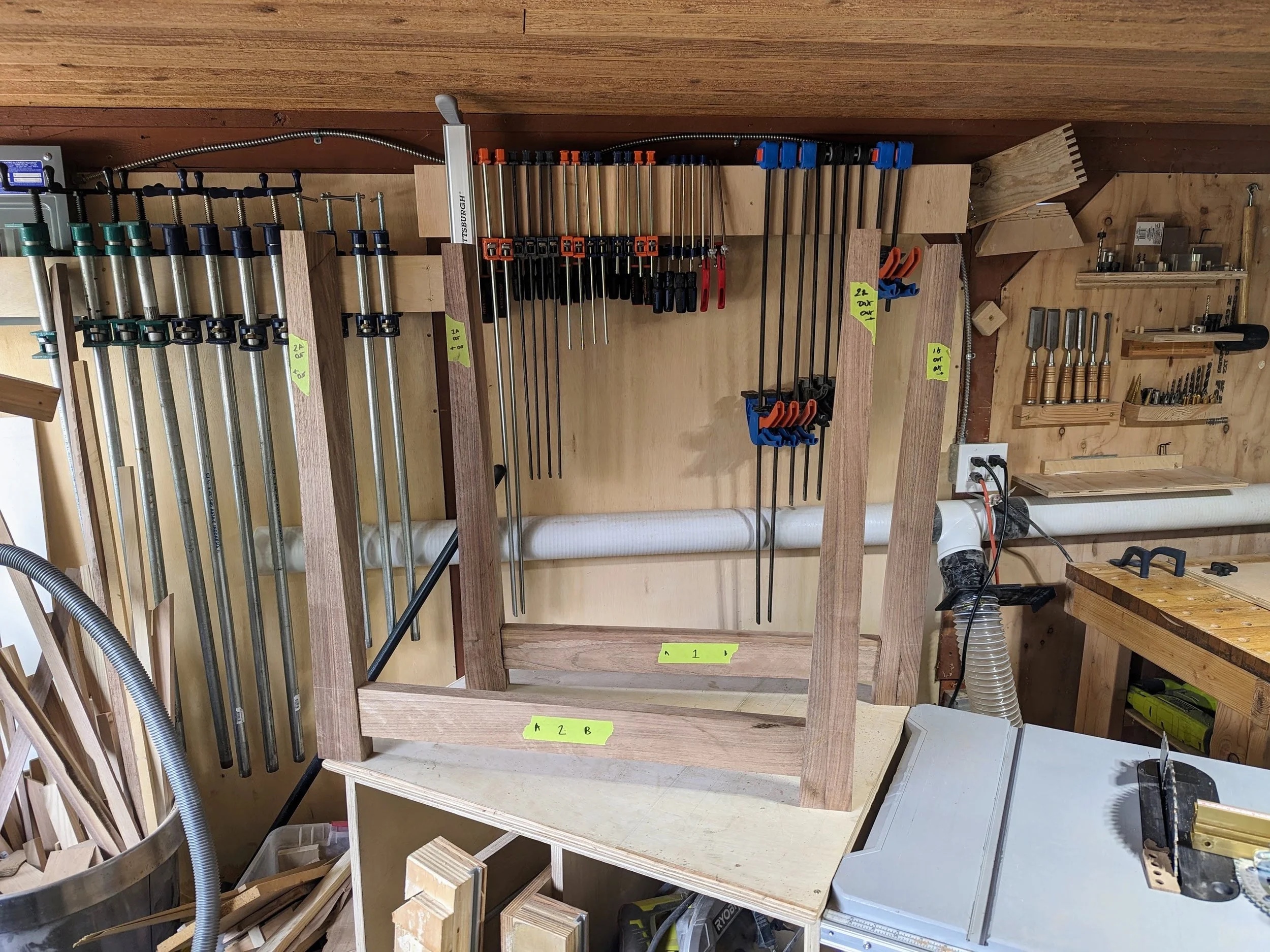
The legs required a custom tapering jig with shallow passes. V-cuts first, then dowel holes, then the 90-degree joints — sequence matters when angles compound. Every piece had to be routed and cleaned before cutting to final dimension. Then the routing of the tabletop: an inlaid recess underneath for a U-shaped rail, four leg attachment plates, and a beveled edge profile — the detail you feel with your hand before you see it with your eyes.
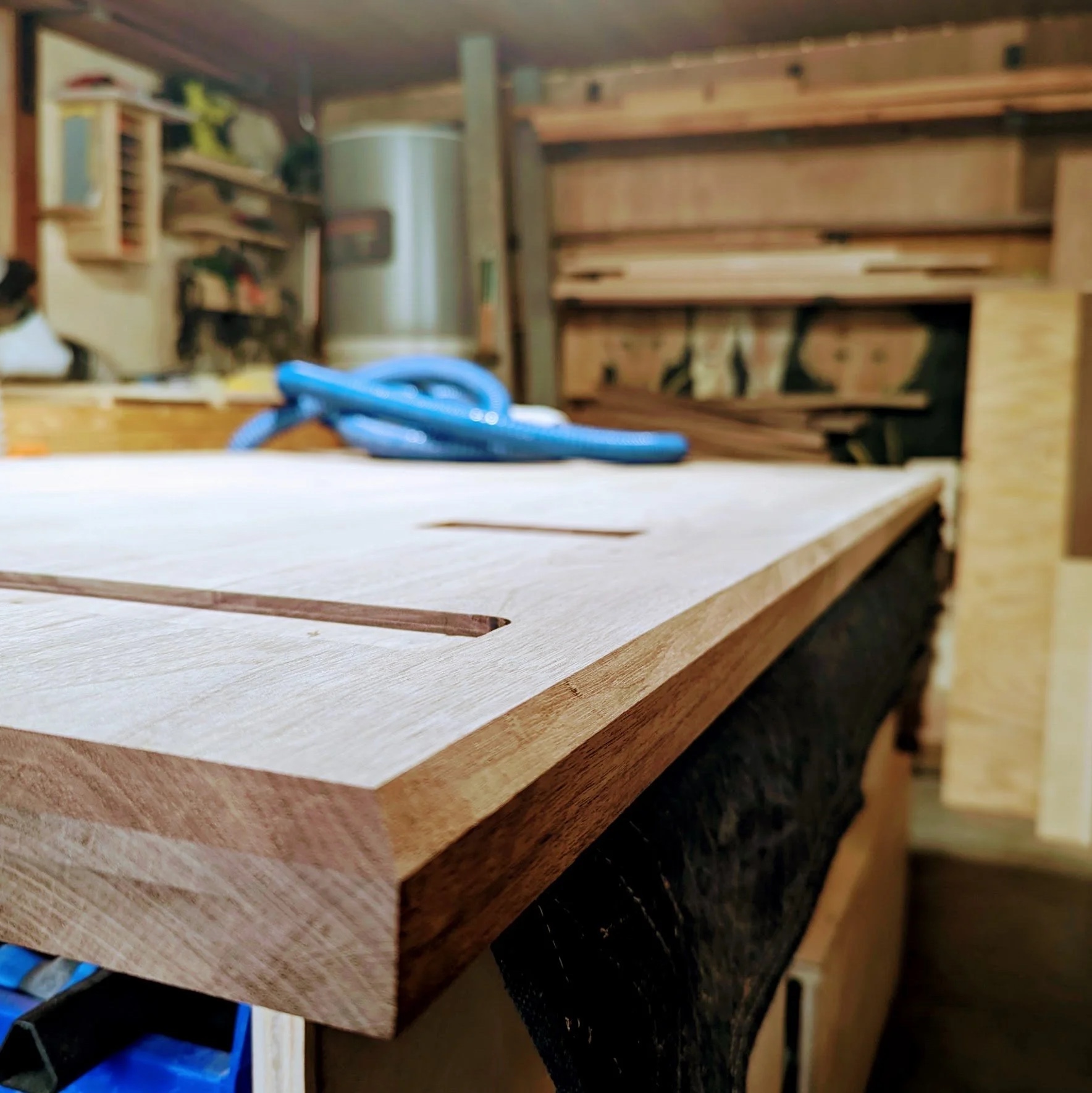
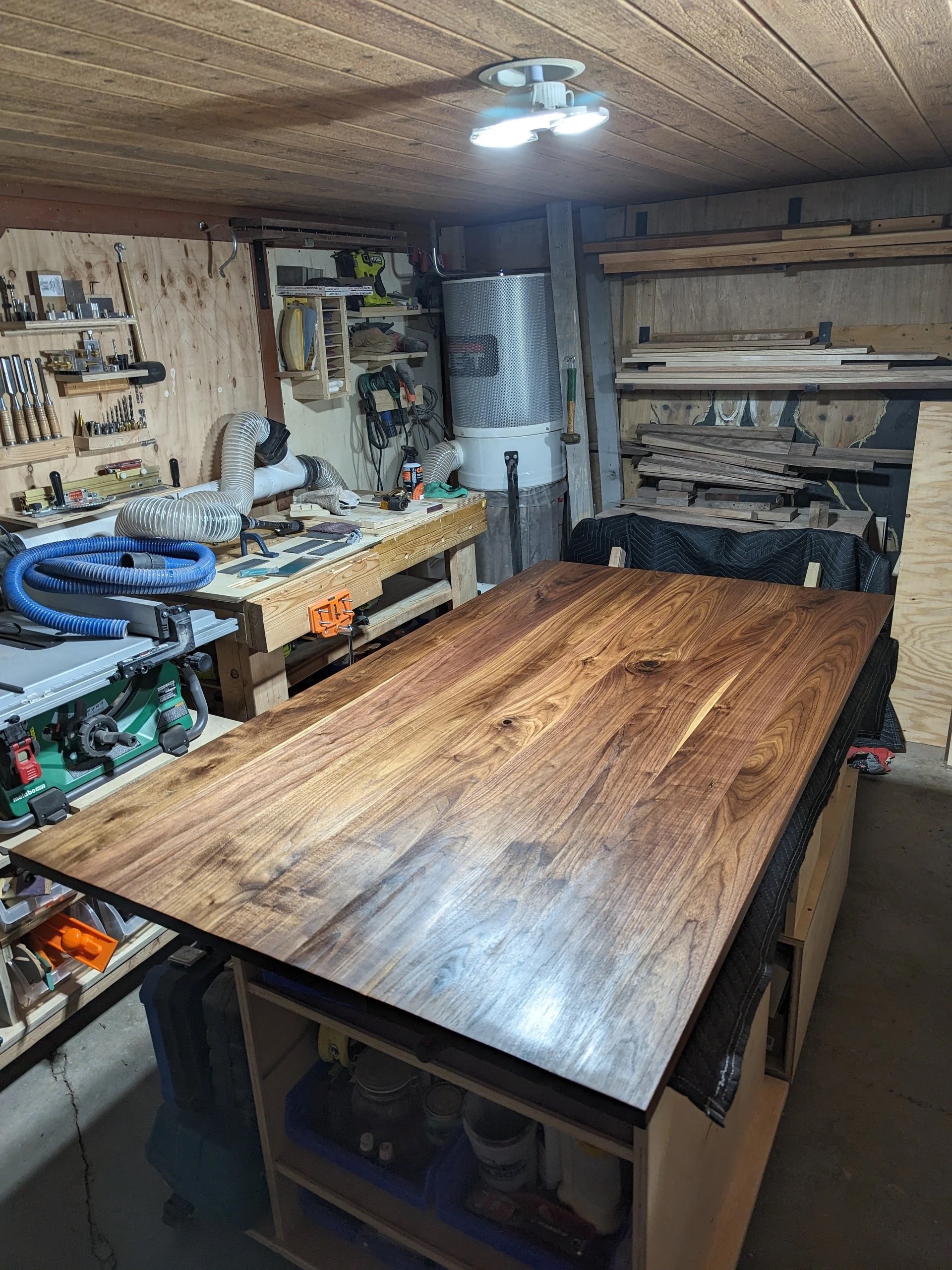
Rubio Monocoat Pure — a hardwax oil that bonds molecularly with the wood fibers instead of sitting on the surface like a plastic film. It brings out the grain’s full depth while letting you feel actual wood under your fingers. Then three coats of Odie’s Wax for durability and a warm, soft sheen.
One week to cure. The walnut went from raw lumber to something that glowed — every cathedral grain, every knot, every variation in color singing at full volume. This is what you get when you let wood be wood.
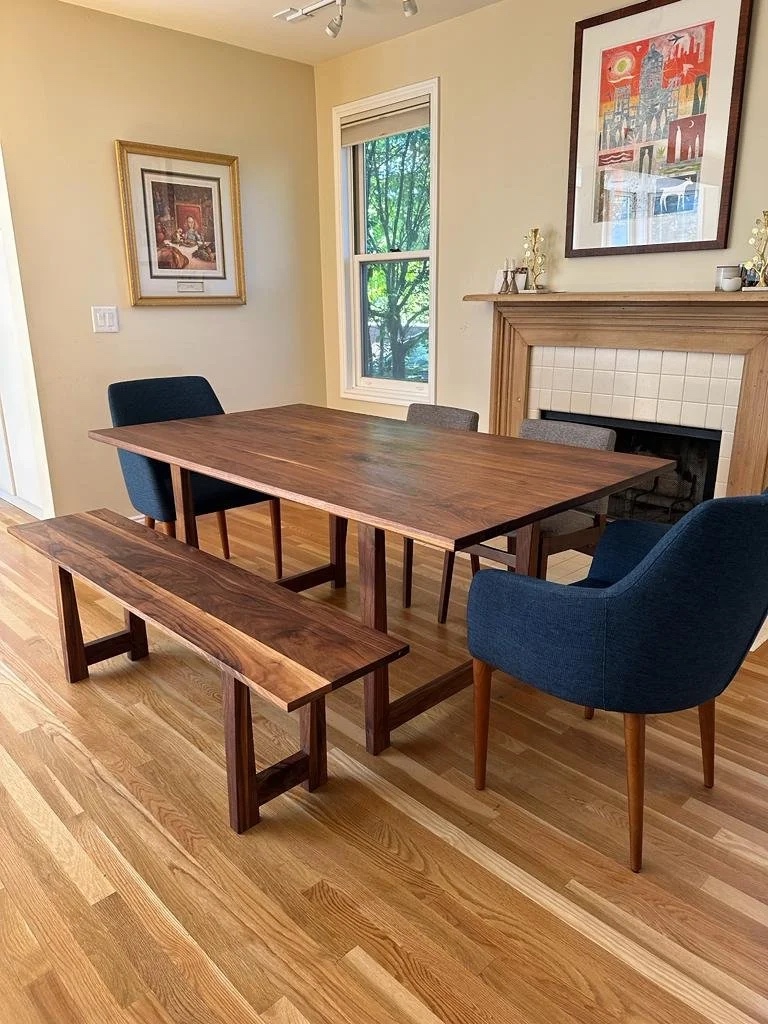
The table transformed the room. Brittney loved it so much she asked for a matching bench — same walnut, same leg geometry, same finish. She paired them with blue mid-century chairs that completed the space in a way that felt like it had always been there.
The best ideas happen in the space between two or more people. Brittney knew what she wanted but couldn’t build it. I could build it but needed her vision to aim at. Somewhere in between, in those conversations about Peter Hvidt and leg angles and how light hits walnut — that’s where this table was really made.
Wood tells you what it needs if you learn to read the lines.