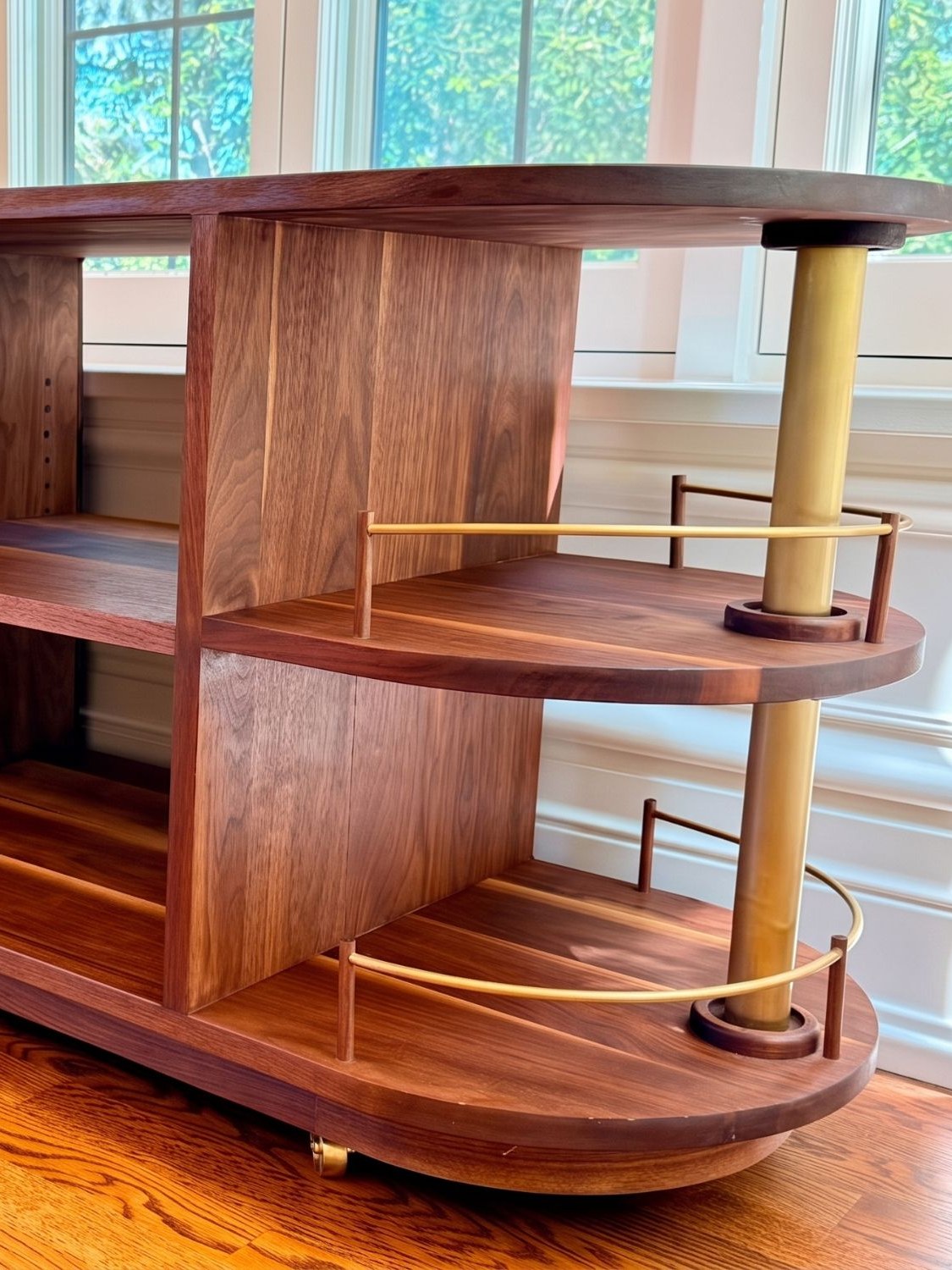
American Walnut · Brass · CNC
Brittney’s Cart
The Commission
A Bar Cart That Became a Buffet
Brittney is a returning client. ALISO built her dining table years ago — a piece she and her family have lived with, fed guests on, and eventually moved with them to a beautiful 1920s-style home with an open, light-filled dining room.
She originally asked for a bar cart — something to hold her turntable and record collection. Then the turntable migrated to the living room. Function, it turns out, is stubborn. She still needed somewhere to stash the records, the glasses, the board games. Somewhere mobile. Somewhere close to the dining table, which is the heart of the house.
So the cart stayed. It just became a buffet.
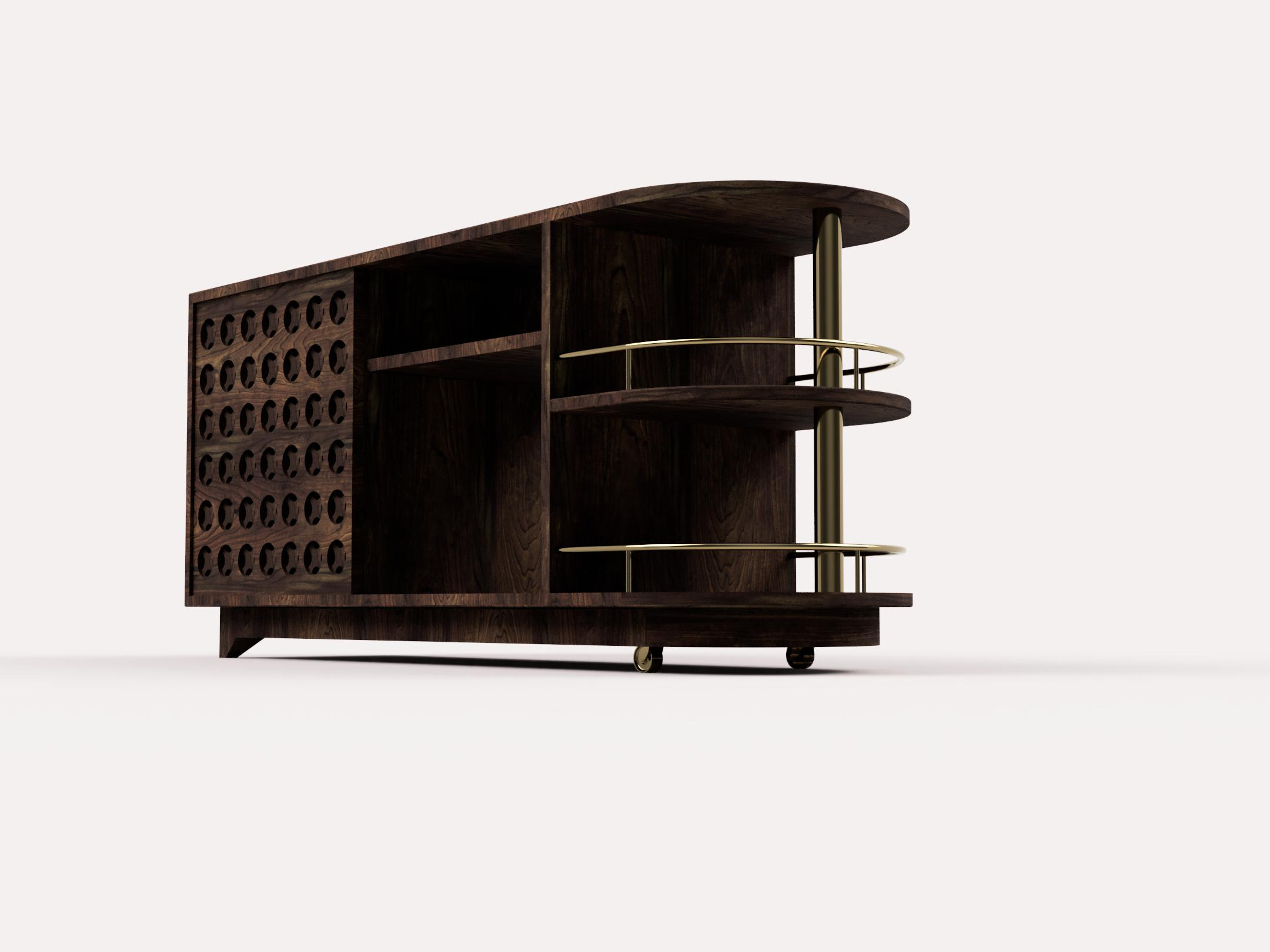
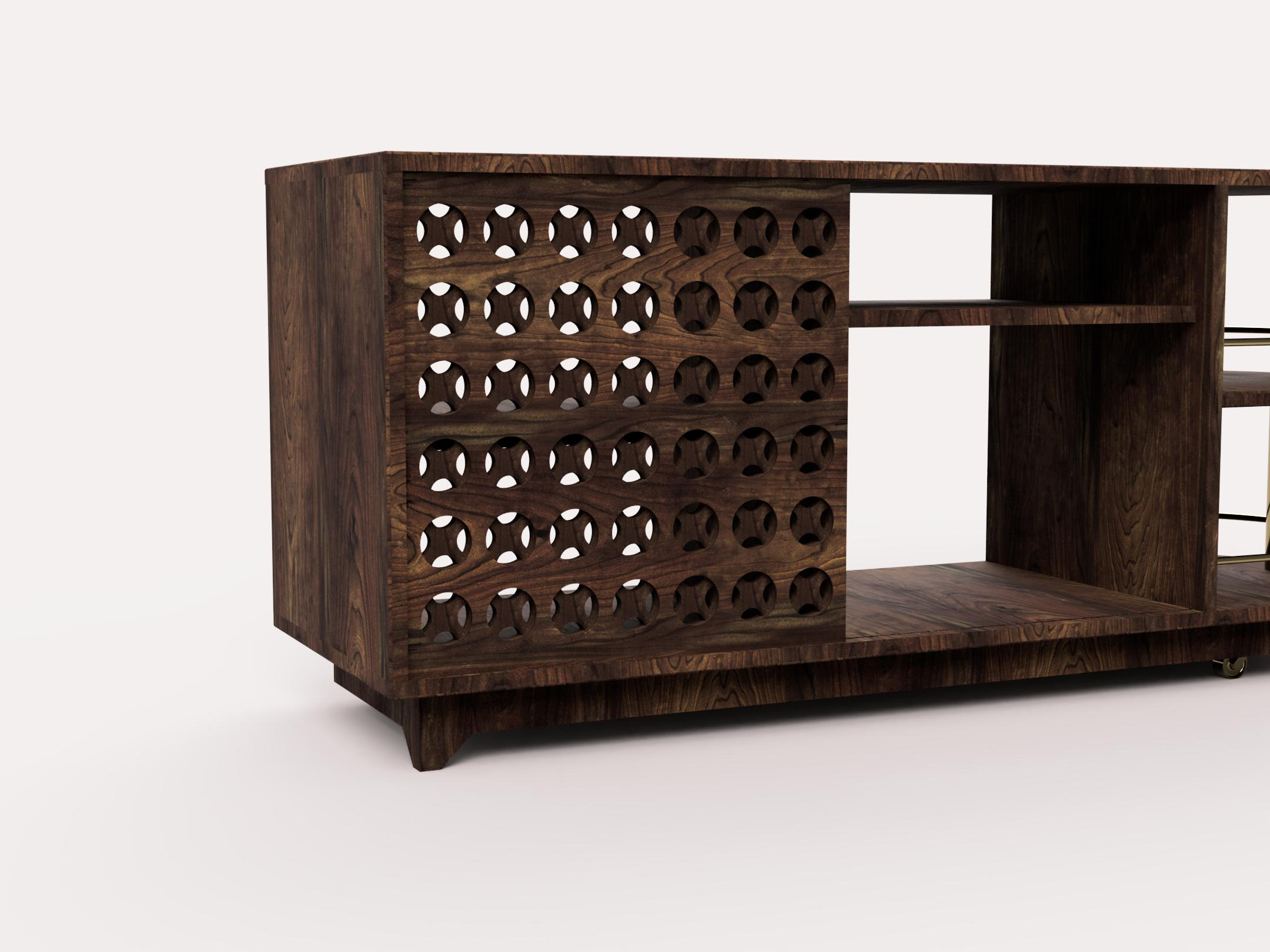
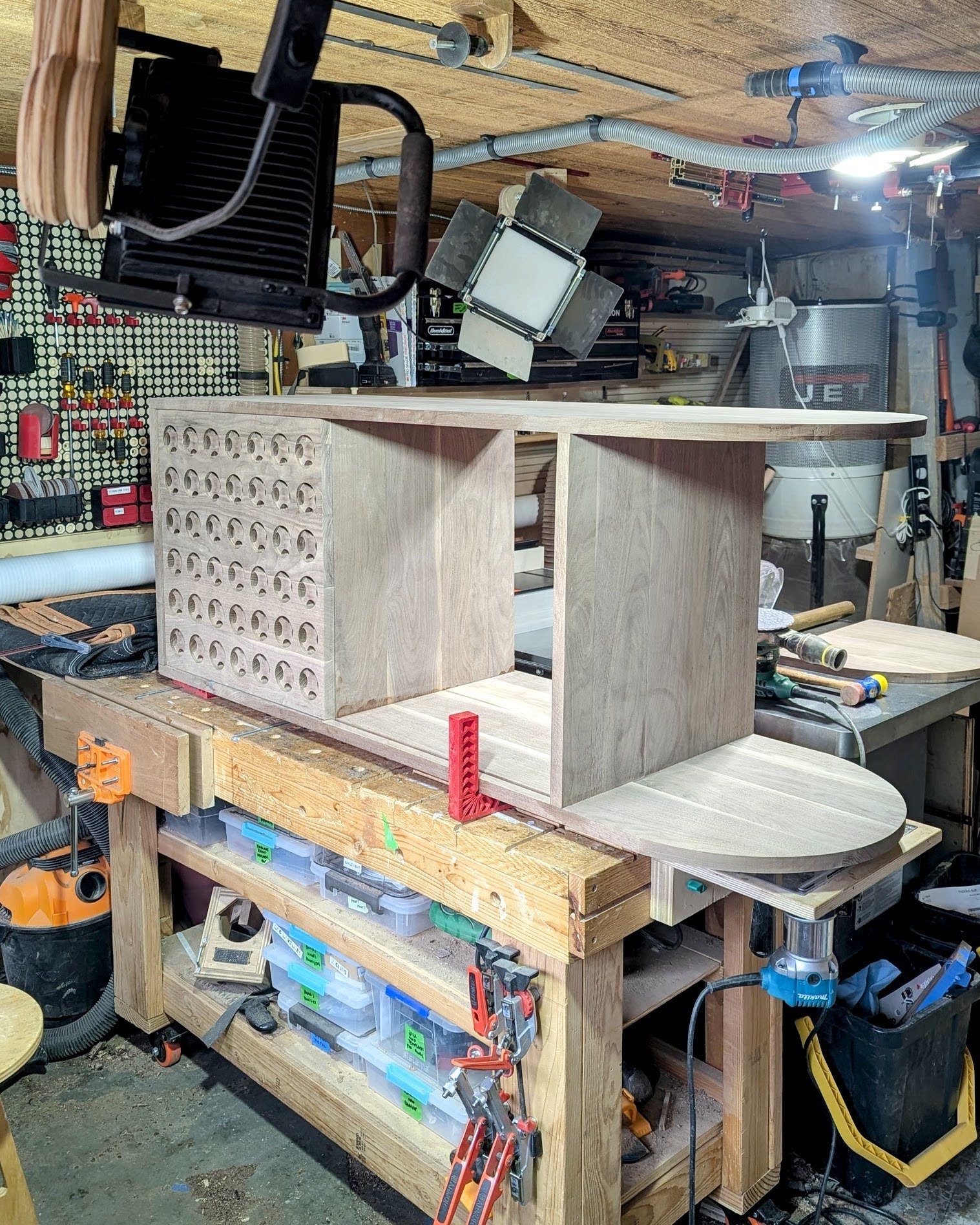
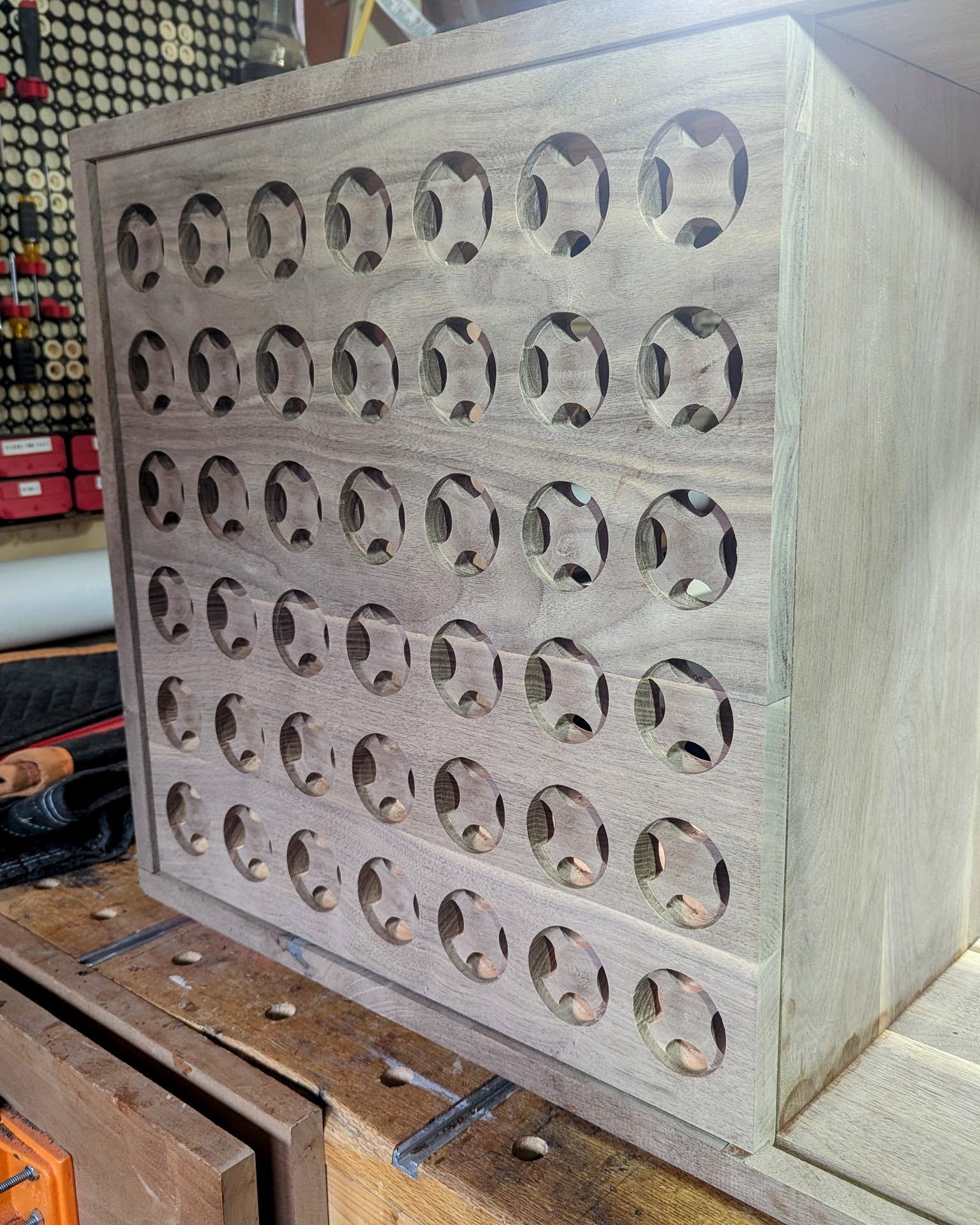
The design language blends Bauhaus × Art Deco × Mid-Century Modern — the architecture of her home married to her personal taste. A CNC-cut panel inspired by vintage speaker grilles is the detail that lifts the whole piece. Once the Fusion 360 renders landed, they both committed.
The Design
Bauhaus × Deco × Mid-Century
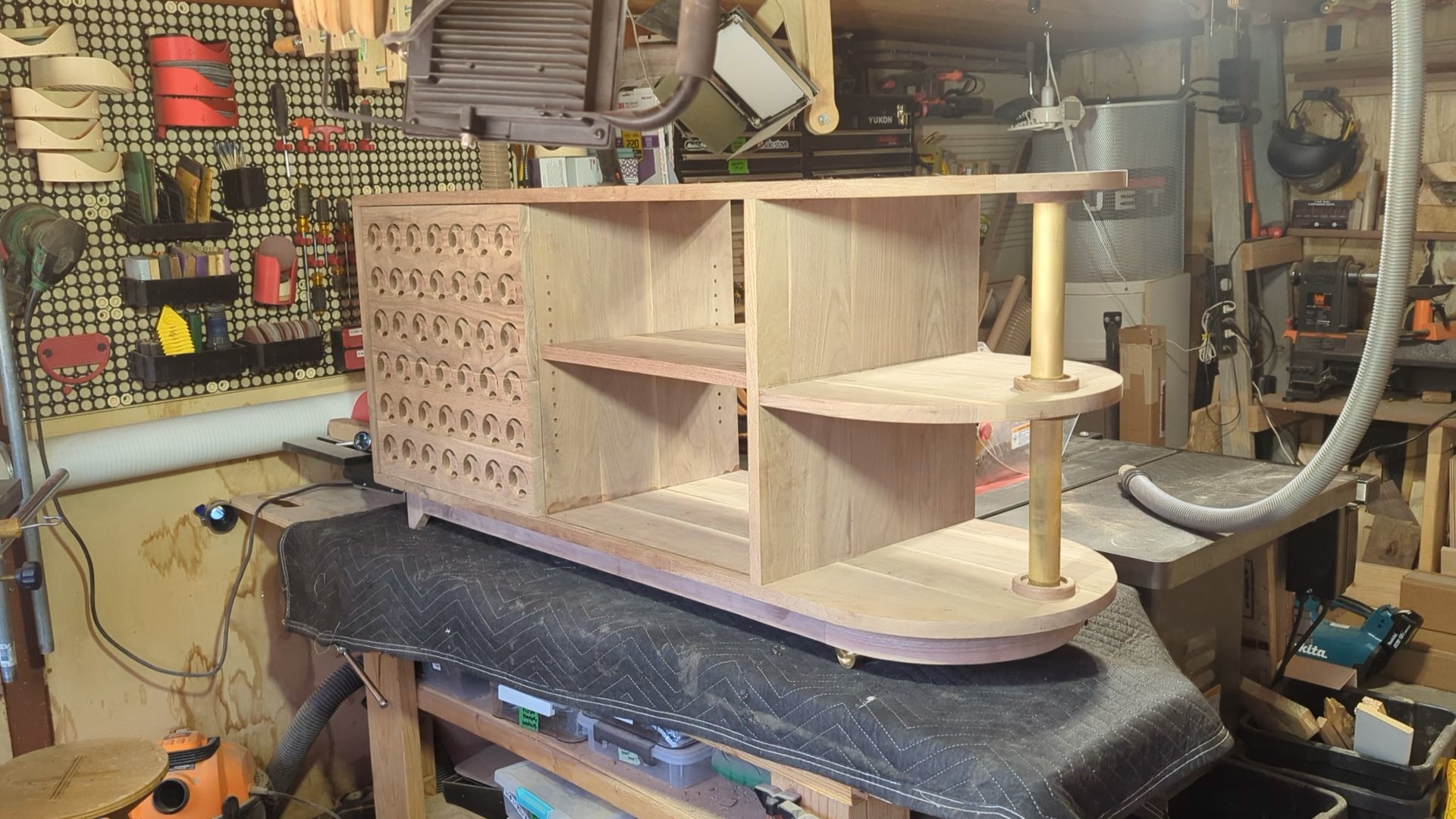
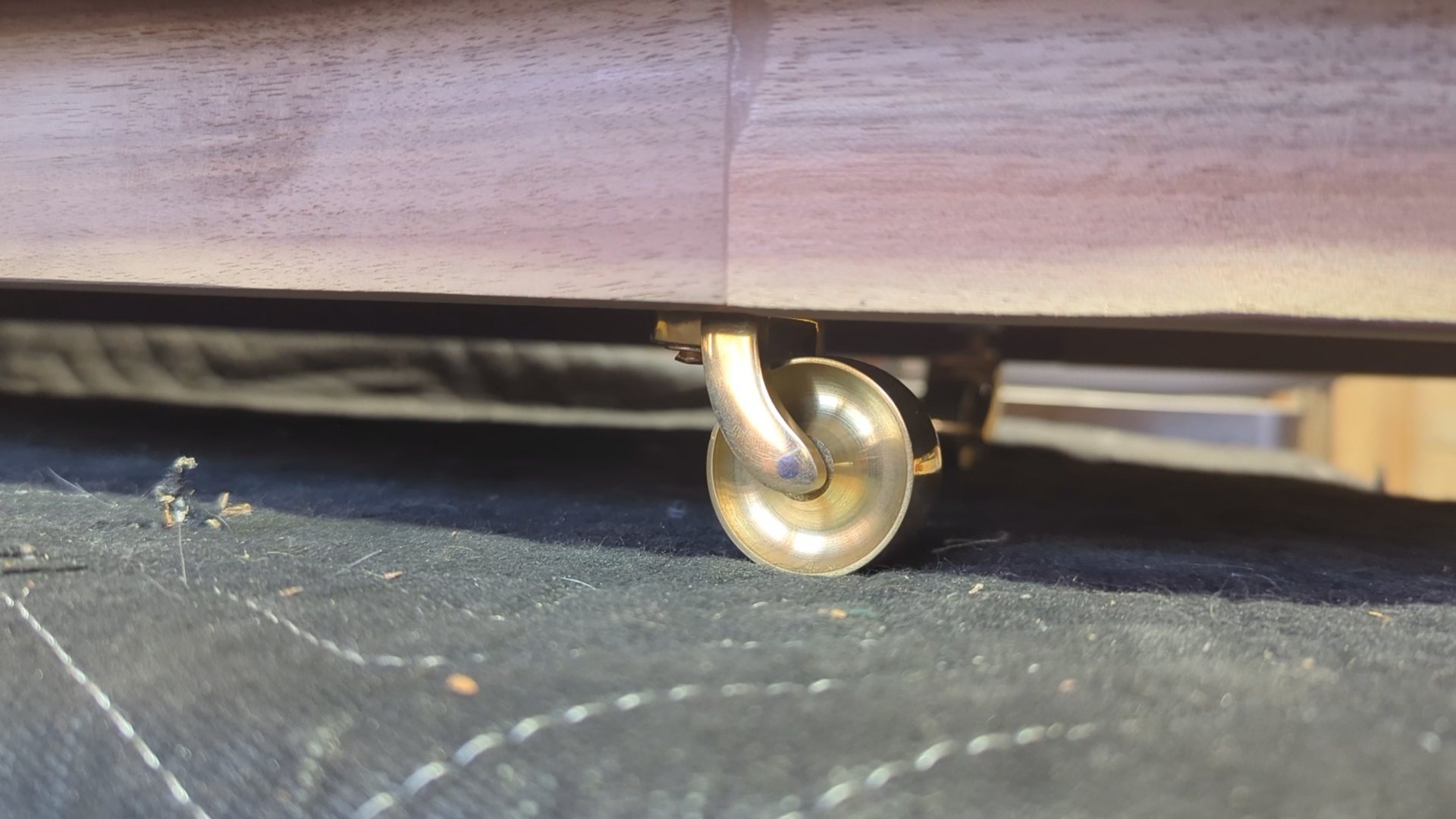
Walnut is the body. Brass is the punctuation — a curved rail fence on the open shelving side, retractable casters that drop when you want to push it across the dining room and disappear when you don’t.
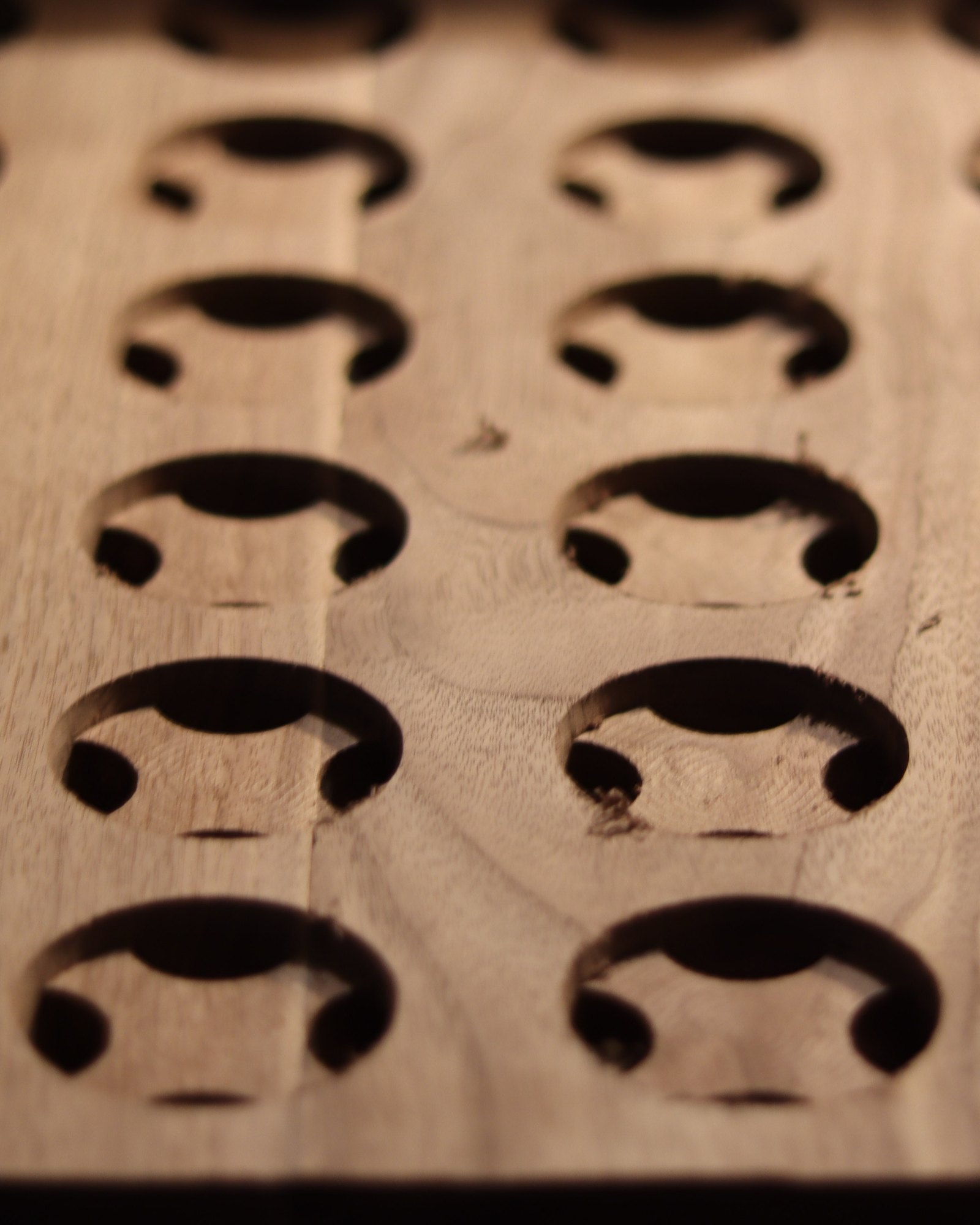
The signature move is the speaker-grille door: a CNC-cut pattern that gives a single flat panel rhythm and depth, filtering light like an old radio cabinet. Buffet on one end, bar on the other. Mobility underneath.
45.9″ long · 17.9″ deep · 20.9″ tall.
The Build
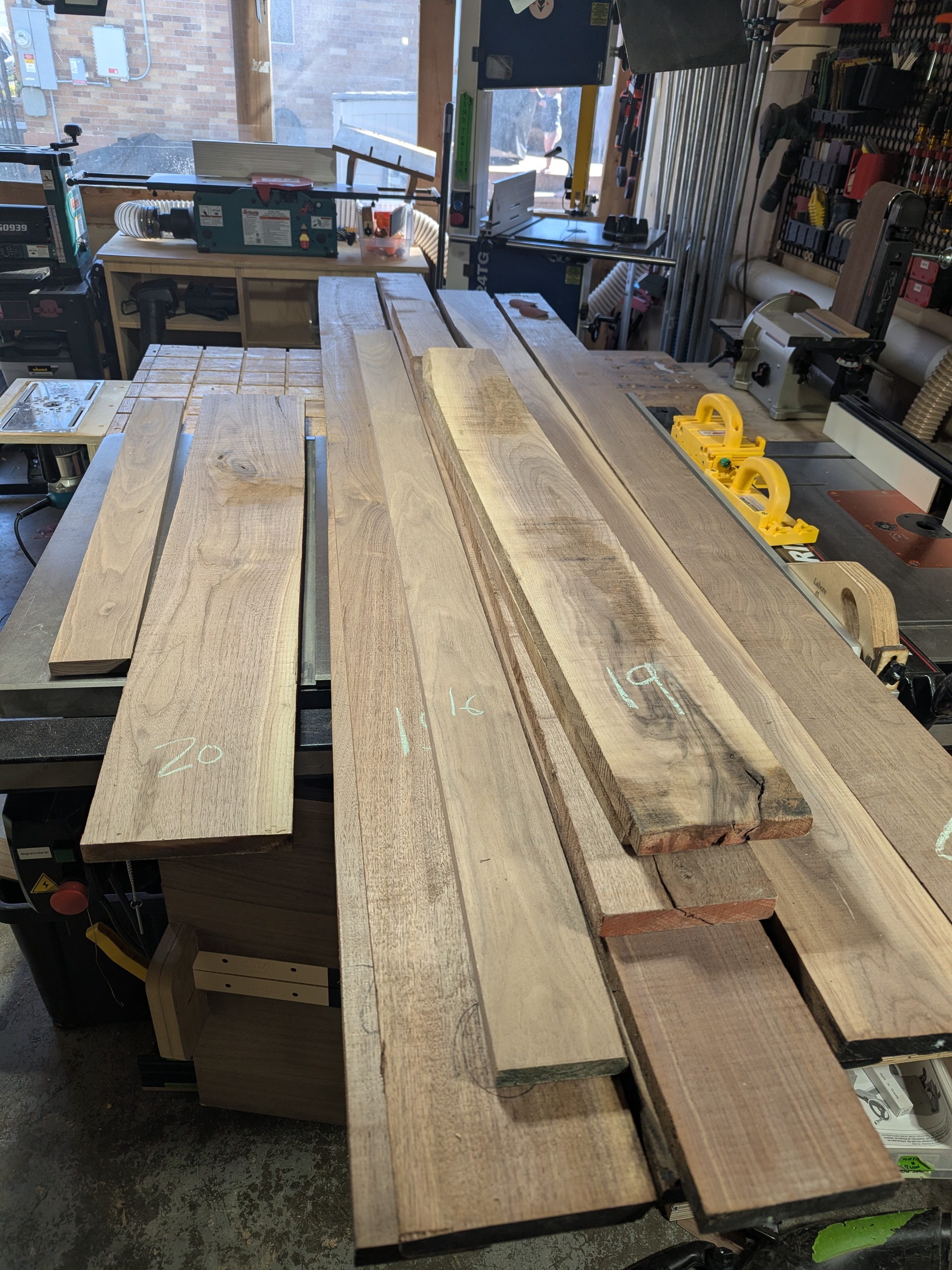
Cast Every Board
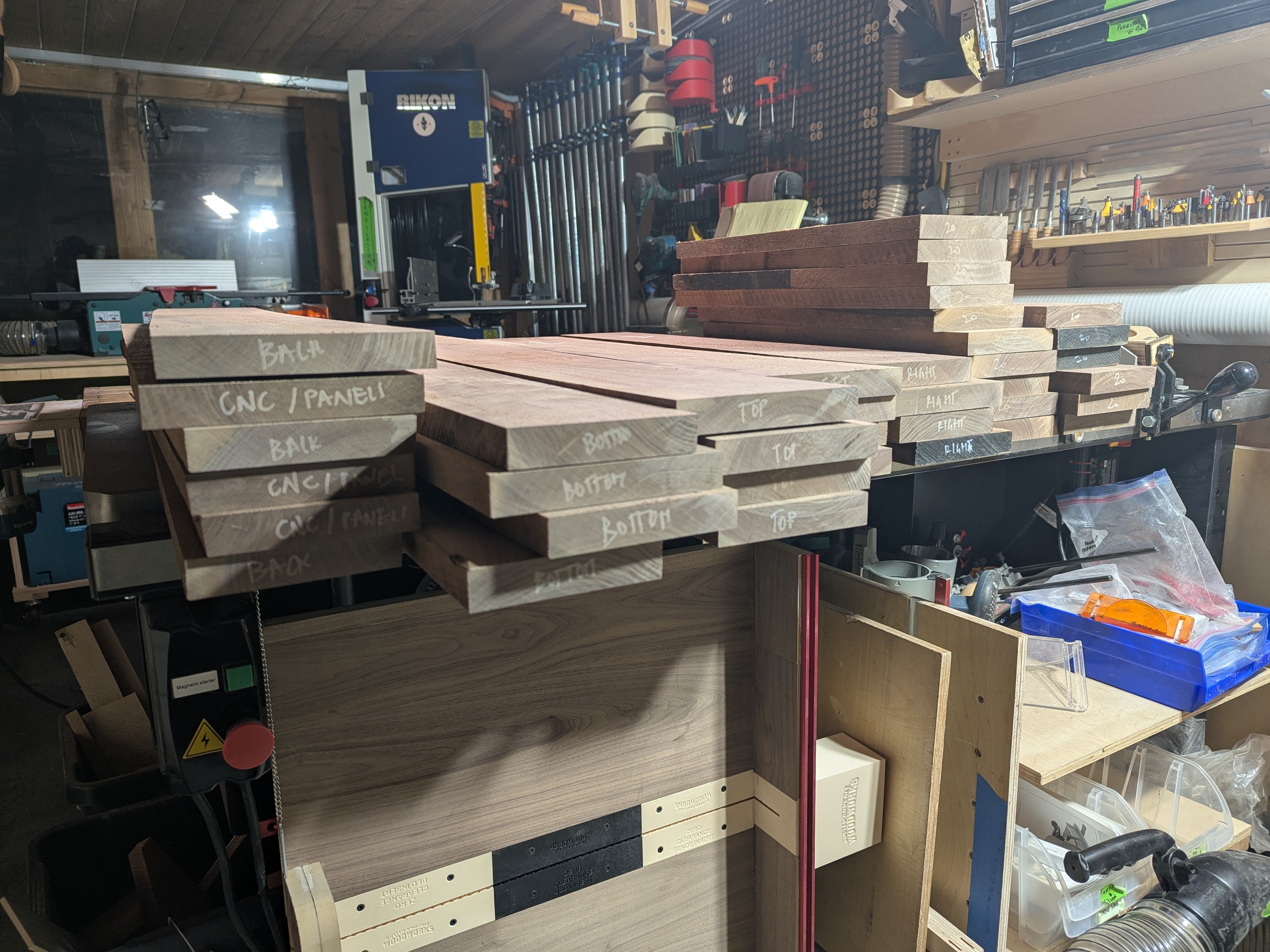
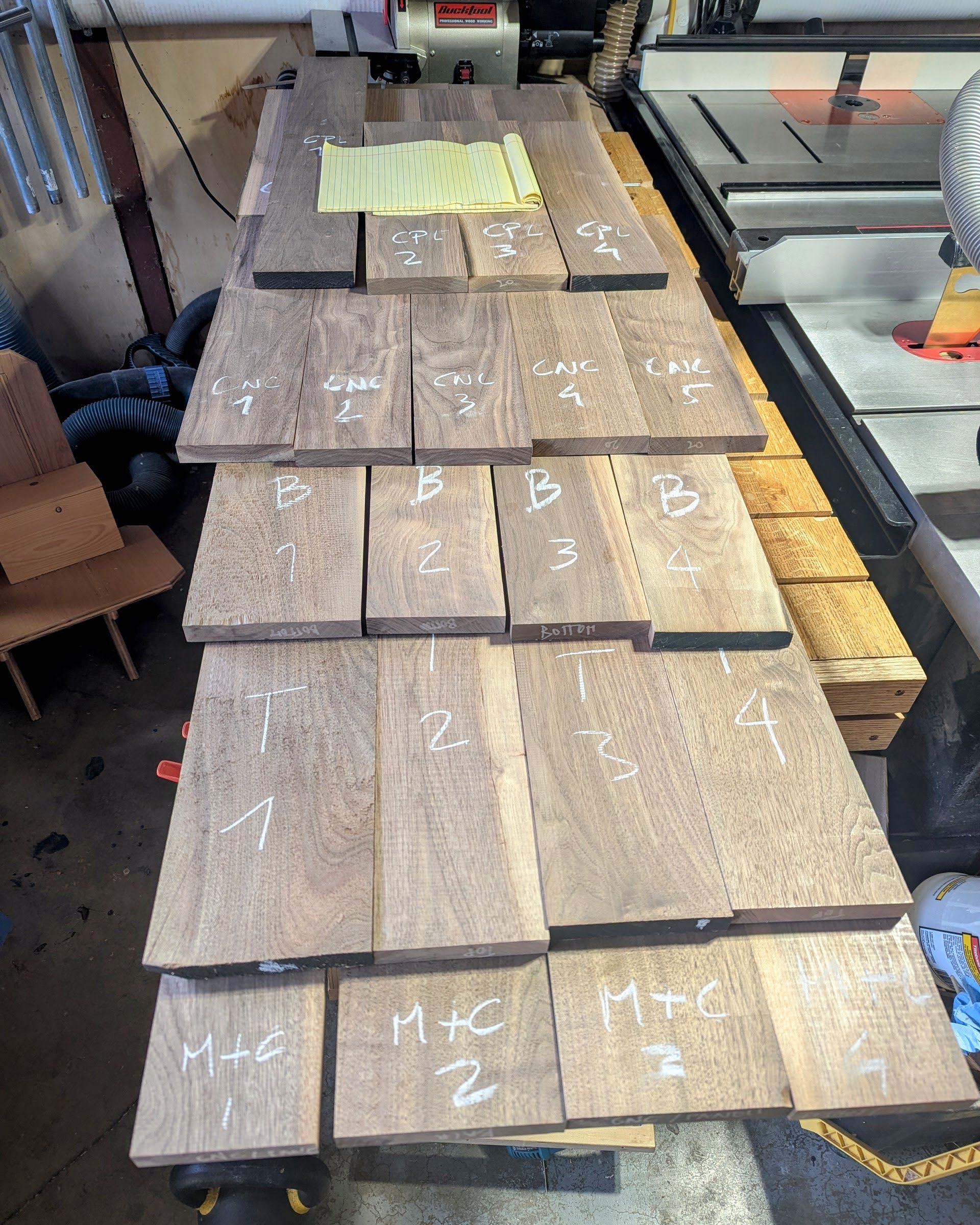
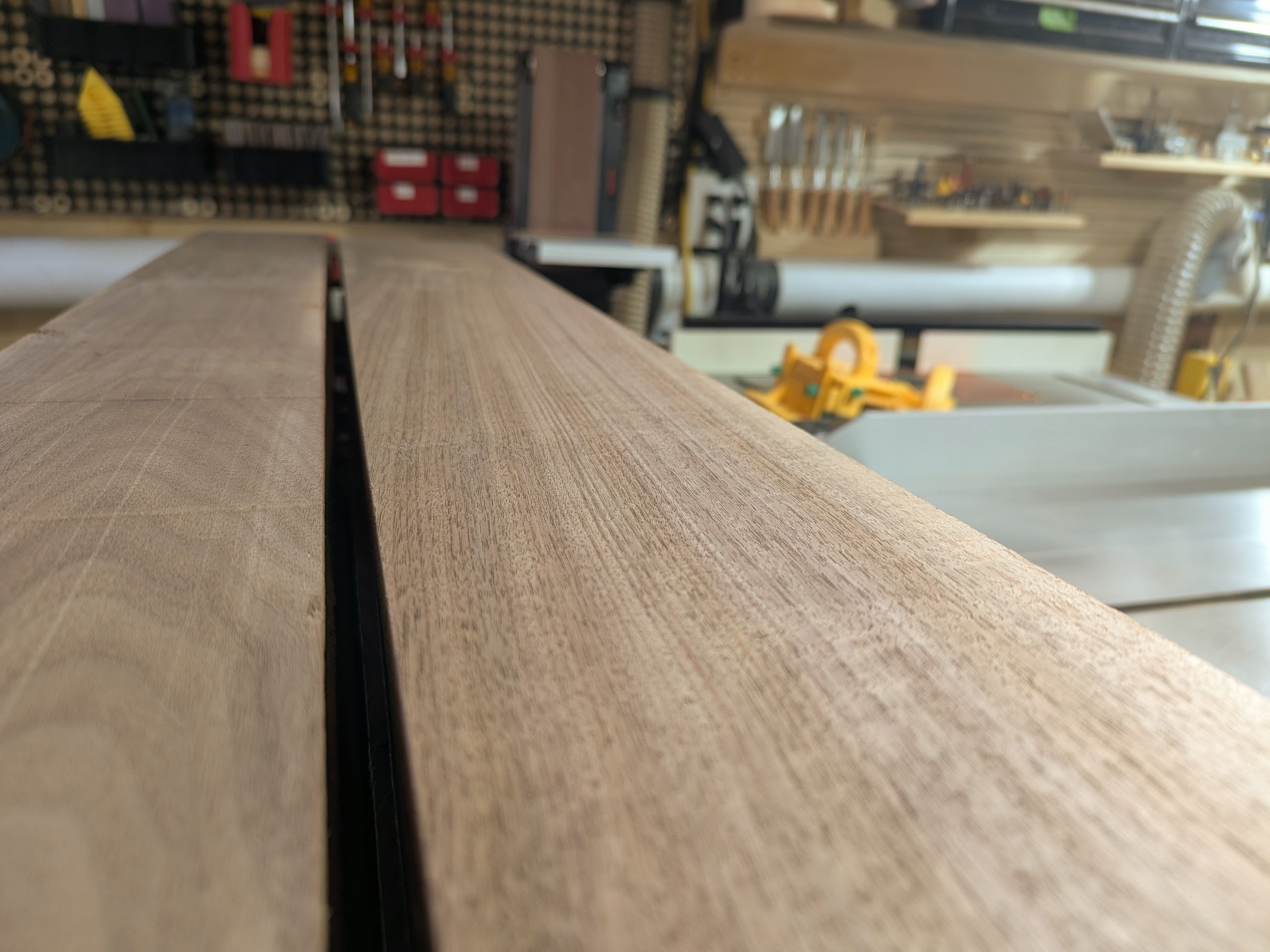
20 boards of American walnut — roughly 60 board feet against a 42 BF need. A 40% margin, deliberately, so every board can be cast into its role. Which face becomes the top. Which edge lives at the glue line. Which stick gets assigned to the CNC door where every millimeter of figure will show.
The order of operations is: crosscut every board to rough length first, then mill. Shorter pieces joint easier, plane flatter, rip straighter. Milling an 85-inch board is a wrestling match. A 20-inch piece is a conversation.
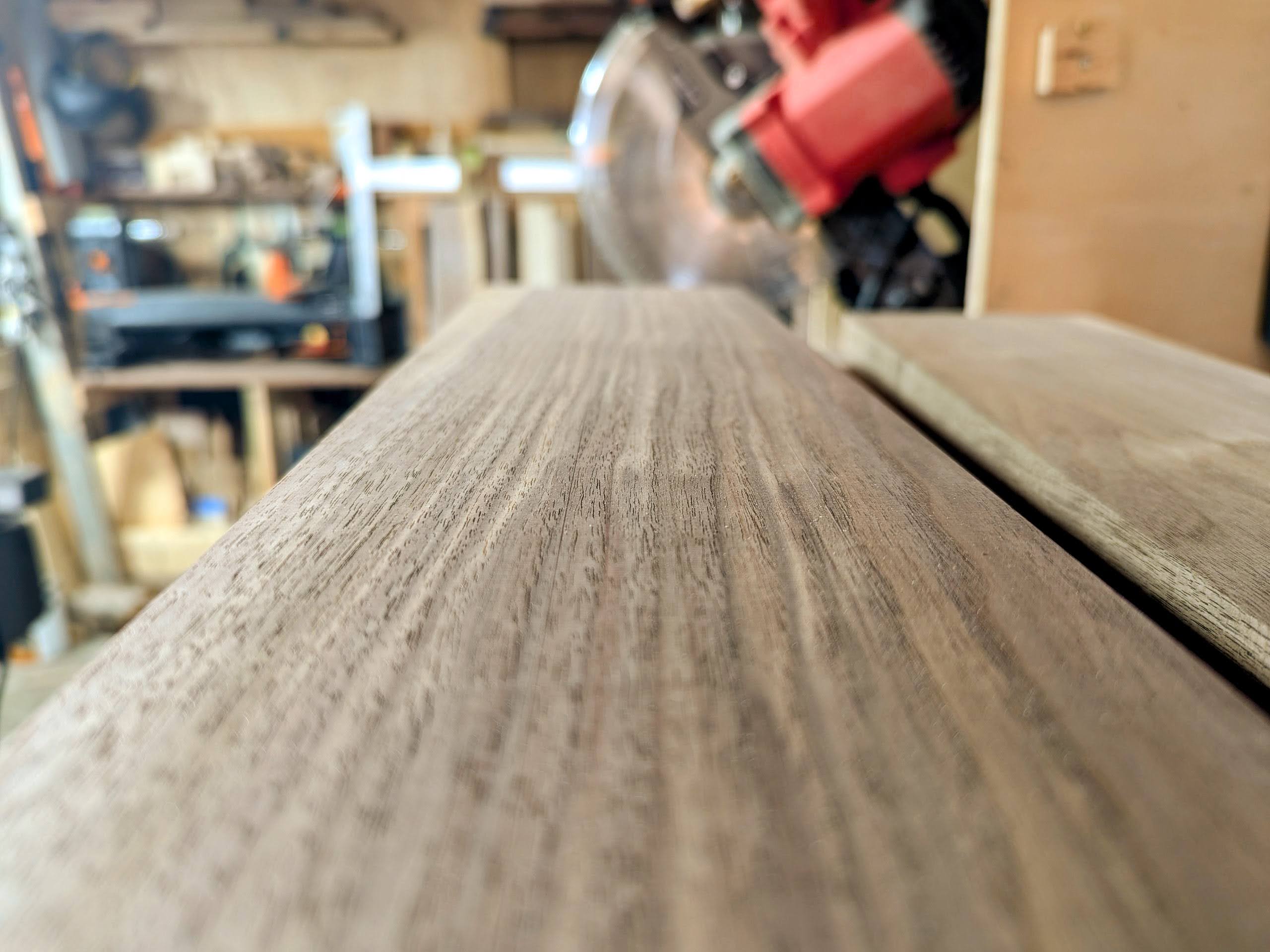
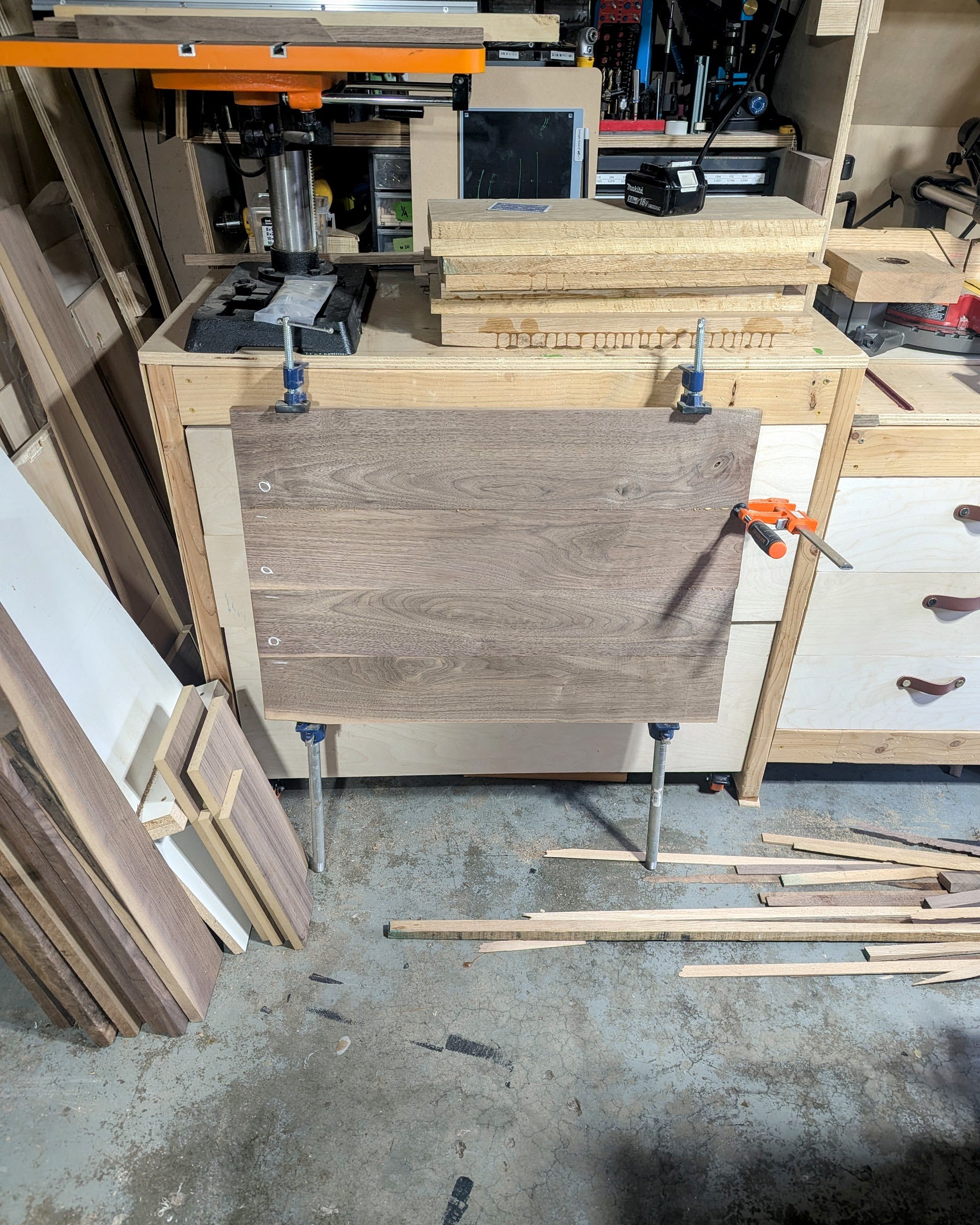
Once surfaced, the grain that was hiding under sawmill marks and oxidation finally showed its face. Deep walnut, real figure throughout. Then the glue-ups, one panel at a time.
The 27-Hour Cut
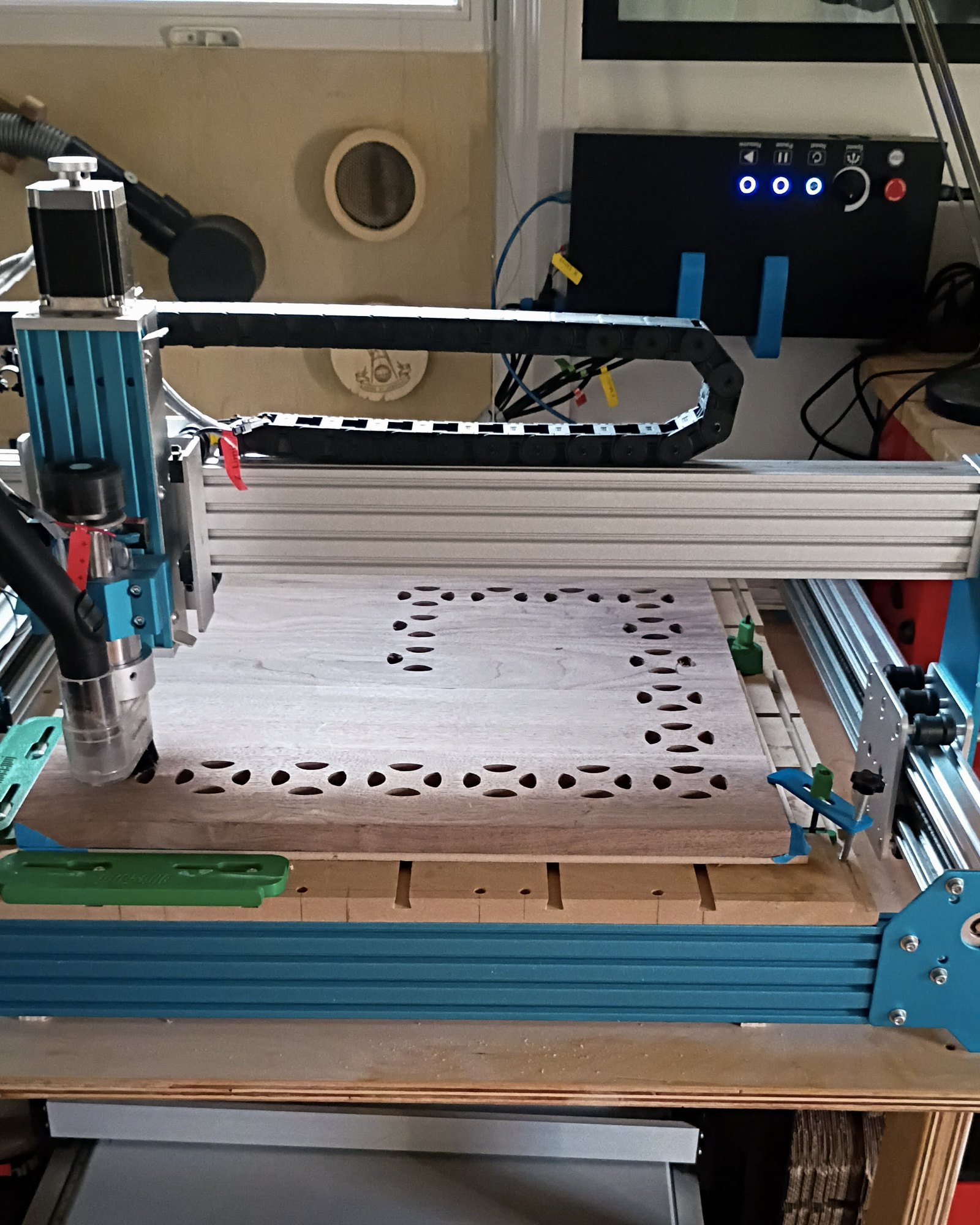
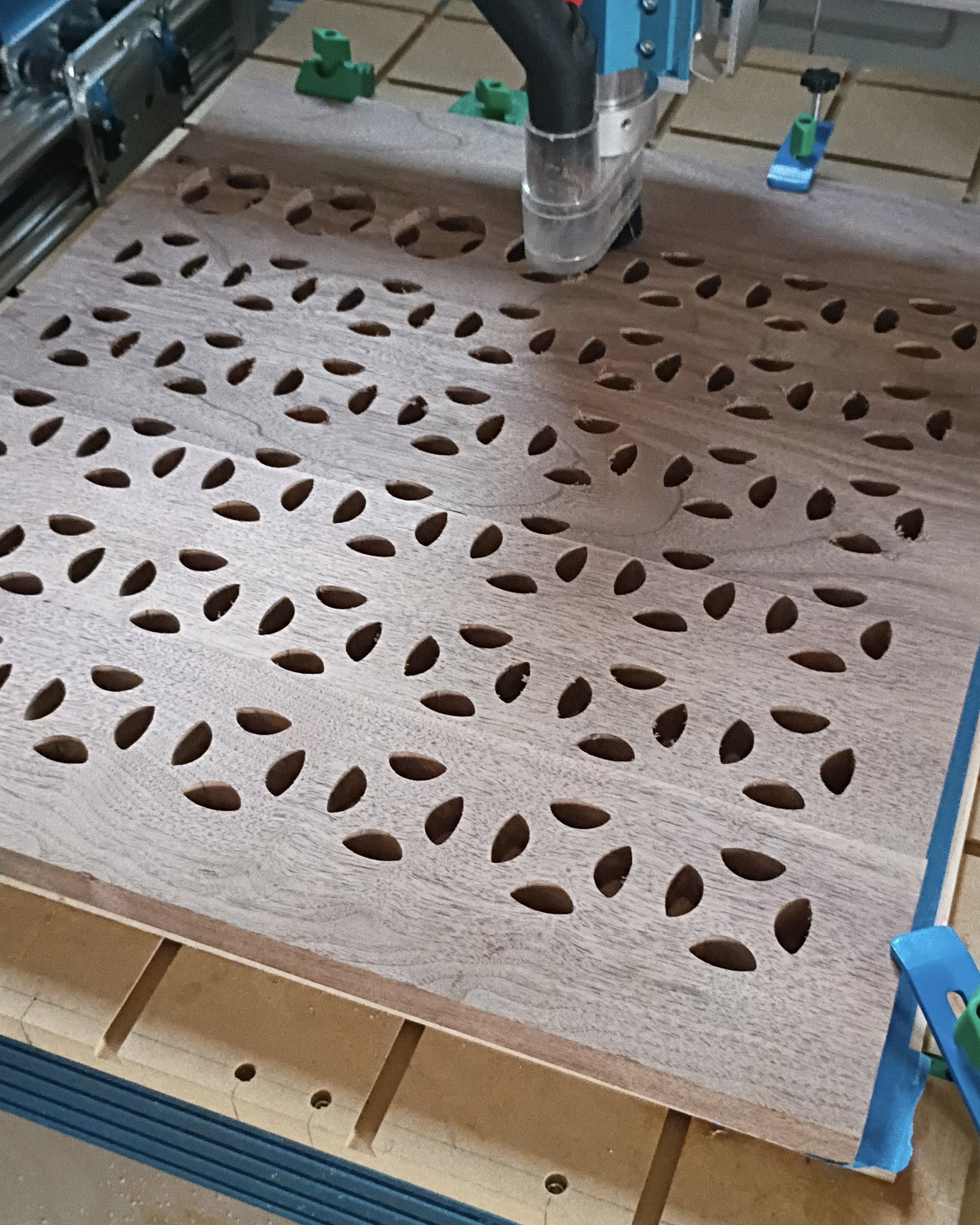
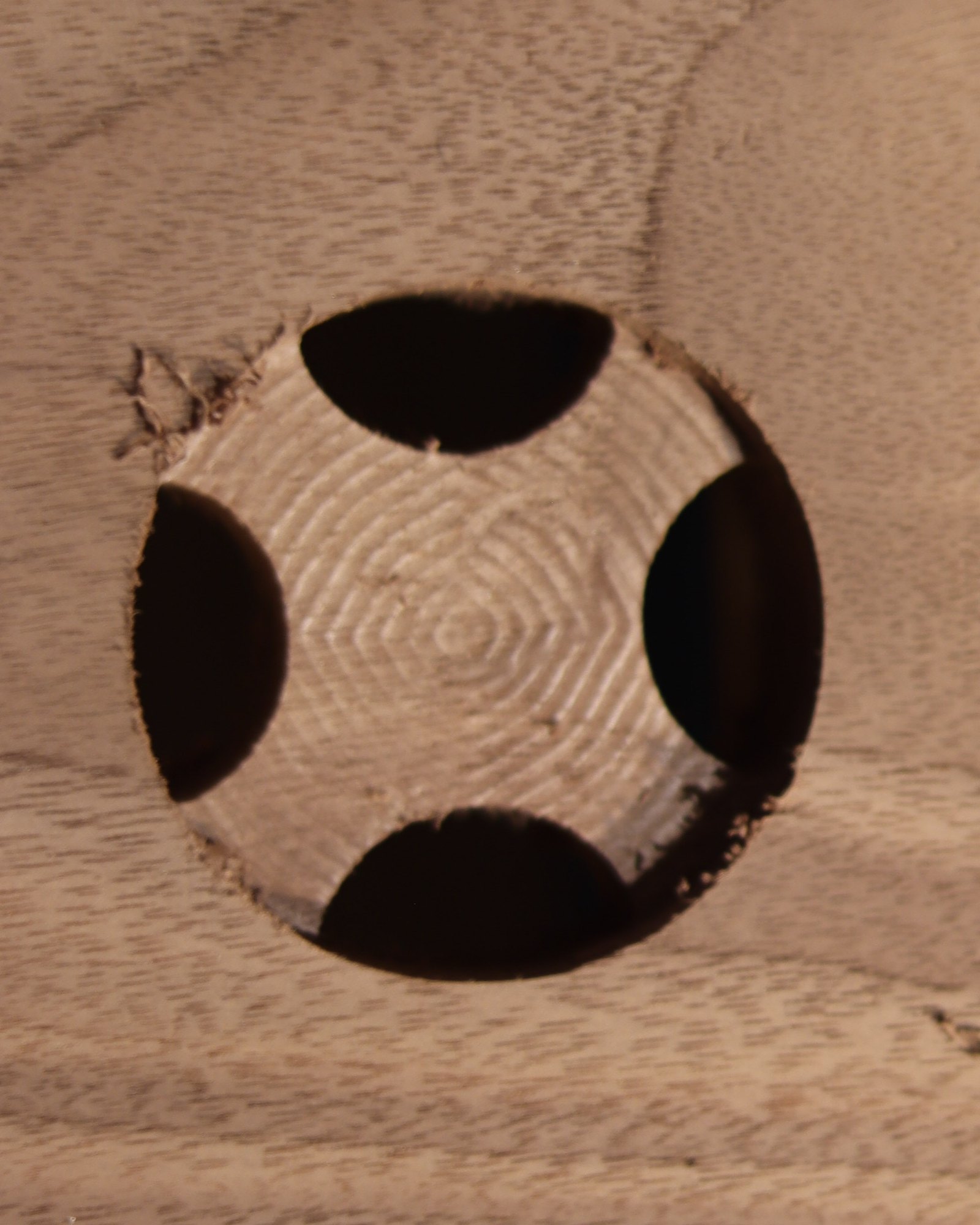
The speaker-grille door was the part of the design that scared me. The router is the most dangerous machine in the shop: thousands of RPM, fully exposed, more powerful than anything else I own. The CNC takes it out of my hands, but a pattern like this asks the machine for a full day of perfect behavior. A power outage, a knot in the wood, a bit that gives up, and the panel is firewood.
I estimated eight hours. It ran for twenty-seven. A day and a half of babysitting, with a couple of crises solved mid-cut, because the machine moves slowly enough to let you think. Then the last pass cleared and the whole pattern appeared at once, every opening aligned. A beautiful, beautiful day.
The Fence
The metalworker said the rail was too complicated, so I went to the metal shop myself, with my son as my assistant. Everything at ALISO travels by bike. The yard had rod instead of the tube I had in mind, and my assistant voted for the rod. Good call. The rest of the brass came from an old trick: lamp shops carry everything.
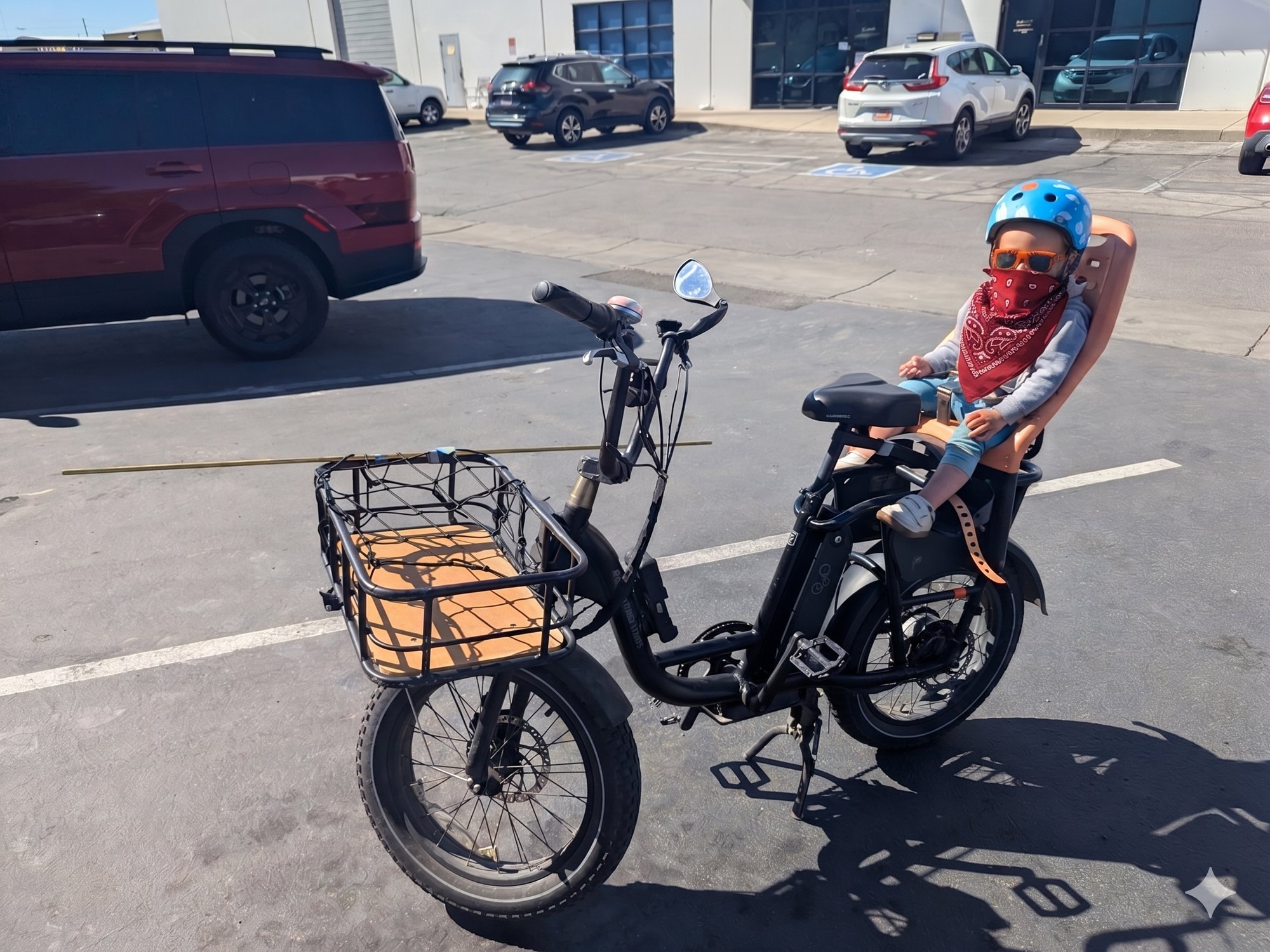
The bandana was added afterward. My assistant gets to keep his privacy on the internet.
Then came the hardest part of the whole build. Metal is the one material I had barely worked. The plan was 3/8″ rod, which turned out too heavy for the piece, so I stepped down to 1/4″. Bending it with heat worked, sort of. A friend pointed me to the right tool, and with it I found the exact curvature and a little finesse. The fence held the project up longer than anything else. It was worth every day.
It Came Alive
Assembly was strange: as smooth as it could go and not smooth at all, somehow at the same time. Then the door slid for the first time and the thing came alive. This is an ambitious design, a lot of elements mixing, and you can intellectualize it on a screen all day. In real life it lives better than the render.
The Reveal
Delivered
Delivery day went smoothly. The cart rolled in, found its place in the dining room near the table ALISO built for Brittney years ago, and looks beautiful there. I couldn’t be happier with it.
Buffet on one end. Bar on the other. Walnut and brass all the way through.
Specifications
The Details