The Red Tiger
A chevron coffee table in rift-sawn red oak

Chandani and Brady are two incredibly lovely humans who also happen to be razor-sharp and cerebral. While traveling, they stumbled upon a mid-century modern Airbnb with a coffee table that stopped them cold.
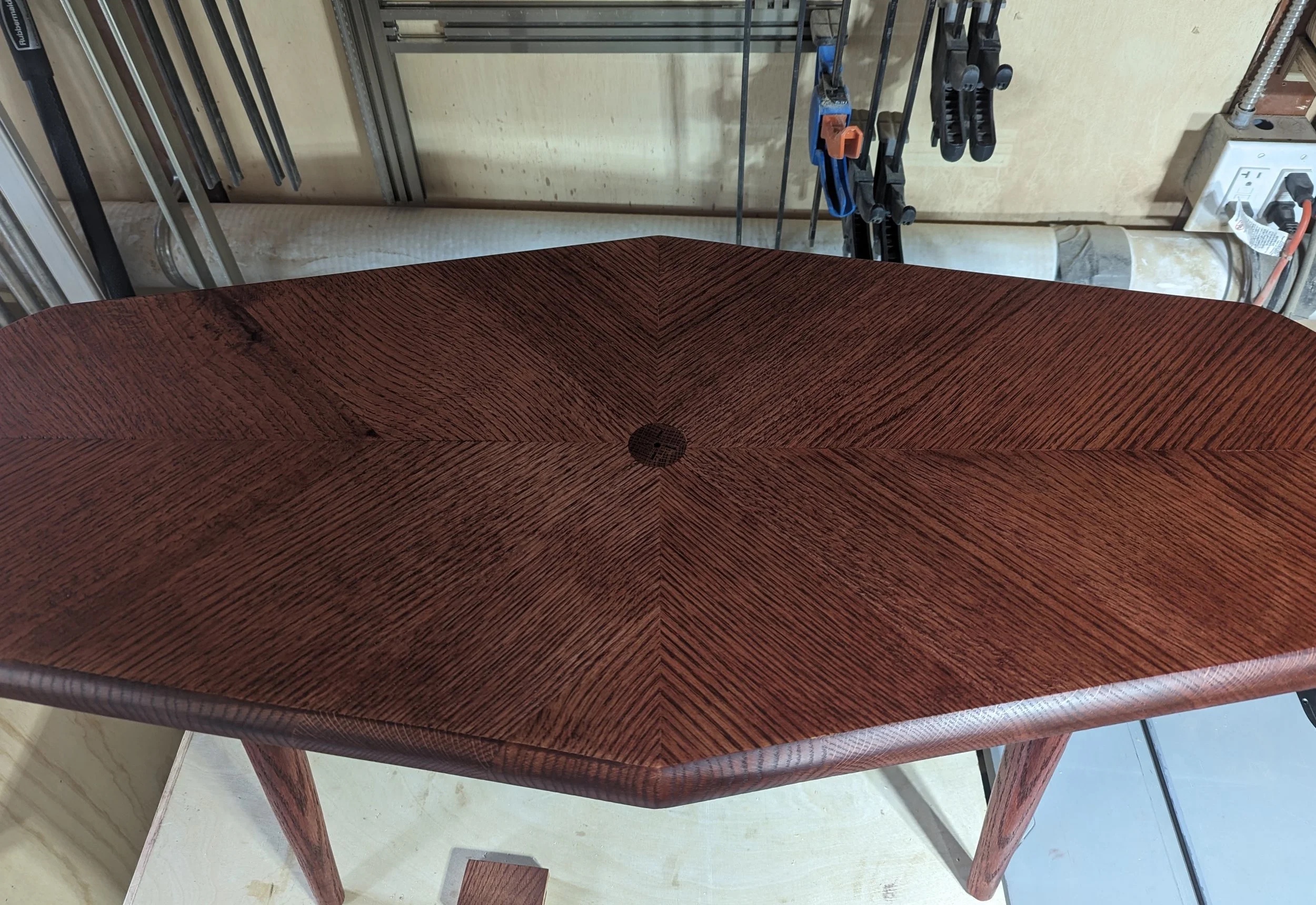
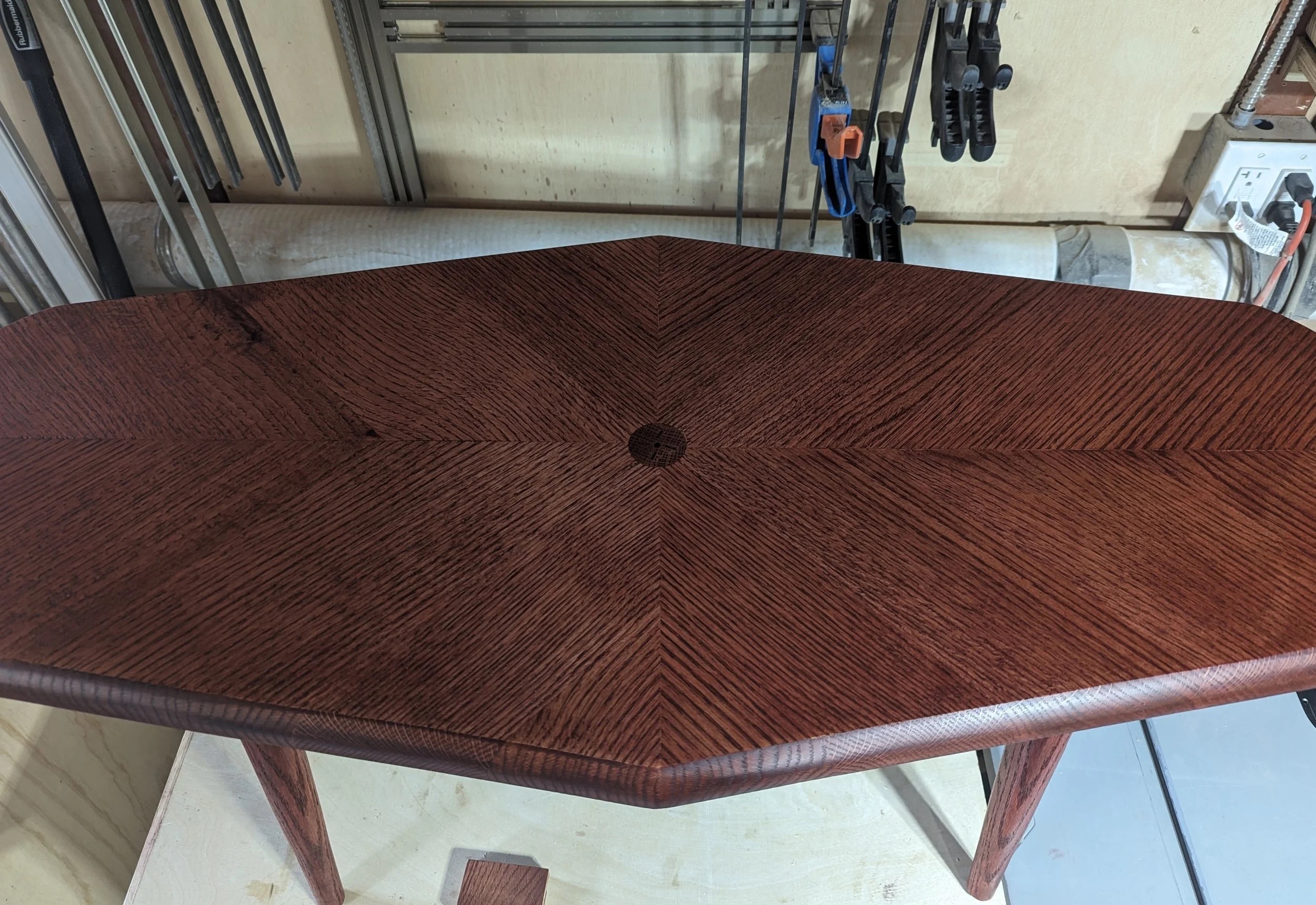
They sent me the pictures and said: we want this. Two elements caught my attention. First, a chevron pattern that made the table’s shape and the wood grain work as one. Second, sleek round tapered legs. Combined with the diamond-rounded tabletop, it was an awesome mix of angular and round.
Hell yeah, I’m on it.
I always advise putting samples in the space where the piece will live. This is not an intellectual thing — it’s physical, and it helps to see it. So I gathered a wide array of brown and red woods with strong grain and sent them over.
Chandani and Aashna picked oak with a cherry stain. I went to the lumber store and got the most beautiful rift-sawn red oak available. The rift sawn would guarantee stability and some tiger grain that would make the chevron pattern come alive.

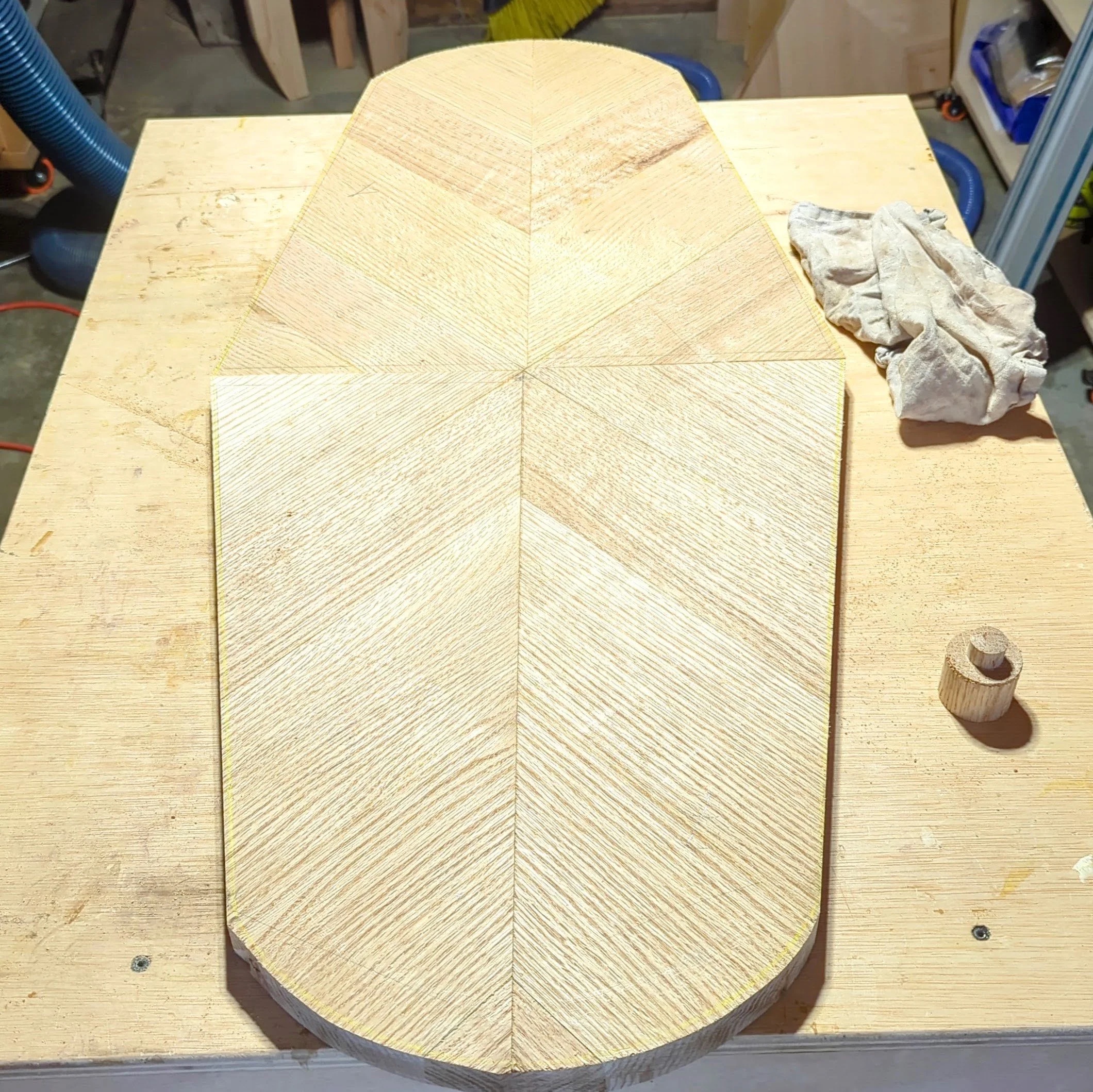
I built a pine prototype first to make sure I could replicate the chevron. Cut a square into rectangles, those into triangles, glued them into squares, then rectangles, then one big square from which the tabletop would be cut.
The prototype nailed the grain direction in each segment so the chevron would read as a unified surface — not a patchwork. After that and confirming the measurements, the design was ready to go.
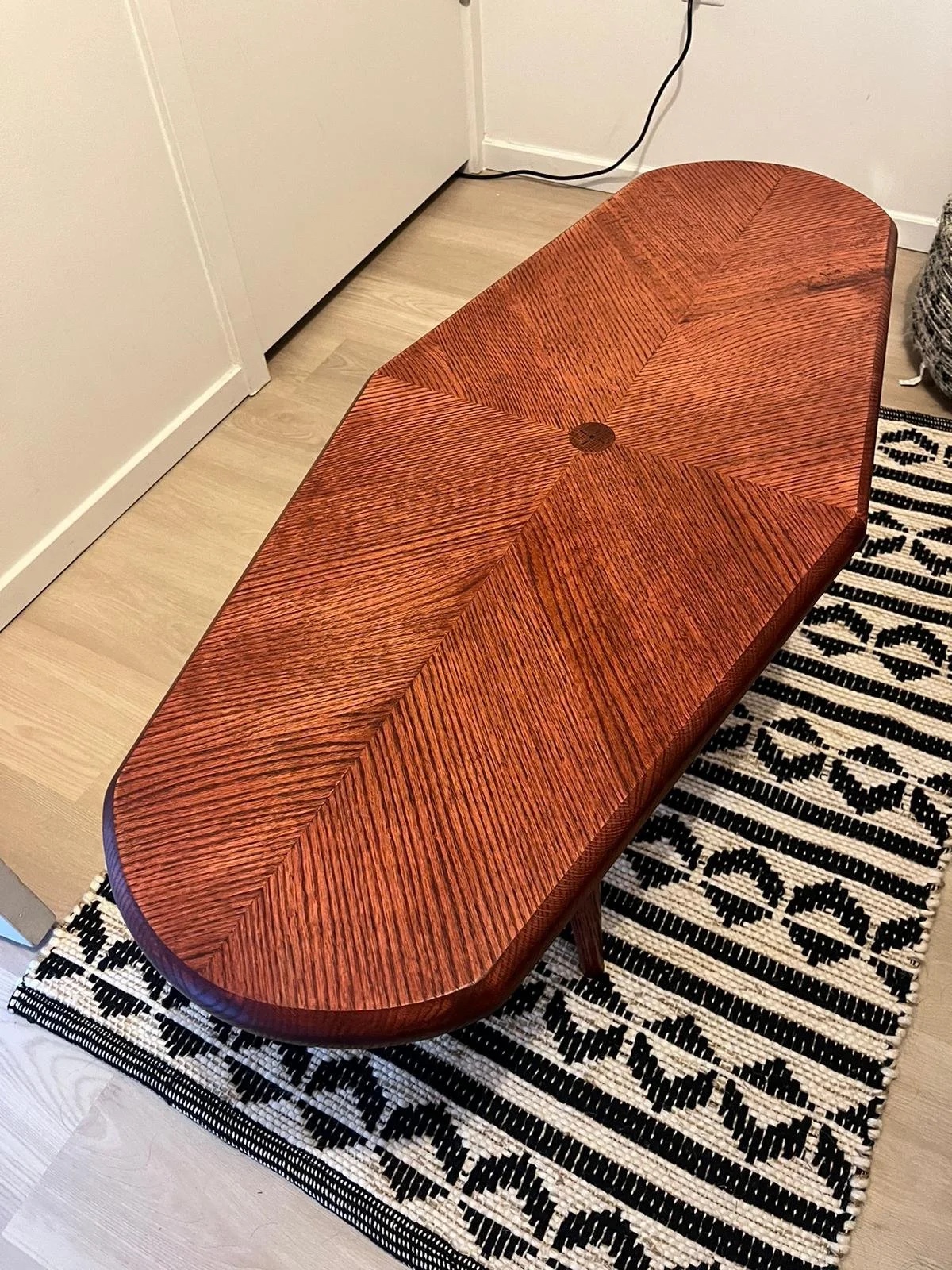
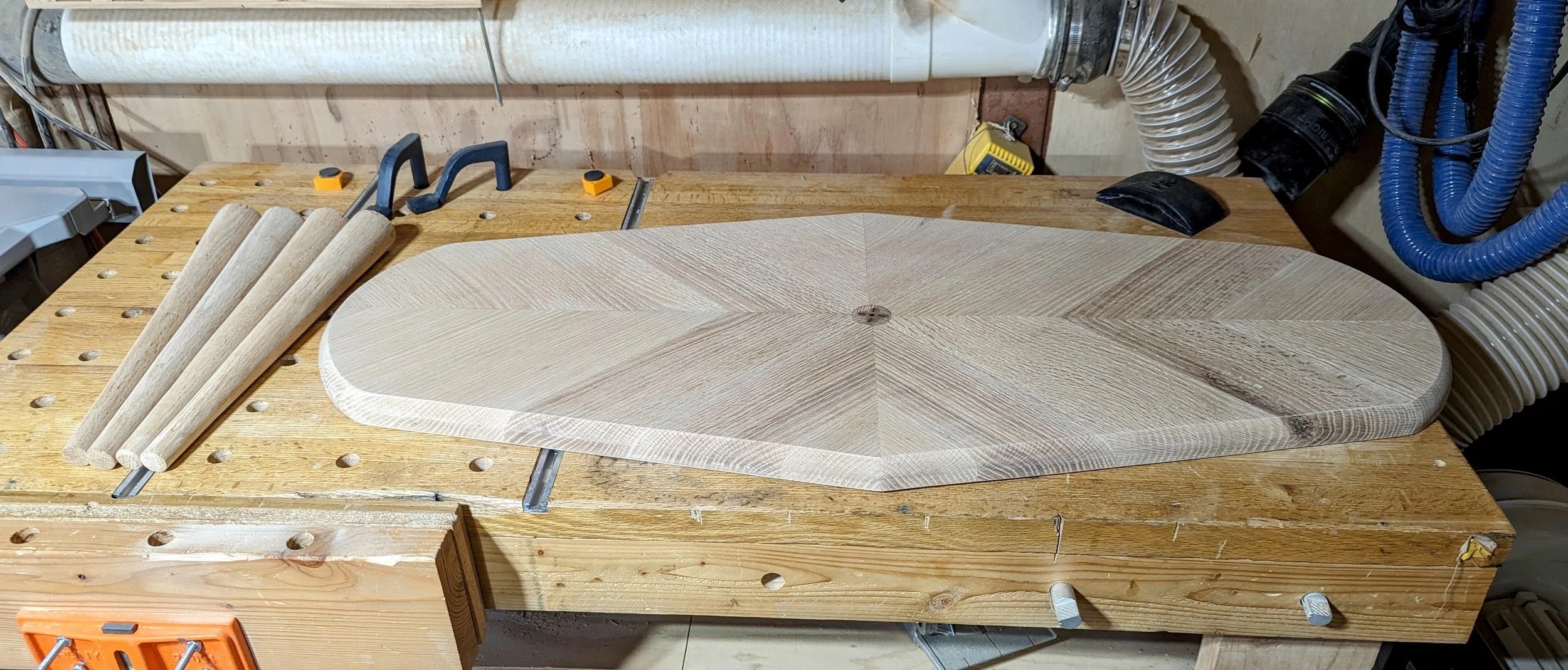
A diamond-rounded shape — softer than a rectangle, more intentional than an oval. A shape that invites you to gather around it.
Building this table was pure joy. I didn’t want it to end. Every step uncovered a beautiful aspect of the wood or the design. Because of the nature of the shapes and the turning of the legs, it felt more like sculpting than cutting.
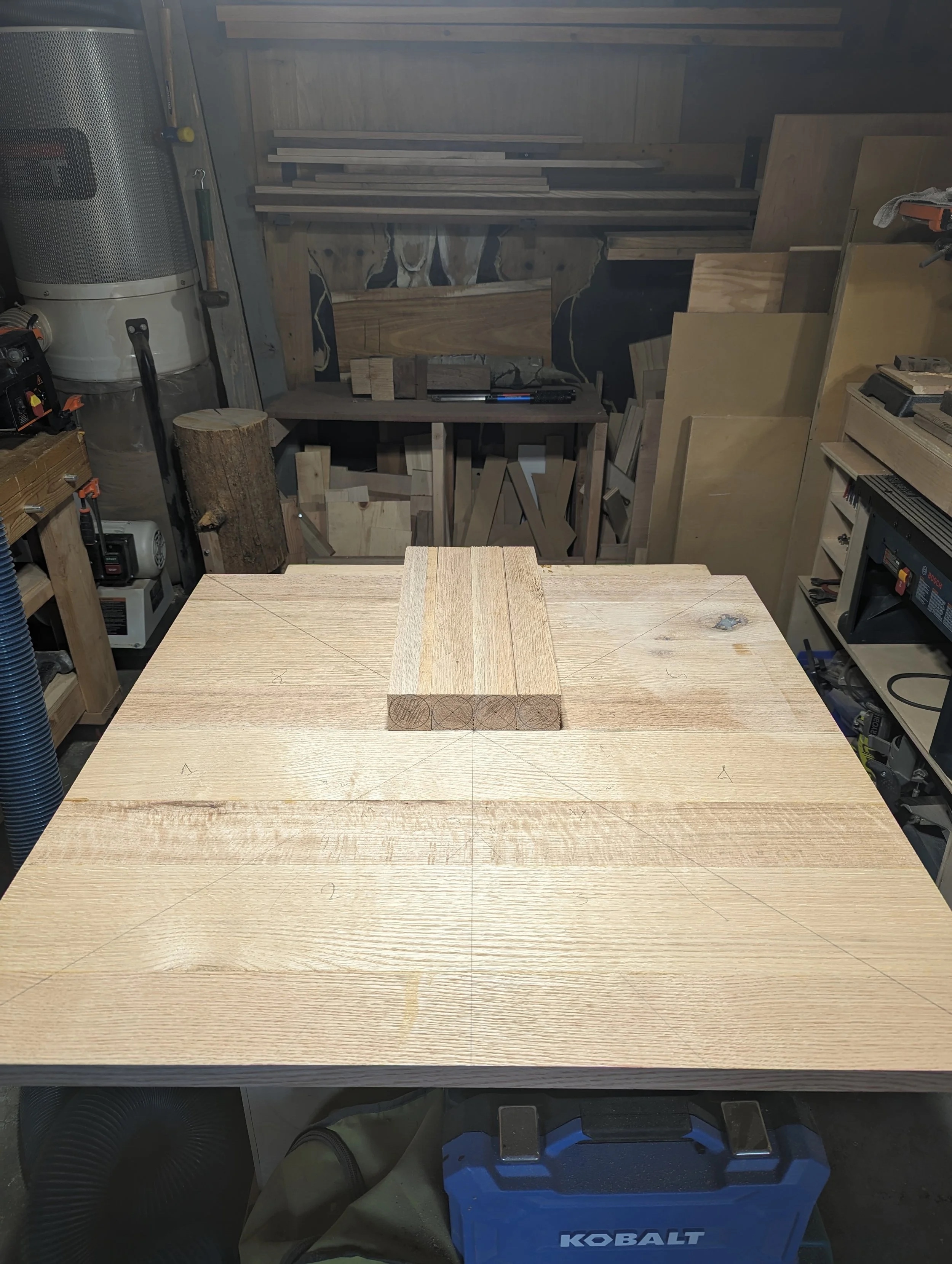
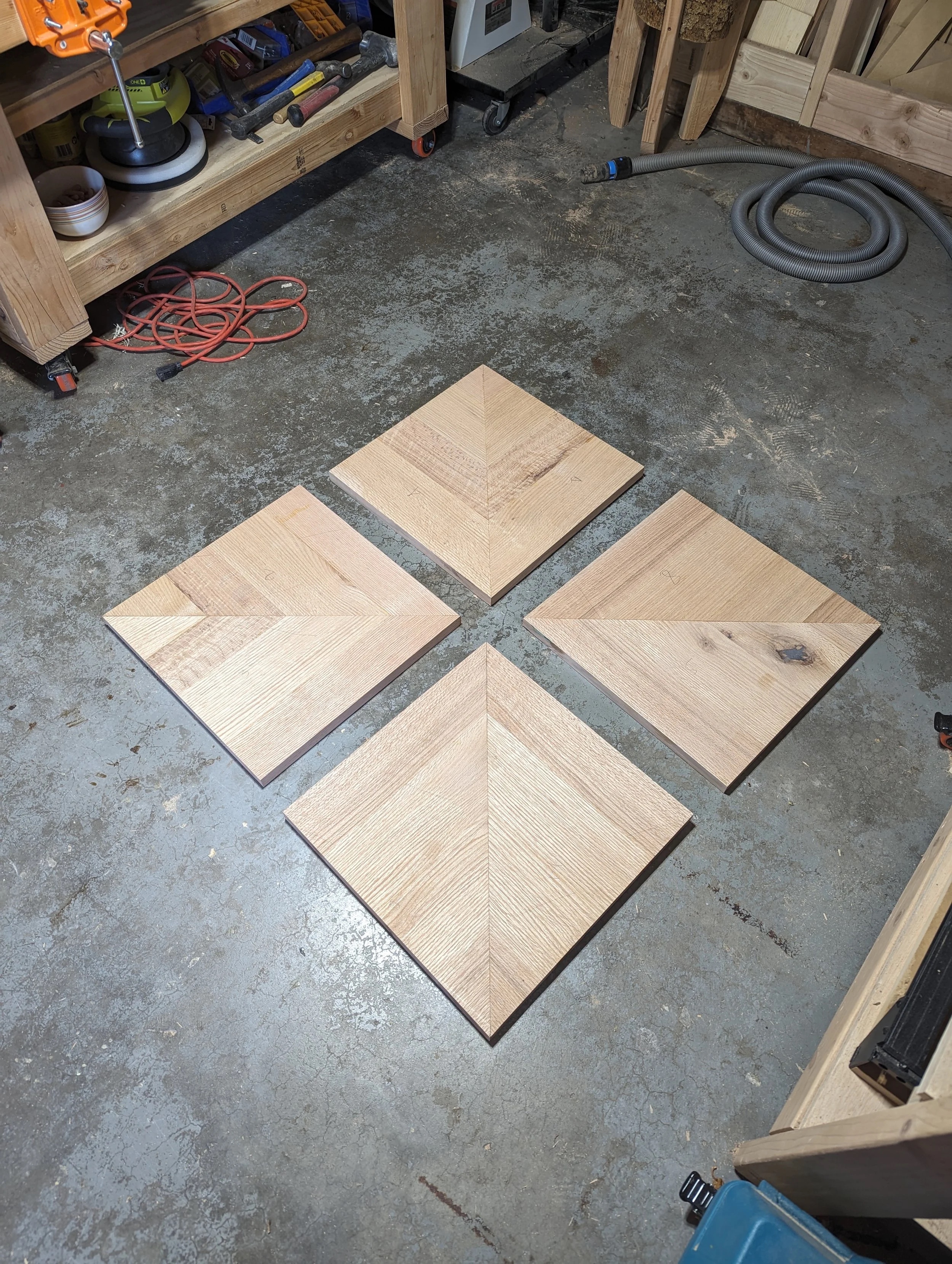
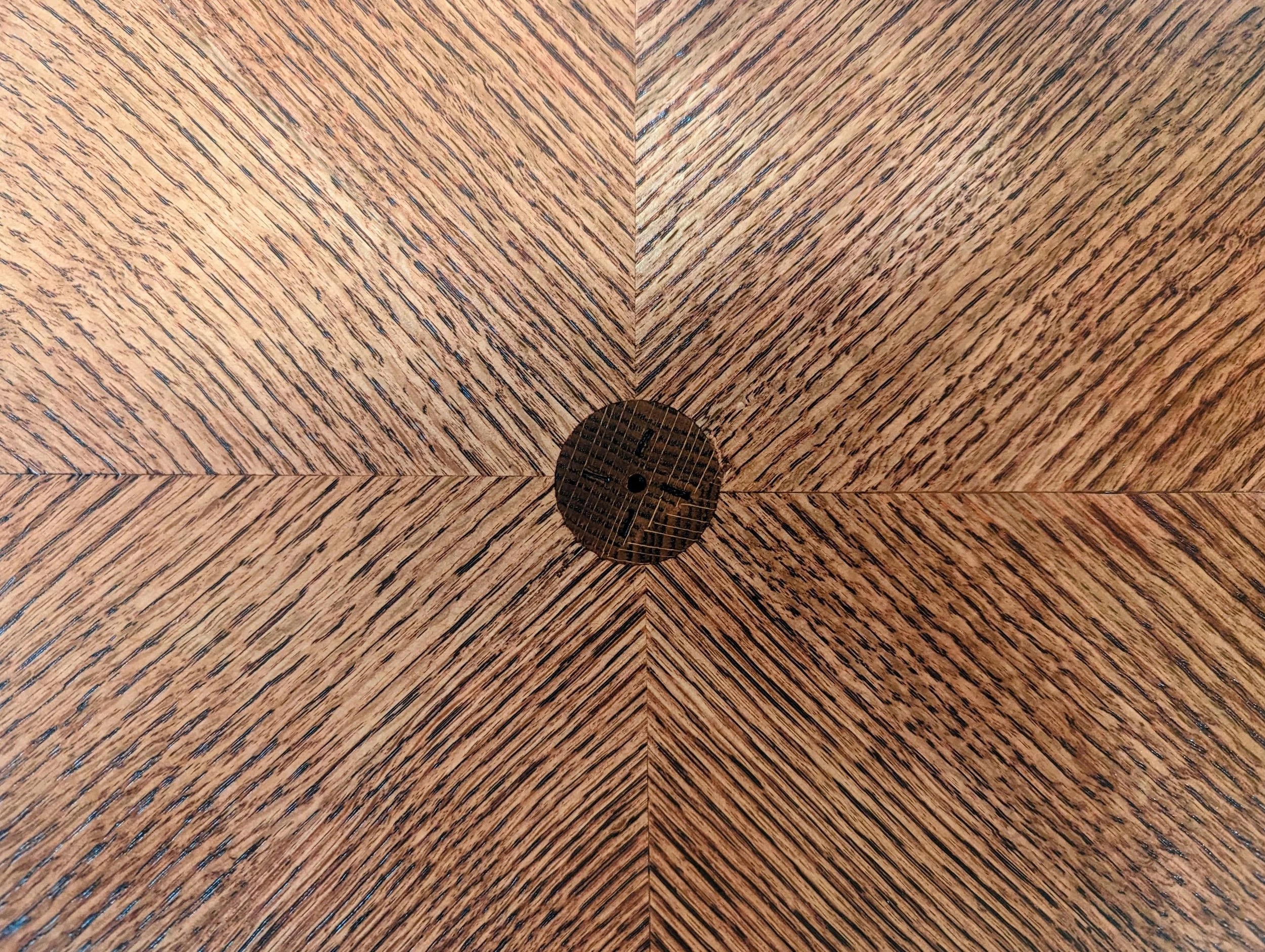
The process was a labyrinth of steps — cutting squares into precise triangles, aligning grain direction on every piece, then assembling them into four large chevron quadrants that would converge at the center of the tabletop. Once shaped into its diamond-rounded form, the four tapered legs were turned on the lathe.
It went from simple to convoluted to simple again. Five distinct parts — one tabletop and four legs — achieved through a labyrinth of steps.
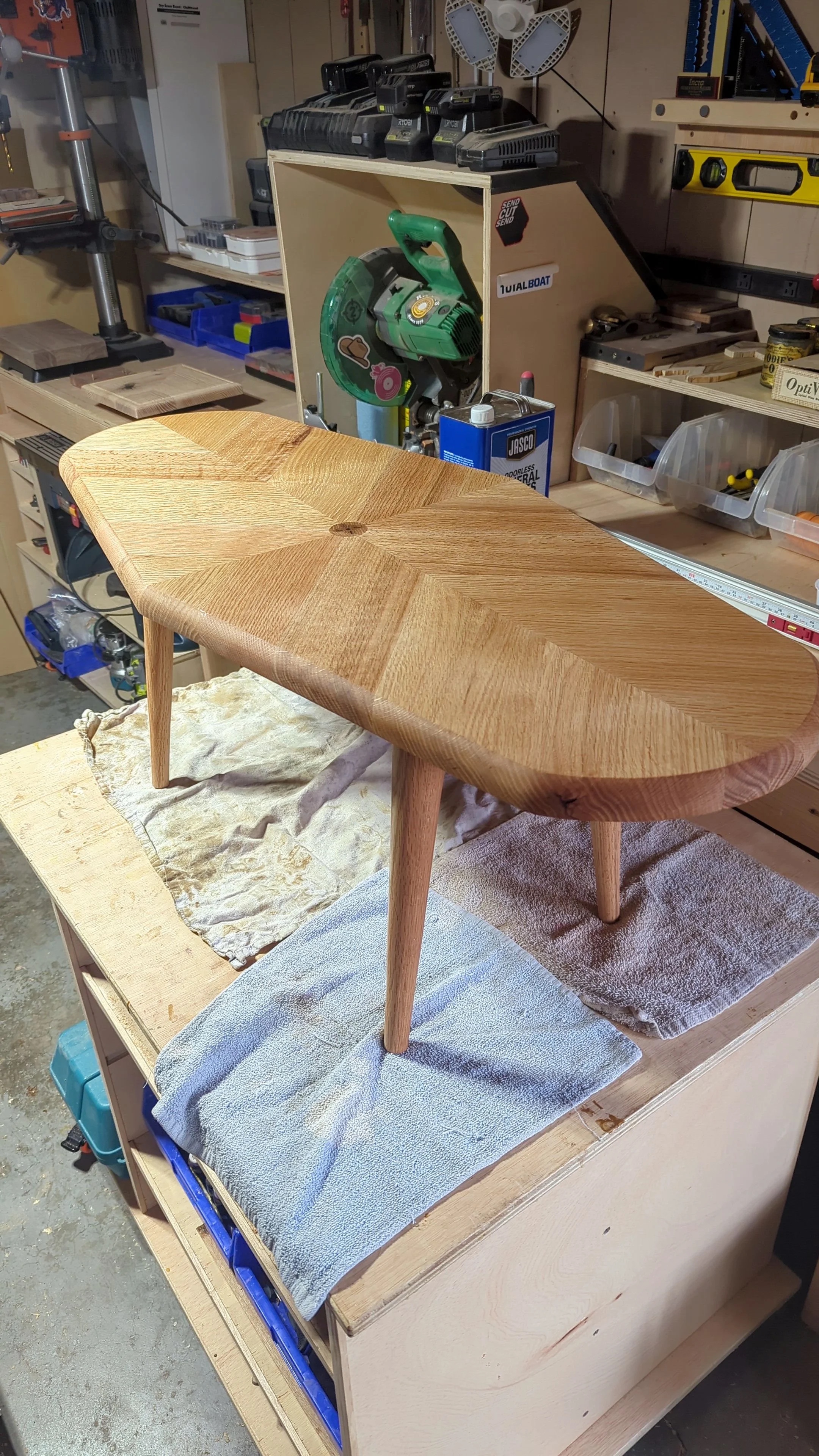
From someone who’s always telling people not to stain wood, I was now a convert.
The first coat of cherry stain was too red, too rich. For the top I needed to soften it with yellow and brownish tones. So I added a tiny bit of brown pigment to Odie’s Oil for the second coat. Then one last coat of Odie’s Oil and Wax for depth and a soft sheen.
The tiger grain in the rift-sawn oak exploded under the stain. Every stripe in the wood became a tiger stripe on the table — and that’s how it got its name.
The table found its home in Chandani and Brady’s living room — surrounded by eclectic art, a patterned rug, and the kind of intentional curation that makes a space feel alive. The chevron pattern catches different light throughout the day, and the tiger grain shifts from subtle to dramatic depending on the angle.
A table is just the top and the legs. Yet there is so much room to play between those two. The more the client is part of the creative process, the better the result. A maker is just a conduit.
Sculpted, not just cut.
Labore et Constantia.